
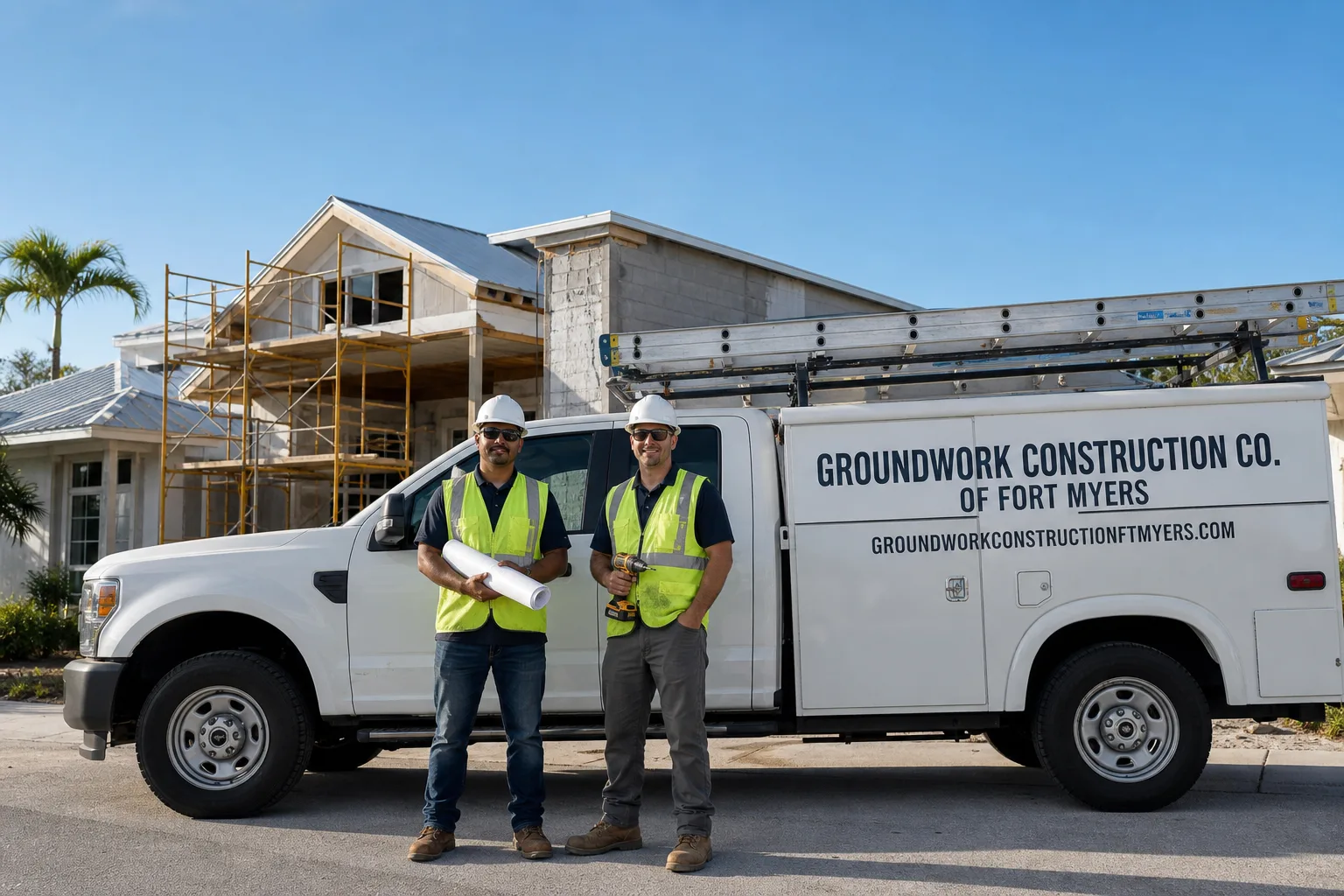
What a specialty roofing job actually involves in Three Oaks, and what it costs
Specialty roofing in Three Oaks means focused, non-standard roof work that falls outside a full tear-off replacement: think wind-mitigation retrofits, hurricane-strap anchor installations, localized structural repairs on post-Ian homes, or custom metal and tile detailing on complex roof geometries. Most of these jobs in our market take two to five working days on site, not months, with hard costs typically landing between $1,200 and $8,500 depending on scope and whether engineered tie-downs are required. Call (844) 638-7249 for a free on-site estimate and a written, line-item scope of work that tells you exactly what you’re paying for before the first fastener goes in.
How we tackle a specialty roofing job in Three Oaks, from first call to final inspection
The process changes based on whether we’re chasing a wind-mitigation deficiency flagged by an insurance inspector, rebuilding a section of roof decking that Ian tore open, or retrofitting hurricane clips onto an older block home’s truss-to-wall connection. But the sequence we follow, and the decisions you’ll make along the way, stay consistent.
Stage 1: On-site assessment and attic inspection (Day 1, about an hour)
We walk the roof looking for exactly what is failing or out of spec: cracked tiles, lifted ridge vents, missing strap connectors visible in the attic, decking delamination from moisture, or wind-driven rain entry points around penetrations. This is where we determine whether the fix is a straightforward material replacement or whether the underlying structure needs an engineered anchor solution. You’ll get a firm number for the repair scope before we leave, not a “we’ll get back to you” email three days later.
Stage 2: Pulling the permit and ordering spec materials
Lee County requires a permit for any specialty roofing that touches the structural connection between roof and wall or alters more than a small repair square of decking. We file it on your behalf, which usually clears in two to five business days for straightforward retrofits. While the permit processes, we order exactly the wind-rated fasteners, Simpson clips, flashing, underlayment, and matching tile or shingle stock the job needs. Material lead time dictates the actual start date; rare tile profiles can take a week, common asphalt stock is on our yard shelf.
Stage 3: Prep, protection, and selective demo
We tarp landscaping, cover pool cages if the house backs up to one, and strip only the affected area. For a strap retrofit, that means lifting the bottom courses of tile or shingle at the eave line, exposing the top of the block wall without disturbing the rest of the roof plane. We keep demo surgical because the goal is to fix what’s wrong without turning a specialty job into an unplanned full replacement.
Stage 4: The repair or retrofit work
This is the core of the job. On a wind-mitigation retrofit, we install code-compliant hurricane straps or clips, embed anchors into the bond beam per the engineer’s spec, re-flash the wall-to-roof junction, and lay the roofing material back down with new fasteners. On a specialty tile repair, we match the existing barrel or flat tile profile, bed it properly, and ensure the underlayment lap is watertight. Every penetration gets new boot flashing. If we find rotted decking, we replace it in sheets, not patches.
Stage 5: Water test, cleanup, and close-out
We run a hose on the repair zone to verify water isn’t getting behind the flashing, then do a magnet sweep of the driveway and landscaping beds for dropped fasteners. You’ll get a photo walkthrough of the finished work. The Lee County inspector signs off, and we hand you the close-out packet with the permit final and any manufacturer warranty registration.
The options you’ll choose on a specialty roofing job
What you pick drives the cost and how the repair weathers the next decade of Three Oaks summers. Here are the real trade-offs:
- Asphalt shingle repair vs. architectural match. Three-tab shingles are cheaper per square, but they don’t hold up to a Cat 3 wind gust the way a rated architectural shingle does. If the rest of your roof is architectural, we won’t patch with three-tab; the mismatch fails the next time a storm eyewall clips Lee County. Expect a small upcharge for material parity.
- Standard flashing vs. upgraded stainless or copper. Galvanized flashing is the budget default and works for inland homes. On any Three Oaks property within a mile of the coast or estuaries, we strongly recommend stainless or copper at penetrations. Salt spray eats galvanized in five years or less here. The material cost jumps about $150-$300 per penetration, but it buys a decade of extra life.
- Hurricane strap retrofit method: surface-mount vs. embedded. Surface-mounted straps are faster and cost less, but they sit on the exterior face of the wall. Embedded straps require cutting into the stucco and patching it afterward, so the labor bill goes up. The structural result is functionally identical; the choice usually comes down to whether the HOA cares about visible hardware on the fascia line.
- Underlayment upgrade: felt vs. synthetic. Florida code allows #30 felt, but synthetic underlayment has about four times the tear strength and handles the high heat of a Three Oaks attic without drying out and cracking. On any repair where we’re opening more than a square of roof deck, synthetic is the smarter call for about $80-$200 more in material.
- Tile sourcing: field-match vs. salvage-match. Barrel and flat concrete tile profiles from the 1990s and early 2000s are often discontinued. We can usually source close field-match stock from regional suppliers, but if the color variance bothers you, we’ll hunt salvage yards for an exact match, which adds time and a small sourcing premium.
What specialty roofing costs in Three Oaks, FL
Specialty roofing in Three Oaks runs $1,200 on the low end for a focused flashing or isolated shingle repair, up to $8,500 on the high end when the scope includes an engineered hurricane-strap retrofit across multiple truss bays plus decking replacement and full re-tile of the affected zone. The median job we see in this market lands around $2,800-$4,200.
Five things push the number toward the top of that range:
- Structural retrofit scope. The more truss-to-wall connections that need anchors, the higher the labor and engineering cost. A home with zero existing straps, which we see regularly in pre-2002 Three Oaks builds, requires full-perimeter anchoring.
- Decking damage discovered after tile lift. We don’t know what the deck looks like until the tile comes up. If Ian’s moisture sat in the plywood for months before the roof was tarped, we may be replacing full sheets at $90-$130 per 4×8, installed.
- Roof geometry. A simple 6/12 gable is fast. A cut-up hip roof with valleys, dormers, and three skylights multiplies the flashing points and slows the crew, which adds labor hours.
- Permit and engineering costs. Lee County’s permit fee for a structural roof retrofit is a flat cost we pass through at cost. If the municipality requires a signed engineer’s letter for the anchor spec, that adds $400-$700 to the job total depending on complexity.
- Material grade and availability. Discontinued tile, copper flashing upgrades, and synthetic underlayment all nudge the material line up by a few hundred dollars relative to basic spec.
Every estimate we write in Three Oaks is a fixed-price, line-item document. The number you see is the number you pay. We don’t file change orders unless you ask us to expand the scope or we uncover structural damage we couldn’t see during the initial inspection. 0% financing for 18 months and $1,000 off projects over $10,000 apply when the specialty roofing is part of a larger scope; ask during your walkthrough if the numbers line up.
What Three Oaks homes specifically do to a specialty roofing job
Three Oaks sits squarely in the post-Ian rebuild zone, and that reality shows up on almost every specialty roofing job we open here. The housing stock is overwhelmingly 1990s and early-2000s concrete block construction, slab-on-grade, with original tile or architectural shingle roofs that predate Florida’s tougher 2007 wind-code update. When we pull a few tiles at the eave line on a home in the neighborhood around Three Oaks Parkway, we almost always find that the original builder never installed hurricane straps at all. The truss was set on the block wall with nothing but gravity and a thin bed of mortar holding it in place for twenty years.
That changes the job. What starts as a tile repair or wind-mitigation inspection turns into a code-required anchor retrofit, because no legitimate contractor in Lee County is going to button up a roof that fails the current uplift standard. The Lee County building department’s post-Ian permit workflow has been processing these retrofits at a steady clip, and inspectors are diligent about verifying the embedment depth on epoxy-set anchors. The humidity and afternoon storm cycle here also mean we plan specialty work in smaller weather windows, especially between June and October, tarping the work zone at the end of every day. These aren’t complications you deal with 30 miles inland; they’re just how roofing works in Three Oaks now.
Homeowners often tie a specialty roofing job like this to other exterior work. The same house with lifted tiles from Ian frequently needs attention on the sliding patio door track that took wind-driven water, so we coordinate with our sliding and patio door team in Three Oaks when the project scope overlaps. And if the repair involves a parapet wall or balcony deck edge, we’ve sometimes paired it with glass railing systems in Three Oaks on homes where the original builder railing was failing.
Serving Three Oaks, FL - Our Local Coverage Area
We’re based in the Three Oaks area and know this community well. Use the map below to see our service coverage - if you’re nearby, we can almost certainly help.
Frequently asked - specialty roofing in Three Oaks
Most specialty roofing jobs in Three Oaks finish in two to five working days on site. A focused flashing or shingle repair can be done in a single day. A full-perimeter hurricane-strap retrofit with decking replacement and re-tile pushes closer to five working days plus the permit wait. Weather can stretch the timeline between June and October. Call (844) 638-7249 and we’ll give you a realistic schedule for your specific scope during the walkthrough.
Yes, on almost any specialty roofing that touches the structural roof-to-wall connection or replaces more than a small area of decking, Lee County requires a permit. We pull it for you as part of the job, and the inspection is included in the scope. Simple tile swaps or isolated vent boot replacements typically don’t trigger the permit threshold, and we’ll tell you honestly which category your job falls into when we assess it.
If your insurance company flagged your roof-to-wall attachment as deficient, the fix is an engineered hurricane-strap or clip retrofit. That means installing code-compliant connectors that physically tie the roof truss to the concrete block wall. It’s not a paperwork fix, and no amount of caulk or extra nails satisfies the mitigation credit. Our retrofit jobs in Three Oaks consistently pass the follow-up inspection because the anchors are embedded to the engineer’s spec and the county inspector verifies the embedment before we close the roof back up.
Coverage depends on your policy and the cause of the damage. If wind from Ian or a subsequent storm caused the tile loss or lifted the flashing, many policies in Three Oaks will cover the repair scope minus your hurricane deductible. We don’t handle claims directly, but we provide detailed photo documentation and a scope-of-work report you can submit to your adjuster. We also flag supplemental damage the adjuster may have missed on the first walkthrough, which is common on Three Oaks homes where initial post-Ian inspections were rushed.
Every specialty roofing job we do in Three Oaks is covered by our 730-Day Done Right Promise: if something isn’t right, we make it right, no runaround. Manufacturer warranties on materials vary by product; GAF and CertainTeed shingles carry their own coverage periods, and we register them on your behalf. The structural anchor retrofit itself is a code-compliance fix, and we warranty the workmanship for two full years. If a hurricane strap pulls out because it wasn’t embedded correctly, we fix it at our cost. Call (844) 638-7249 to schedule the walkthrough and get your scope in writing.
Get a fixed-price specialty roofing estimate in Three Oaks
If your insurance company is asking for a wind-mitigation fix, your post-Ian patch is starting to leak, or your tile roof has a section of cracked barrels that need matching and resetting, we’ll come out, assess it, and hand you a written estimate. No vague pricing, no salesman trying to convert a $2,000 repair into a $25,000 replacement unless the roof genuinely needs it. Call (844) 638-7249 to schedule your free on-site estimate. A live person answers, day or night, and our crew in Three Oaks can usually have boots on your roof within a few days. This is a specialty trade, so the work sits within our broader roofing division, which means you get a dedicated roofing crew that does this work every week, not a general handyman. If the scope expands into a full replacement, we’ll fold it into a roofing project in Three Oaks with the same upfront pricing and the same 730-Day Done Right Promise.
Written by Derek Hollenbeck, Owner at Groundwork Construction Co., providing specialty roofing and exterior construction across Southwest Florida.