
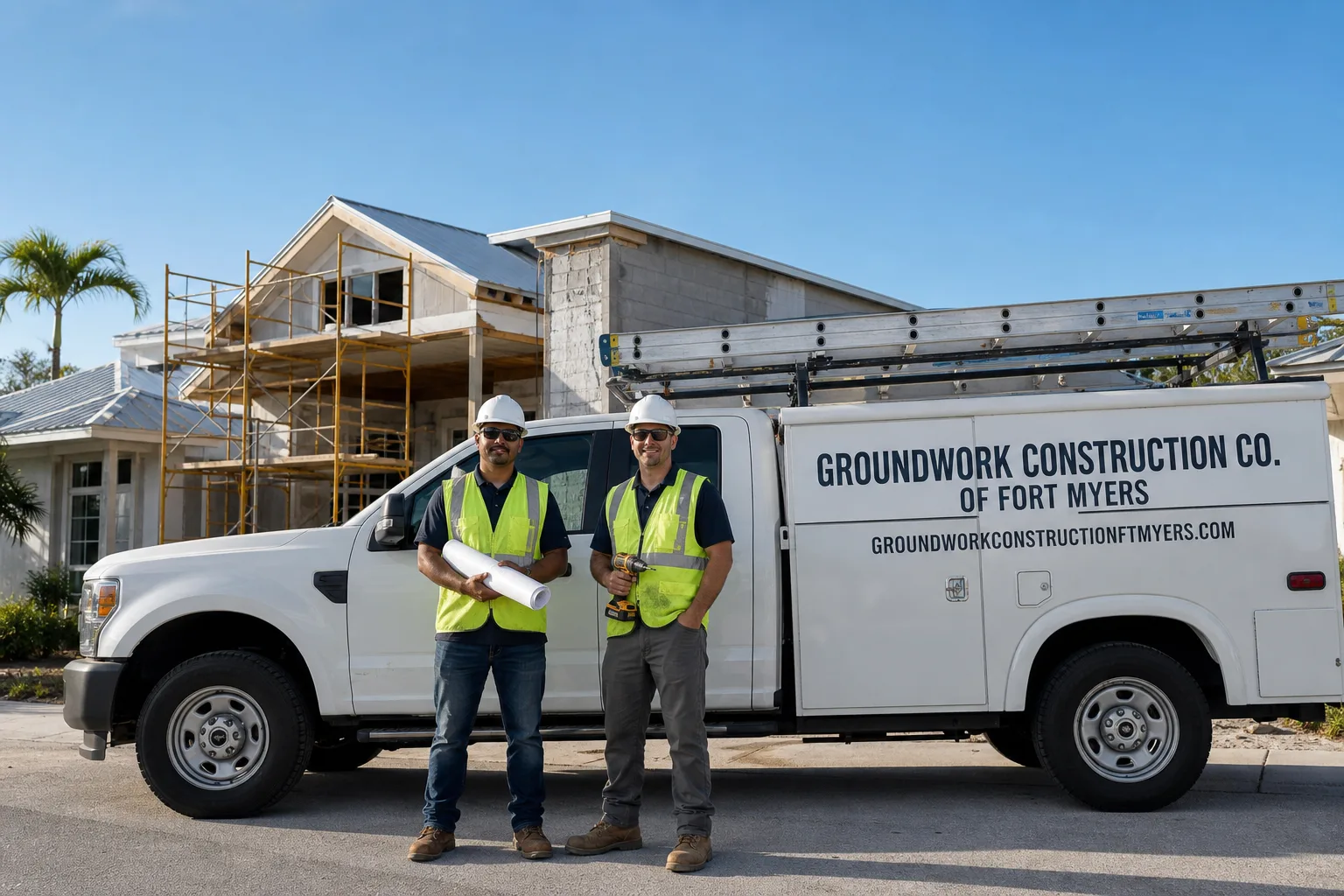
What a Tile Roofing Job in Charlotte Park Really Involves
A tile roofing job in Charlotte Park is either a full replacement or a targeted repair of a concrete or clay tile roof system on a coastal Florida home. Most full replacements take five to eight working days on a standard single-story ranch, with an additional one to two days for a permit-required final inspection. For repair work, like replacing cracked or storm-shifted tiles and re-flashing a penetration, we are typically done in a single day. Repair costs in Charlotte Park run $600-$2,500 and a full tile roof replacement on a typical 1960s-1980s concrete-block home lands between $12,000 and $28,000. Call (844) 638-7249 to schedule a free on-site estimate and we will give you a written, line-by-line number built for your specific roof.
The Step-By-Step Reality of a Tile Roofing Job
Most homeowners have never watched a tile roof go on or come off. Here is the actual sequence, day by day, so you know what to expect before we stage a ladder on your property.
Stage 1: The pre-installation audit and material order (2-3 days). Before a single tile is disturbed, our crew runs a full deck inspection, checking the condition of the existing underlayment and sheathing and confirming that the roof-to-wall hurricane straps and truss connections meet current Florida Building Code uplift standards for the coastal high-velocity wind zone Charlotte Park sits in. Charlotte Harbor exposure means we pay close attention to any signs of salt-corrosion on exposed steel connectors. You choose your tile profile and color during this stage. We place the material order that same day, and it usually lands at the site within 48 hours.
Stage 2: Demolition and dry-in (1-2 days). We strip the existing tile down to the deck, then remove and replace any sheathing that shows water damage, delamination, or fastener pull-through. A self-adhered, high-temperature-rated underlayment goes down next - this is your true waterproofing layer, not the tile itself. On Charlotte Park homes, we commonly find older 3/8-inch plywood sheathing with rusted-out staples that never met a modern nailing pattern. We replace it with code-compliant OSB or plywood and proper 8d ring-shank nails before underlayment is laid.
Stage 3: Flashing, penetrations, and perimeter metal (1 day). All pipe boots, chimney saddles, skylight curbs, and valley metal get upgraded to stainless or copper, never galvanized, because the salt air blowing off Charlotte Harbor eats galvanized metal in under five years. We install drip edge at the eaves and rake edges and set the two-part roof-to-wall flashing wherever a tile plane meets a vertical wall. This is the day most of the long-term leak prevention decisions get made.
Stage 4: Tile installation (2-3 days). We lay the tile from the eaves upward, fastening each piece to meet the wind-load calculations for Exposure C terrain (open water frontage along Charlotte Harbor). Hip and ridge tiles are set in a continuous bed of approved mortar or mechanically fastened with a proprietary ridge clip system, depending on the tile manufacturer’s specification and the wind-rating requirement. We cut tiles for valleys and perimeter edges on site with a wet saw, not a grinder, to keep the edges clean and the warranty intact.
Stage 5: Final walkthrough, punch list, and inspection (1 day). A crew lead walks the roof with a checklist, then walks the property perimeter with you. We sweep the yard and the gutters, run magnets for dropped fasteners, and photograph the finished work. The municipal inspector comes out - typically within 48 hours in Charlotte Park - and verifies the nailing pattern, underlayment lap, and tile attachment against the approved permit set. After the inspection passes, you have a closed permit and a finished roof.
The Tile Choices You Will Actually Make
You are not picking between a hundred options. For a Charlotte Park home, the decision almost always comes down to three real-world paths. Here they are, with the honest trade-off on each.
- Standard-weight concrete tile, flat or low-profile. This is the most common choice - sand-cast or machine-extruded concrete in a flat shake or low-roll profile. It costs less than clay, weighs about 600-700 lbs per square, and holds up well in wind when properly fastened. The trade-off: concrete is more porous than clay and will absorb some moisture during our wet summer months, so a high-quality underlayment matters more here than with any other tile type.
- High-profile barrel tile (concrete or clay). The S-tile or two-piece barrel profile is the look most people picture for a Florida Mediterranean roof. Concrete barrels are heavier and more affordable. Clay barrels are lighter, denser, and more fade-resistant - but they cost about 30-50% more and the lead time is longer. Both require a two-story staging setup because the curvature makes them harder to stack and walk on during install.
- Clay tile, flat or interlocking. Genuine fired clay, typically from a U.S. or European manufacturer. It holds its color for decades, resists the salt-air pitting we see on cheaper concrete, and carries the longest manufacturer warranty. The downside is cost - clay pushes a full roof replacement in Charlotte Park toward the high end of the $12,000-$28,000 range - and availability. A specialty clay order can take three to four weeks to land.
Every tile job also involves an underlayment choice. We default to a self-adhered, modified-bitumen sheet across the entire deck. It costs more than a synthetic mechanically fastened underlayment, but on a waterfront Charlotte Park lot, where wind-driven rain is a real threat, a fully adhered membrane underneath the tile is the only approach that makes sense as part of a full Roofing in Charlotte Park system that has to survive a named storm.
What Tile Roofing Costs in Charlotte Park, FL
Tile roof repair in Charlotte Park runs $600-$2,500. A complete tile roof replacement on a typical single-story home here lands between $12,000 and $28,000. If your job is an insurance claim repair after a wind event where only one slope is being re-tiled, the number usually falls in the $4,000-$9,000 range, depending on slope size and whether the underlayment on that slope is being replaced too.
What pushes the cost from the low end to the high end, in order of impact:
- Roof square footage and complexity. A 1,400-square-foot hip roof with six facets costs more per square to tile than a simple gable roof, because every hip and valley means a slower, more detailed cut-and-trim day. Multiple dormers or a steep pitch over 8:12 add staging time and safety equipment cost.
- Deck condition and structural repairs. On Charlotte Park homes built before Hurricane Charley, we frequently find sheathing that was never upgraded. Replacing a few sheets of rotted plywood adds a modest line item. Re-sheathing an entire roof deck because the original is 3/8-inch CDX with no edge clips puts the job at the high end of the range fast.
- Tile material and profile. A standard flat concrete tile is the most economical. A high-profile clay barrel, imported, adds thousands to the material line before labor is even factored. The labor to install barrel tile also runs higher because of the handling and cutting complexity.
- Flashing system and metal upgrades. A roof with four skylights, two chimneys, and a wall intersection at every plane needs far more custom flashing work than a clean uninterrupted hip roof. We use stainless steel or copper rather than galvanized anywhere near salt water, and that is a deliberate material cost increase that buys decades of additional service life.
- Permit scope and wind-load engineering. A straight tile-for-tile replacement where the deck and straps are untouched keeps the permit scope simple. A job where the truss-to-wall connection has to be retrofitted with a new hurricane tie and a signed engineer’s letter adds hard costs and a longer inspection timeline.
Our written estimate for tile roofing in Charlotte Park includes a square-footage breakdown, the specific tile product and underlayment by manufacturer name, the flashing spec, the permit fee, and a line for any structural repair we can see before we open the roof. We also flag what we cannot see - the deck condition under existing tile is unknowable until tear-off - and give you a worst-case deck-replacement allowance so you are never surprised by a change order.
What Charlotte Park Homes Specifically Do to This Job
Charlotte Park sits on the open water of Charlotte Harbor, and that changes almost everything about how a tile roof has to be installed and maintained. The 1960s-1980s single-story concrete-block and wood-frame homes that dominate the neighborhood were built before Florida’s post-Hurricane Andrew building code overhaul, and many were patched - not properly rebuilt - after Hurricane Charley tore through in 2004. Contractors working in Charlotte Park routinely pull a permit for what looks like a straightforward tile re-roof and discover that the existing roof-to-wall connection is held down with nothing but a few cut nails, or that the hurricane straps installed during a post-Charley insurance repair were put on backward.
Salt-air corrosion is the other constant. Steel fasteners, drip edge, and flashing that would last twenty years ten miles inland can show significant rust in five to seven years on a Charlotte Harbor-front lot. We spec stainless or copper for every exposed metal component and we inspect every truss connector we can access. The FEMA flood zone designation - most parcels here are high-risk AE or VE - does not usually govern a tile roof replacement on an existing structure unless the scope triggers a substantial improvement review, but it is something we flag during the estimate so you know exactly where you stand with your flood insurance before we pull the permit.
Because Charlotte Park absorbed so much unpermitted, rush-repair work in the months after Charley, we treat every tile roofing job here as a code-compliance audit first and a tile installation second. That is not a sales pitch. It is the only way to guarantee that the roof we install is fastened to a structure that will hold it in a storm.
Serving Charlotte Park, FL - Our Local Coverage Area
We’re based in the Charlotte Park area and offer Charlotte Park ADU Design & Permitting, and we know this community well. Use the map below to see our service coverage - if you’re nearby, we can almost certainly help.
Frequently Asked Questions About Tile Roofing in Charlotte Park
Five to eight working days is the standard timeline for a full tile roof replacement on a single-story Charlotte Park home, plus one to two days to close the final inspection, after our ADU Site Prep & Utilities service in Charlotte Park is complete if applicable. If the job requires significant deck replacement, structural strapping upgrades, or a specialty clay tile with a long lead time, the calendar stretches into a three-to-four-week window from permit pull to final sign-off. A tile repair - replacing broken tiles, re-flashing a pipe boot - is typically finished in one day.
Yes. Charlotte County requires a permit for any roof replacement and for any repair that involves more than a minor like-for-like tile swap. A tile roof repair that replaces underlayment or flashing also requires a permit. We pull the permit as part of our scope, and the job is not complete until the county inspector signs off. Unpermitted roofing work is a headache at resale and with your windstorm insurance carrier. Call (844) 638-7249 if you are unsure whether your repair scope triggers a permit; we will tell you straight.
You can replace individual broken tiles without touching the underlayment, and that is what most $600-$900 tile repairs in Charlotte Park consist of, unlike an Aluminum Fence - Charlotte Park installation which is a separate project entirely. But if the underlayment is original to a pre-2004 home, or if you see water stains on the soffit or ceiling, the underlayment is almost certainly compromised and a spot repair becomes a larger conversation. We give you an honest assessment during the estimate - not just what you asked for, but what the roof actually needs to stay watertight through the next hurricane season.
Most tile roof repairs in Charlotte Park fall between $600 and $2,500. A simple fix - replacing five or six cracked flat concrete tiles and re-bedding a section of ridge - sits at the low end. A more involved repair that requires stripping a section of tile, replacing a section of damaged underlayment, re-flashing a plumbing vent, and then re-installing the tile lands closer to $2,000-$2,500. Every estimate is free and written line by line.
A properly installed tile roof fastened to a code-compliant deck with the correct wind-load nail pattern and a fully adhered underlayment is one of the most wind-resilient roof systems available for a Charlotte Park home. The tile itself is heavy and aerodynamic when laid correctly, and the underlayment provides a secondary waterproofing barrier even if tiles are lost. The weak point is almost never the tile - it is the connection between the roof deck and the walls. That is why we inspect the strapping on every job, and why homeowners often pair a tile re-roof with Impact Windows & Doors in Charlotte Park to harden the entire exterior envelope at once.
Get a Straightforward, Written Estimate for Tile Roofing in Charlotte Park
If you need tile roof repair or a full tile roof replacement in Charlotte Park, we will walk the roof, give you an honest assessment of what is failing and what is still sound, and put a fixed, detailed number in your hands. No sales pressure, no pricing surprises after tear-off. Call Groundwork Construction Co. at (844) 638-7249 to schedule your free on-site estimate. A live person answers, and we will have a crew lead in front of your home within a few days.
Written by Derek Hollenbeck, Owner at Groundwork Construction Co., serving Florida homeowners with tile roofing and full-scope Roofing since 2014.