
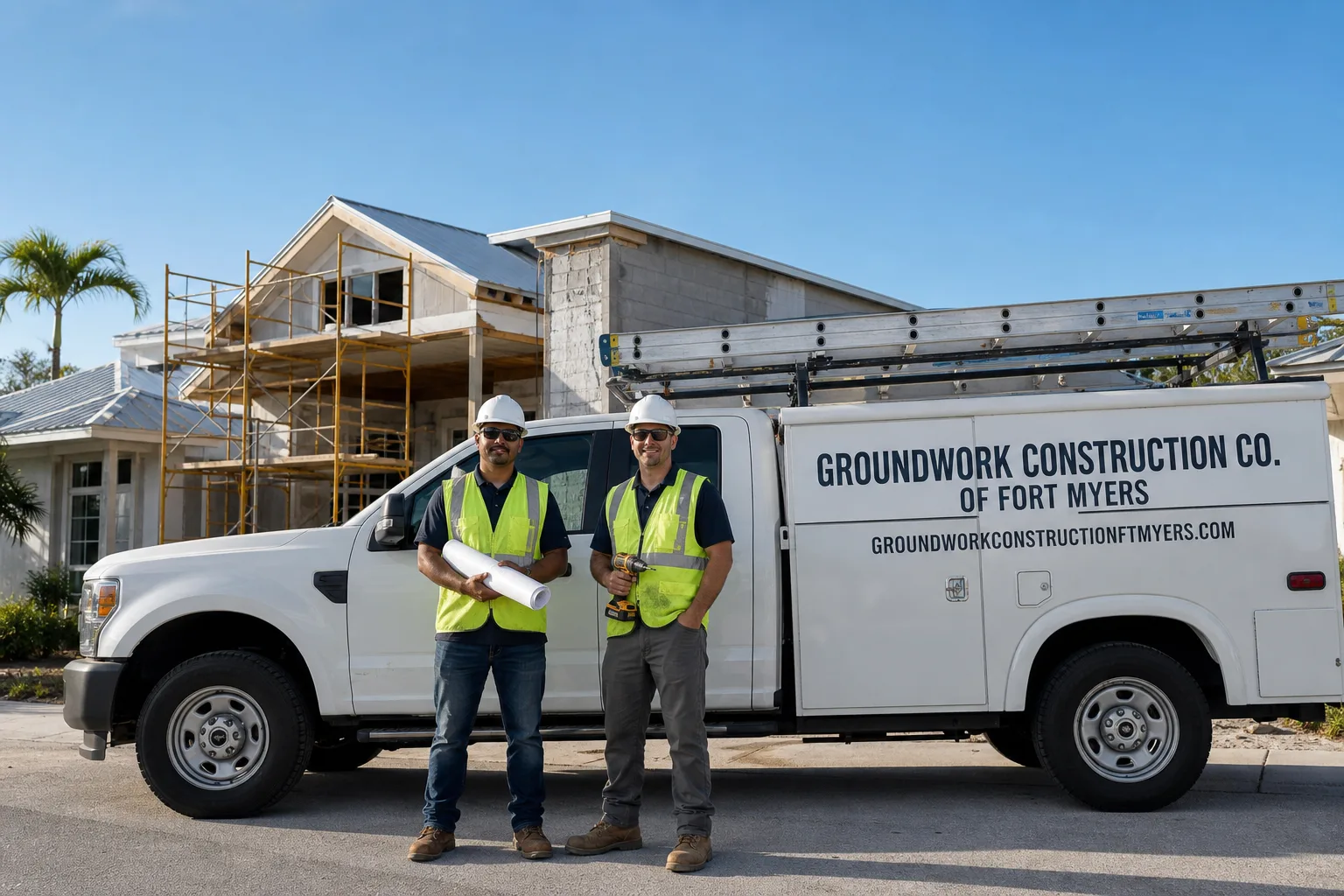
What Tile Roofing Actually Costs and Takes in Island Walk
Tile roofing in Island Walk typically runs $600-$2,500 for targeted repairs or $20,000-$45,000 for a full replacement on the community’s Mediterranean-style DiVosta homes. Most jobs we handle here are partial replacements on original late-90s and early-2000s concrete barrel tile that has cracked, slipped, or lost its underlayment after two decades of Florida sun and hurricane cycles. Call (844) 638-7249 for a free estimate with real numbers, no vague ranges.
We see the same pattern across Island Walk. The original tile itself is often still sound. Concrete tile can last 50 years. What fails is what sits underneath. The underlayment, the flashing at the valleys and penetrations, the fasteners that were never upgraded after the 2002 Florida Building Code changed attachment requirements. You’re not looking at a roof that failed early. You’re looking at a roof whose waterproofing layer lived out its 20-to-25-year service life right on schedule. The question is whether you catch it before the plywood decking starts to go.
How we handle tile roofing in Island Walk, step by step
Stage 1: Tile-by-tile condition assessment (Day 1, 2-3 hours)
We walk the entire roof, marking every cracked, chipped, and displaced tile. On Island Walk homes built 1996-2006, we usually find 15-40 damaged tiles per roof, concentrated near the hips and ridges where wind uplift hits hardest. We also check the underlayment at every penetration, chimney, vent stack, and skylight. If you’re seeing ceiling stains inside, we cut a small inspection port to check the decking. This stage gives you a decision document: repair the bad sections or replace the whole underlayment system.
Stage 2: Permitting and HOA submittal (2-7 days)
Collier County requires a reroof permit for any job that replaces more than 25% of the underlayment or tile field. We pull the permit, prepare the wind-mitigation documentation, and file the color and profile approval with Island Walk’s architectural review committee. The ARC here is particular about tile matching. DiVosta used specific Boral and later Eagle Roofing profiles, and we’ve tracked down the current equivalents so the new tile blends with the original. You’ll make your tile selection during this window if you’re doing a full or partial re-tile.
Stage 3: Tile removal, underlayment strip, and deck inspection (2-3 days)
Crews remove tile in sections, palletizing salvageable pieces for reinstallation. The old underlayment comes off, and we inspect every sheet of plywood decking. In Island Walk, roughly 30% of the roofs we open need some decking replacement, usually at the valleys and eaves where water pooled behind clogged gutters. We give you a square-footage count and price for any decking replacement before a single sheet gets cut. No surprises. With the decking exposed, we install a peel-and-stick secondary water barrier, which Florida code now requires for all reroofs in wind-borne debris regions.
Stage 4: Tile reinstallation and fastener upgrades (2-4 days)
Every tile goes back with the attachment pattern Florida’s current High-Velocity Hurricane Zone standard demands. For the original late-90s DiVosta roofs we see across Island Walk, that almost always means upgrading from the original single-nail attachment to a two-screw or foam-adhesive-set system, especially at the perimeter zones. Ridge caps get mechanically fastened and set in a polymer-modified mortar. This is the stage where the crew’s speed depends entirely on the roof’s complexity, barrel tile with its curves takes longer than flat profiles, and a roof with three hips and two valleys costs more in labor than a simple gable.
Stage 5: Final inspection and wind-mitigation certification (1 day)
The county inspector checks nailing patterns, underlayment laps, and flashing details. We walk the roof with you and show you every repair decision we made. You get a completed wind-mitigation report you can submit to your insurer, something that routinely saves Island Walk homeowners $800-$1,800 a year on premiums given the post-Ian market. The 730-Day Done Right Promise covers every fastener, every tile, and every inch of flashing.
The tile choices you’ll make, and what each one means
- Concrete barrel tile (like your originals): Eagle Roofing and Boral make profiles that match the DiVosta-era Mediterranean look closely. Concrete tile costs less than clay, holds its color well in Florida UV, and weighs about 900-1,100 pounds per square. Your existing roof structure was designed for this weight. No structural upgrade needed. This is what we install on 80% of Island Walk re-tiles.
- Clay barrel tile: Genuine clay brings a richer color depth and near-indestructible durability. It also weighs more and costs 30-50% more than concrete. For a full Island Walk roof, clay typically pushes the job $10,000-$15,000 above concrete. We order it when homeowners want an exact match to a high-end custom home or are willing to pay for a 75-year solution.
- Flat profile concrete tile (if you’re changing the look): A modern, cleaner aesthetic that some Island Walk owners choose when re-roofing the whole house. It still meets the community’s Mediterranean architectural guidelines if the color stays in the approved earth-tone palette. Slightly faster to install than barrel tile, which offsets some of the material cost.
- Underlayment upgrade (self-adhered vs. standard #30 felt): We strongly recommend a self-adhered peel-and-stick underlayment for every Island Walk roof. It seals around the fasteners and buys you years of waterproofing even if a tile cracks or blows off in a storm. The upgrade adds $1,200-$2,400 on a typical Island Walk roof. It’s the best money you’ll spend on a roof in hurricane country.
What tile roofing costs in Island Walk, FL
Tile roof repair in Island Walk runs $600-$2,500 depending on scope. A full tile roof replacement on a DiVosta Mediterranean home here falls between $20,000 and $45,000. That range isn’t vague. It’s driven by five variables we can measure on the first visit.
Roof square footage is the biggest lever. Island Walk homes range from roughly 1,500-square-foot attached villas to 2,800-square-foot single-family models with attached garages, and the roof area doesn’t track living space one-to-one. A complex hip roof on a 1,800-square-foot home can have more roofing surface than a simple-gable 2,200-square-foot design.
Decking condition comes second. Homes built 1996-2006 have now seen two decades of wet-dry cycles. When we strip the underlayment, if we find delaminated or rotted plywood, that’s $3-$5 per square foot to replace. On a roof that’s been leaking slowly into a valley for years, decking replacement can add $1,500-$4,000 to the job. We show you the wood before we touch it.
Tile profile matters. Barrel tile costs more in labor than flat tile because it’s slower to set and requires more cuts at hips and valleys. A full barrel-tile re-roof on a DiVosta original layout is the upper end of the range. Clay versus concrete moves the material cost substantially.
Perimeter attachment upgrades affect the number. Florida code requires stronger nailing or adhesive-set attachment at the roof’s edge zones. On an Island Walk roof with 300 linear feet of perimeter, that upgrade is built into our number. On a roof where we’re patching a smaller section, it may not apply, which keeps the repair estimate leaner.
Every written estimate we give in Island Walk includes the tile material, underlayment, fasteners, flashing, permit fees, dumpster, and the wind-mitigation report. What it doesn’t include is decking replacement we haven’t seen yet or structural repairs that only reveal themselves after the roof is opened. If we find either, you get a change-order price before the work proceeds. No-hassle upfront pricing, the number you see is the number you pay for the scope we’ve agreed on.
What Island Walk homes specifically do to this job
Island Walk was built almost entirely by DiVosta Homes between roughly 1996 and 2006, and every roof we work on here sits atop DiVosta’s signature solid poured concrete wall system. That matters for tile roofing in one critical way: the roof-to-wall connection. On a standard Florida CMU-block home, upgrading hurricane straps is a straightforward anchor-bolt process. On a DiVosta solid-concrete wall, installing or retrofitting the roof-to-wall tie-down requires core-drilling into a monolithic pour and setting epoxy-anchored hardware, a step that demands specialized tooling and experience with this exact construction method. Contractors who’ve only worked on block homes have walked off Island Walk jobs because they didn’t budget for the core-drilling step. We know it’s coming and price it from the start.
Collier County permitting for a tile reroof here triggers a wind-mitigation inspection as part of final sign-off. The county wants to see the secondary water barrier, the fastener schedule, and the opening-protection compliance. Island Walk’s architectural review committee also requires color samples and a profile spec before you start. We handle both submittals. The climate reality is straightforward: these roofs face 160-plus days of direct sun per year plus the June-through-November storm window. The original DiVosta tile held up. The underlayment underneath didn’t. That’s the job, every time.
If you’re already re-roofing, a number of Island Walk homeowners use the same project window to upgrade to impact-rated windows and doors, an upgrade that stacks wind-mitigation credits and simplifies the insurance conversation. We handle the full scope when it makes sense, whether that means coordinating tile roofing as part of a wider Roofing in Island Walk project or running the Roofing crew alongside our window team. For homes near the lake and canal edges, we also pay close attention to flood-zone requirements on any structural attachment details, something our Island Walk work routinely involves. Homeowners often pair tile roofing with Impact Windows & Doors in Island Walk to get the full insurance discount in one pass, and when the roof is open, it’s the right time to address any Sliding & Patio Doors in Island Walk that are original and showing their age.
Serving Island Walk, FL - Our Local Coverage Area
We’re based in the Island Walk area and know this community well. Use the map below to see our service coverage - if you’re nearby, we can almost certainly help.
Frequently asked - Tile Roofing in Island Walk
A partial tile repair with underlayment patching takes one to two days. A full tile roof replacement on an Island Walk DiVosta home runs seven to ten working days from tear-off to final inspection. Permitting and HOA approval add one to two weeks before the crew arrives. Weather can stretch the schedule during summer afternoons when lightning shuts down roof work, something we build into the timeline in June through September.
Yes, if the job exceeds 25% of the roof area or involves underlayment replacement, which nearly all Island Walk tile roofing work does. Collier County issues the permit, and the job requires a final inspection. We pull the permit as part of the project and include the fee in your estimate. The Island Walk HOA also requires architectural review approval for any visible material change, including tile color and profile.
In most cases, yes. DiVosta used concrete barrel tile from manufacturers that are still producing, including current Eagle Roofing and Boral profiles in the earth-tone colors approved for the community. We bring physical samples to your estimate so you can see the match in natural light against your existing roof. If your specific color has been discontinued, we’ll find the closest approved alternative and submit it to the ARC for you.
A targeted tile repair here runs $600-$2,500 depending on how many tiles are damaged and whether the underlayment underneath needs patching. A full tile roof replacement on a typical Island Walk home ranges from $20,000-$45,000. If the underlayment is failing in multiple sections, which is common on the original 1996-2006 roofs, replacing the whole system now costs less than chasing leaks section by section over the next five years. Call (844) 638-7249 for a free on-site estimate with exact numbers for your roof.
Every tile roofing job we do, repair or full replacement, is covered by the 730-Day Done Right Promise. If something isn’t right, we make it right. The tile manufacturer’s warranty runs separately and covers material defects for the rated lifespan of the product, 50 years on the concrete tile we typically specify. The underlayment and flashing workmanship is on us for two full years.
Get a free tile roofing estimate in Island Walk
Call (844) 638-7249 and you’ll reach a live person, not a voicemail. We’ll schedule a free on-site estimate for your tile roofing work in Island Walk, walk the roof with you, and hand you a written, line-item price that covers the full scope. No ranges, no change orders unless the decking underneath tells a story the surface didn’t. Our crew shows up in uniform and background-checked. Upfront pricing and a 730-Day Done Right Promise on every job, from the first tile to the last.
Written by Derek Hollenbeck, Owner at Groundwork Construction Co., serving Island Walk with tile roofing expertise and a no-surprises guarantee.