
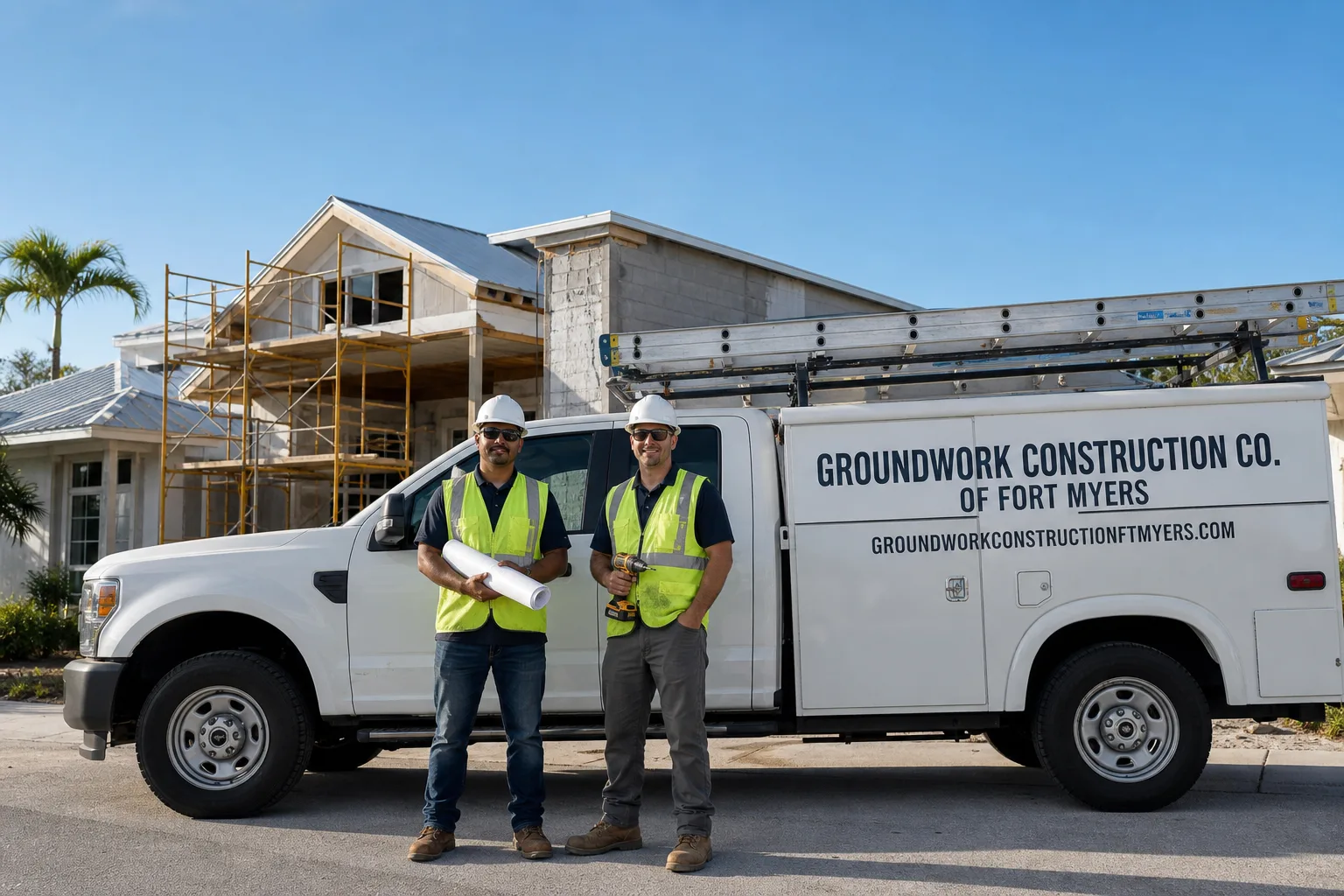
What Tile Roofing in Punta Rassa Actually Costs and How Long It Takes
Tile roofing in Punta Rassa typically runs between $18,000 and $65,000 for a full installation on an average luxury waterfront home, with repair work on existing tile roofs falling in the $600 to $2,500 range. A standard whole-roof tile job on a Punta Rassa elevated home takes about two to three weeks from tear-off to final inspection, though complex post-Ian rebuilds with deep-pile foundation coordination can stretch that to four or five weeks. Call (844) 638-7249 for a free, written estimate specific to your property.
We focus on concrete and clay tile roofing here because that’s what Punta Rassa demands. The combination of salt-spray exposure off San Carlos Bay and the Caloosahatchee mouth, mandatory VE-zone wind-load requirements, and the reality that virtually every structure in this community has been rebuilt or substantially elevated since Ian means shortcuts don’t exist. You’re not just picking a roof color. You’re choosing a system that has to hold together when the next storm funnels water up the estuary exactly the way Ian did in 2022.
That’s the lens we work from, and it shapes every material choice, every fastener specification, and how we sequence the job around your seawall and dock infrastructure. If you’re also tackling the rest of the envelope after storm damage, many homeowners here pair tile roofing with Impact Windows & Doors in Punta Rassa to get the full wind-borne debris protection dialed in at the same time.
How We Install a Tile Roof in Punta Rassa - The Real Sequence
Tile roofing on a coastal VE-zone home doesn’t start on the roof. It starts with paperwork and a hard look at what the original structure left behind. Here’s the actual stage-by-stage process we follow on Punta Rassa jobs, with the timelines and decision points that matter.
Stage 1 - Engineering and permit lock-in (3 to 7 days before anything touches the roof). Because nearly every Punta Rassa property is in a FEMA VE flood zone and subject to Lee County’s post-Ian substantial damage determinations, the roof assembly has to be engineered as part of the overall wind-load and elevation package. We pull the existing structural drawings, confirm the uplift ratings the county requires, and submit the full permit set before ordering materials. This is not a formality. Lee County plan review for coastal VE-zone tile roofs will kick back anything that doesn’t account for the exposure category and mean roof height of your specific elevated slab or piling footprint. We handle that, but you should budget the time.
Stage 2 - Tear-off and deck inspection (1 to 3 days). If we’re replacing an existing tile roof, the old tile, underlayment, and flashings come off down to the deck. On Punta Rassa homes built or rebuilt after Ian, the deck is almost always CDX plywood or a premium OSB over reinforced concrete block or stem-wall framing. We inspect every square foot for salt-driven fastener corrosion at the deck-to-truss connections before anything new goes down. If we find corroded connectors, that’s the moment we flag it. Better now than after tile is loaded.
Stage 3 - Underlayment, flashing, and secondary water barrier (2 to 4 days). Tile is a water-shedding system, not a waterproof membrane on its own. The real waterproofing lives here. We install a high-temperature self-adhered underlayment (typically a modified bitumen or synthetic product rated for 130°F+ surface temps) over the entire deck, then flash every penetration, valley, and sidewall with stainless-steel or hot-dipped galvanized metal. In Punta Rassa’s salt-spray environment, standard galvanized flashing corrodes in under five years. We spec marine-grade metal on every job. This is also when we install the perimeter edge metal and any required drip-edge profiles that tie into the fascia and soffit assembly.
Stage 4 - Tile loading, layout, and fastening (5 to 8 days). Concrete or clay tile arrives on pallets, and we stage it across the roof to distribute weight evenly. Each tile is either nailed or screwed per the manufacturer’s wind-load chart for Exposure D (coastal) conditions. In VE zones, that often means every tile gets a mechanical fastener, not just every third or fifth. Ridge and hip tiles get bedded in a polymer-modified mortar with mechanical attachment as backup. This is the stage where tile profile - flat, S-shape, or barrel - most affects the labor pace. Barrel tile takes longer to lay and cut around hips and valleys, but it’s the profile most Punta Rassa homeowners choose for the Mediterranean and Spanish-revival look that dominates the waterfront lots here.
Stage 5 - Final detailing, inspection, and close-out (1 to 2 days). We finish the ridge caps, seal any exposed fasteners, and walk the entire roof for cracked or misaligned tiles. Lee County sends a structural and roofing inspector, and we’re on site for that walkthrough. Once it passes and the job site is cleaned down to the last tile chip, we hand you the warranty documentation and the manufacturer’s care guide.
The Tile Options You’ll Choose Between
You’re making three real decisions on a tile roof in Punta Rassa: material, profile, and color. Each one pulls the cost and the long-term performance in a different direction. Here’s how we talk through them with homeowners.
- Concrete tile. Heavier, more affordable per square foot, and available in a wide range of profiles and colors. Concrete holds up to salt spray well when the factory finish is intact, but it will absorb moisture if the surface erodes over decades. In a coastal VE zone, that means you want a high-quality polymer-coated or through-color concrete tile - not the entry-level painted product. Expect to replace underlayment on a concrete tile roof in Punta Rassa roughly every 25 to 35 years, even when the tile itself has more life left.
- Clay tile. The premium option, and the material you see on the highest-end Punta Rassa waterfront estates. Clay is naturally impervious to salt, doesn’t fade, and carries a look that’s hard to replicate. It’s also brittle, more expensive to ship and handle, and demands a very precise layout because broken tiles during installation are a real cost risk. If your home’s post-Ian elevation puts the roof at a steep pitch or has complex hip-and-valley geometry, clay tile labor will run noticeably higher than concrete.
- Profile choices: flat, S-shape, or barrel. Flat tile (sometimes called shake-style) installs fastest and sheds water efficiently on lower slopes. S-shape (mission-style) interlocks and creates the classic Spanish tile shadow line. Barrel tile (two-piece or one-piece) gives you the deepest contour and is the go-to for Punta Rassa luxury homes aiming for that Old World coastal profile. The trade-off: barrel tile costs more in labor and weighs more, which matters if your structural engineer is already pushing the limits of an elevated pile foundation.
- Color and finish. Lighter colors reflect more heat and keep the attic cooler - relevant when your roof is baking under the Punta Rassa sun with no tree cover. Darker profiles look sharper against white stucco but absorb more UV. Every manufacturer we use, from the names we trust like Oldcastle and Quikrete tile divisions, offers a range of through-body and surface-coated options we can walk you through with full samples.
What Tile Roofing Costs in Punta Rassa, FL
A full tile roofing installation in Punta Rassa lands between $18,000 and $65,000. Most of the post-Ian rebuilds we price fall in the $28,000 to $45,000 range for a standard two-story elevated home with roughly 2,200 to 3,500 square feet of roof deck. Repair-only work - replacing broken tiles, addressing a leak at a valley or flashing, or fixing storm-lifted ridge caps - runs $600 to $2,500 depending on how many tiles and what access looks like.
Here’s what moves the number on your job:
- Roof deck size and complexity. Square footage drives material quantity, but the real cost multiplier is geometry. A simple gable roof with two planes tiles out fast. A cut-up hip roof with turrets, crickets, and four valleys takes far more labor per square. Punta Rassa custom homes tilt toward the latter.
- Concrete vs. clay. Clay tile material can cost 30 to 50 percent more than concrete before you account for the extra handling and breakage. On a $35,000 concrete tile job, the clay equivalent might push $48,000.
- Deck condition and fastener retrofit. If the tear-off reveals corroded straps, clips, or truss connectors - and in this salt-spray environment, it often does - we stop and address those before tile loads the roof. That work isn’t in a basic roofing quote, and in Punta Rassa it can add $1,500 to $4,000 depending on scope.
- Elevation and access. Post-Ian homes elevated 10 to 14 feet on pilings or stem walls are harder to stage. Material loading takes longer, and safety setup is more involved. Scaffolding and lift equipment costs show up in the estimate line items.
- Permit and engineering scope. Lee County VE-zone permits for roofing that ties into the structural wind-load package are more expensive and require more engineering review than a standard re-roof inland. We carry those costs in the estimate so they’re not a surprise.
Every estimate we write for tile roofing in Punta Rassa is a line-item, fixed-price document. It shows material grades, fastener specs, underlayment type, flashing metal, and the permit line. What it usually does not include unless we’ve specifically scoped it: deck replacement beyond isolated sheathing repair, full truss or rafter retrofit, and any separate marine-contractor work on seawall tie-ins that the South Florida Water Management District permit might require. Those get flagged up front so you know what’s ours and what might need a separate trade. Call (844) 638-7249 and we’ll price your roof specifically - the estimate takes about an hour on site and costs you nothing.
What Punta Rassa Homes Specifically Do to a Tile Roofing Job
Punta Rassa sits at the exact funnel point where Hurricane Ian’s surge compressed into the Caloosahatchee estuary in September 2022, and the result was near-total structural damage across the peninsula. Virtually every habitable building here received a Lee County “substantially damaged” determination, which triggered mandatory rebuilds to current FEMA VE-zone base flood elevations - often three to five feet higher than the pre-Ian slab heights. That means the tile roofs we install here aren’t going onto 1990s-era ground-level ranch homes. They’re going onto brand-new or recently-elevated concrete block and reinforced CBS structures perched on deep pilings or raised stem walls, with every component engineered to a coastal high-hazard standard.
The practical effect on roofing: we’re not matching old tile profiles to a 30-year-old addition. We’re installing full new tile roofing systems on structures where the roof deck, truss package, and uplift strapping were all designed together under the current Florida Building Code coastal requirements. That’s a cleaner job in many ways, but it also means any roof penetration, any valley detail, and every single piece of flashing has to work within a wind-load calculation that treats the roof as part of a unified structural system - not an isolated cover.
The salt-spray factor is relentless here. Punta Rassa occupies a narrow peninsula fully open to San Carlos Bay and the river mouth, with nothing blocking the marine aerosol that rolls in on every breeze. Standard electro-galvanized fasteners and flashing corrode aggressively. We spec stainless-steel or hot-dipped galvanized hardware on every exterior metal component, and we use polymer-modified underlayments and mortars rated for prolonged moisture exposure. This isn’t an upgrade. It’s the minimum for tile roofing to survive a decade here without rust streaks bleeding through the tile.
There’s also the dock-and-seawall coordination that’s unique to Punta Rassa. Because so many homes were forced to elevate on new deep-pile foundations, the roof drainage and gutter systems often have to discharge into a site-grading plan that was engineered around existing seawall caps and marina-edge infrastructure. That’s a coordination point between us, the general contractor on the Roofing in Punta Rassa scope, and any marine contractor still finishing dock work. We’ve done enough post-Ian jobs here to know the sequence cold, but it’s not a variable you’ll run into on a tile roof in Fort Myers or Cape Coral.
For homeowners thinking about the full exterior package after a rebuild, we often see Sliding & Patio Doors in Punta Rassa get scheduled in the same window, since the rough openings and flashing details tie directly into the weather-resistive barrier that runs up to the roofline. Our Roofing crew coordinates that handoff so the envelope is continuous and water-shedding from top to bottom. If you’re in Punta Rassa and looking at tile roofing as part of a larger post-Ian rebuild, we can look at the whole job and sequence it so the trades aren’t stepping on each other.
Serving Punta Rassa, FL - Our Local Coverage Area
We’re based in the Punta Rassa area and know this community well. Use the map below to see our service coverage - if you’re nearby, we can almost certainly help.
Frequently Asked - Tile Roofing in Punta Rassa
Plan on two to three weeks from tear-off to final inspection for a standard elevated single-family home. Complex cut-up roofs with barrel tile, or jobs that uncover corroded deck fasteners requiring retrofit work, can push to four or five weeks. The Lee County permit and engineering review ahead of the start typically takes another five to seven business days, so total timeline from signed contract to done is usually four to six weeks. We’ll give you a dated schedule in the estimate. Call (844) 638-7249 to get one started.
Yes, and it’s not a simple over-the-counter permit. Every tile roofing job on a Punta Rassa property in a VE flood zone requires a full Lee County building permit with structural engineering for wind-load and uplift compliance. We pull the permit, provide the engineering, and manage the inspections - but you should know that plan review for coastal tile roofs here takes longer than an inland re-roof, and the county inspector will verify fastener spacing, underlayment laps, and flashing gauge at multiple stages before signing off.
It shouldn’t, and with our upfront pricing it doesn’t, unless the tear-off uncovers a structural issue nobody could see from below - like rusted-out truss connectors or deck sheathing that’s delaminated from years of salt-driven moisture intrusion. If we find something, we stop, show you photos, and give you a fixed-price change order before we touch it. You approve it or we don’t do it. That’s rare on post-Ian new-elevation homes, more common on the few older structures that were repaired rather than fully rebuilt. Either way, the base roofing number in your estimate is locked.
Tile roof repair here runs $600 to $2,500. A few broken or slipped tiles after a storm - usually the low end, assuming no underlayment damage. A leaking valley or sidewall flashing replacement with corrosion repair - mid to high end. The biggest variable on Punta Rassa repair work is access: if the damaged section is on a steep elevation over a seawall or dock edge, we need lift equipment or scaffolding that adds cost. Call (844) 638-7249 and we’ll come look. The estimate is free.
The tile manufacturer’s material warranty - typically 50 years on concrete and 75-plus on clay - covers defects in the tile itself. The underlayment and flashing system carries a separate manufacturer warranty, usually 20 to 30 years for the high-temperature self-adhered products we use. Our workmanship on every tile roofing job in Punta Rassa is backed by the 730-Day Done Right Promise: if it’s not done right, we make it right. That’s one of the longest workmanship guarantees you’ll find in residential roofing, and it applies regardless of how corrosive the coastal air gets.
Get a Free, Written Estimate for Tile Roofing in Punta Rassa
If you’re planning a tile roof on a Punta Rassa rebuild or repairing an existing one after storm damage, call (844) 638-7249. We’ll schedule an on-site walkthrough, write a fixed-price estimate with the material specs, fastener grades, and timeline specific to your property’s VE-zone requirements, and answer any questions about how the roof ties into the rest of your exterior envelope. Calls are answered by a live person, 24/7 - leave a message at 2 a.m. and a real human calls you back, not a sales queue the next business day. The estimate is free, and there’s zero pressure to sign until you’ve seen the numbers on paper.
Written by Derek Hollenbeck, Owner at Groundwork Construction Co., serving Punta Rassa with tile roofing built for the coastal conditions this peninsula demands.