
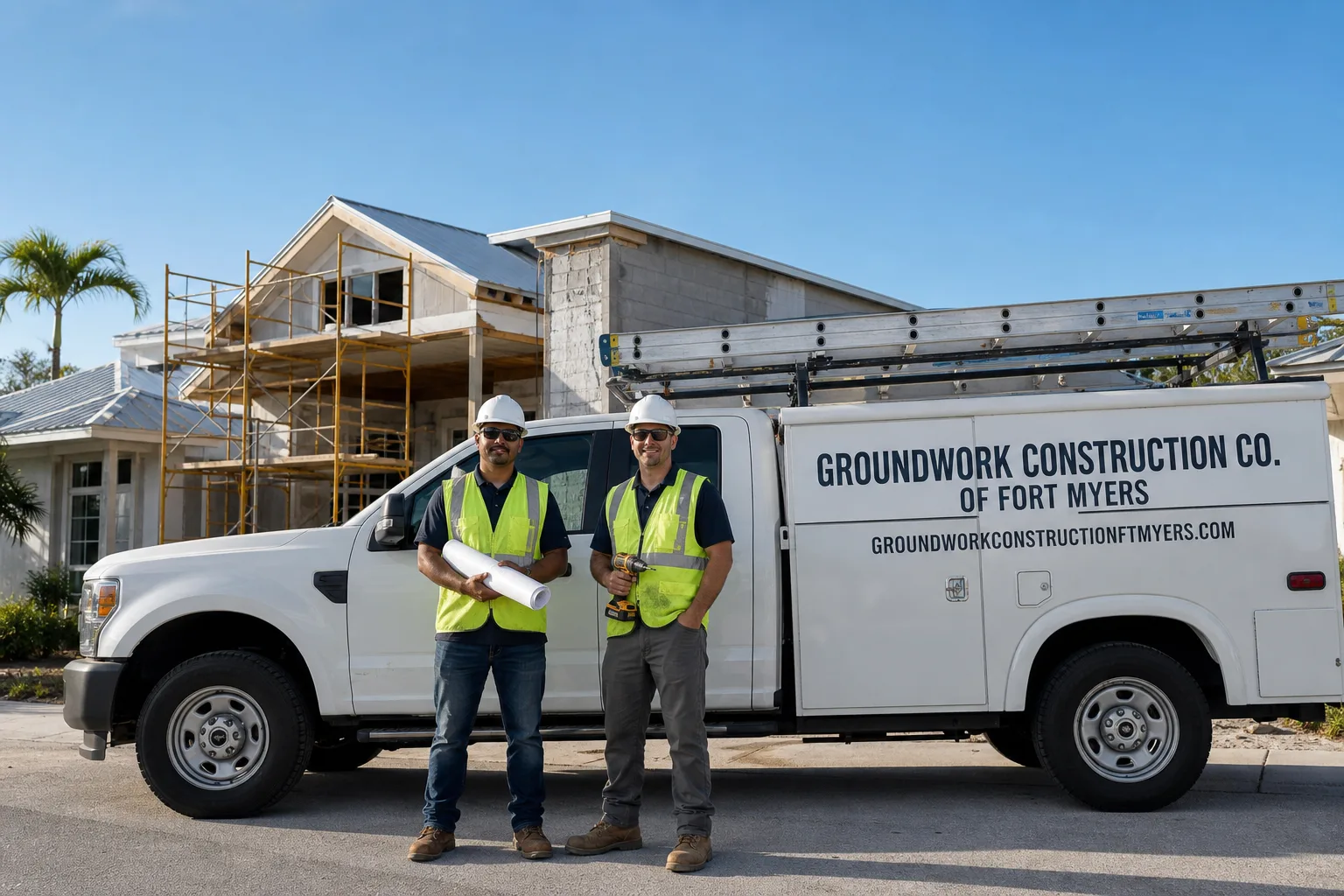
What a Vinyl Fence in Harlem Heights Really Costs and What to Expect
A vinyl fence installation in Harlem Heights, FL typically runs $3,500 to $9,000 and takes three to five working days from post-hole to final walk-through. The wide range turns on four things: linear footage, the number of gates, whether an old fence needs demolition, and how much post-Ian soil compaction complicates the footing depth. Call (844) 638-7249 for a free, line-item estimate that accounts for your specific property and the permitting reality here in unincorporated Lee County.
How We Build a Vinyl Fence: Stage by Stage
Vinyl fence work follows a real sequence, not a mystery timeline. Here’s what happens from the day we show up to the day we hand you the final invoice.
1. Site Mark and Utility Locate (Day 1, 1-2 hours)
We mark the fence line with paint and flags, then confirm that Sunshine 811 has cleared the underground utilities. Harlem Heights has a mix of older direct-burial electric services and newer conduit, and a single misread of an abandoned line can blow a day. You decide the exact gate swing and latch placement at this stage. We adjust on the spot so there are no surprises after posts go in.
2. Post-Hole Digging and Concrete Setting (Day 1-2)
Posts go 30 to 36 inches deep, with a 10-inch diameter concrete footing poured around each post. The depth isn’t arbitrary: Lee County wind-load requirements after Hurricane Ian mean we bottom out below the organic topsoil that’s been saturated and re-compacted across so many Harlem Heights lots. We use Sakrete high-strength concrete mix, and we let it cure overnight before rails go on. If we hit construction debris from a 2004 or 2022 rebuild, we stop and clear it rather than forcing a post where it doesn’t belong.
3. Rail and Panel Assembly (Day 2-3)
Bottom and top rails lock into routed post slots, then vinyl panels slide in one by one. We shim and level continuously. The material expands and contracts about a quarter-inch per eight-foot section in Florida heat, so we leave the specified gap at each post pocket. Skip that step and you get buckling by August. Gate posts get an extra half-bag of concrete and a steel stiffener insert, standard on every gate we hang.
4. Gate Hardware and Latch Adjustment (Day 3-4)
Gates are where most vinyl fences start showing wear first. We use stainless steel hinges and latch hardware, not the zinc-plated kits that come in the box. Salt air moving inland from the Gulf chews through zinc in two years. We adjust every gate so it swings freely without dragging, then we walk the line with you to confirm the swing direction and auto-close tension before we call it done.
5. Final Walk-Through and Cleanup (Day 4-5)
We pull every scrap of vinyl cut-off, every concrete bag, and the old fence debris if we demoed one. You walk the finished fence with the crew lead, and anything that isn’t plumb, straight, or operating smoothly gets corrected on the spot. The 730-Day Done Right Promise covers what happens after we leave, too. If a gate sags or a post shifts inside that window, we come back and make it right.
The Options You’ll Choose Between
Vinyl fence isn’t a single product. You’re picking between panel styles, post configurations, and gate types, and each choice changes the look, the privacy level, and the final price.
- Privacy vs. semi-privacy panels. Full-privacy tongue-and-groove panels block sightlines completely. Semi-privacy panels have a small gap between pickets that lets wind through. In Harlem Heights, where a lot of lots back up to drainage easements or retention ponds, the wind-load difference matters. Full-privacy panels catch more wind and require closer post spacing. Semi-privacy panels shed wind and can often span a standard eight-foot section with fewer intermediate posts, trimming material cost.
- Post reinforcement. Every gate post and every corner post gets a galvanized steel stiffener inside the vinyl sleeve. You can opt to stiffen every line post as well. It adds roughly $12 to $18 per post in material and keeps the fence dead straight across longer runs. On properties with soft post-Ian fill soil, stiffened line posts nearly eliminate the wave that shows up after two wet seasons.
- Gate width and hardware grade. A standard walk gate is 42 inches. A double drive gate for boat or trailer access runs 10 to 12 feet. Bigger gates need heavier stainless hardware and a steel frame insert inside the gate stile. We standardize on stainless components because the corrosion rate in this part of Lee County makes anything less a short-term decision.
- Color and profile. White is the most common, but tan and clay colors are available and hold up identically under UV. The pigment runs all the way through the extrusion, so a scratch won’t expose a different color underneath. Profile-wise, a flat-top panel reads more contemporary; a scalloped or lattice-top panel reads more traditional. Both use the same rail-and-pocket system.
What a Vinyl Fence Costs in Harlem Heights, FL
$3,500 to $9,000 is the range for a typical residential vinyl fence in Harlem Heights. The low end gets you roughly 100 linear feet of semi-privacy fence with one walk gate and no demolition. The high end covers 200-plus linear feet of full-privacy fence with a double drive gate, demolition and haul-off of an old wood or chain-link fence, and steel stiffeners in every post.
What pushes the number:
- Linear footage is the biggest lever. Every additional 50 feet adds roughly $1,200 to $1,800 in material and labor.
- Gate count and type swings the price fast. A single walk gate adds $400 to $700. A double drive gate with a steel frame can add $1,200 to $2,000 depending on width and hardware.
- Old fence demolition runs $3 to $6 per linear foot. If the old posts were set in concrete, removal takes longer and the debris load is heavier. Harlem Heights has a lot of 1960s and 1970s chain-link posts sunk in foot-wide concrete balls that don’t pull out easily.
- Soil conditions and access affect labor hours. Tight side yards, buried stumps from hurricane-cleared trees, and saturated clay all slow the post-hole work.
- Permit fees are a fixed cost but worth mentioning. Lee County’s permit fee schedule applies here, and post-Ian the review timeline can stretch. We handle the paperwork, but the fee is a separate line item on every estimate.
Every written estimate from us is a fixed-price, line-item breakdown. You see the per-foot material cost, the post count, the gate hardware spec, the demolition line, and the permit fee as separate numbers. No “miscellaneous” padding. Our upfront pricing means the number you approve is the number you pay.
What Harlem Heights Homes Specifically Do to a Vinyl Fence Job
Harlem Heights sits squarely in the Hurricane Ian ground-zero rebuilding zone, and that changes vinyl fence work in ways that don’t apply five miles east. A lot of the homes here are concrete-block ranchers built between the 1950s and early 1980s. Construction crews working these properties regularly uncover old fence posts set in crumbling, salt-damaged concrete, or sections where the 2022 storm surge saturated the slab edge and left the soil spongy two years later.
Practically, that means we check footing compaction before we dig. On lots where Ian’s flooding stood for hours, we auger a test hole and look for organic layers that have never fully dried. If the soil won’t compact to code, we over-dig the post hole by four inches and backfill with a drier crushed-stone mix before concrete goes in. It adds an hour to the job and keeps posts from leaning after the first heavy rainy season. The salt air is the second factor. Inland from the Gulf as Harlem Heights is, airborne salt still carries far enough to pit standard hardware, so we default to stainless on every fastener, hinge, and latch. Our fence installation crews keep a dedicated permit liaison relationship with the Lee County office on Colonial Boulevard because the post-Ian inspection backlog remains real. A missed reinspection window here can push a project close-out back further than it would in Fort Myers proper, and nobody wants a finished fence sitting without a signed final for two extra weeks.
Many Harlem Heights lots back up to drainage easements or county-maintained canals. If your fence line touches an easement, the county requires a surveyor’s signed setback verification. That’s a separate step we coordinate, but it’s not optional. We flag it at the estimate stage so the permit packet is complete on the first submission.
Serving Harlem Heights, FL - Our Local Coverage Area
We’re based in the Harlem Heights area and know this community well. Use the map below to see our service coverage - if you’re nearby, we can almost certainly help.
Frequently Asked Questions About Vinyl Fence in Harlem Heights
Yes. Unincorporated Lee County requires a fence permit with a site plan showing the proposed fence line, setbacks from property lines and easements, and gate swing arcs. We prepare and submit the permit packet as part of every Fence Installation in Harlem Heights project. The county’s post-Ian review queue can take longer than the historical norm, so we recommend starting the paperwork early. Call (844) 638-7249 and we’ll walk you through the timeline.
Three to five working days from layout to final walk-through. Day one is marking and post-hole digging with concrete pour. Days two and three are rail and panel assembly. Day four is gate hardware and adjustments. If we’re demolishing an old fence, add half a day. Weather and county inspection scheduling can shift the final day, but the physical build itself is under a week on almost every residential lot in Harlem Heights.
Not unless we uncover a subsurface condition that nobody could have known about before digging. A buried concrete footer from a demolished pool, an unmarked septic line, or a phone cable that 811 missed are the kinds of things that trigger a change-order conversation. We photo-document every surprise and give you a fixed price for the extra scope before we touch it. Otherwise, the estimate is the price.
The vinyl material carries a manufacturer’s limited lifetime warranty against cracking, peeling, and UV fading. Our workmanship is covered by the 730-Day Done Right Promise. If a post shifts, a gate sags, or a panel separates at the seam inside two years, we come back and fix it at no charge. For homeowners in Harlem Heights who are also tackling the rest of the property, we often see this paired with Driveway Repair & Replacement in Harlem Heights for a full exterior overhaul.
A properly installed vinyl fence with steel-reinforced posts and stainless hardware will survive tropical-storm-force winds. No fence is hurricane-proof at Category 3 or above, and vinyl panels can crack if hit by flying debris. What we can control is the footing depth, the post spacing, and the hardware spec. We build every Harlem Heights fence to Lee County’s current wind-load standard, which was tightened after Ian. Some homeowners doing full property updates combine this with Asphalt Driveways & Resurfacing in Harlem Heights so the entire exterior is on the same timeline.
Get a Free Vinyl Fence Estimate in Harlem Heights
A new vinyl fence here in Harlem Heights starts with a no-pressure on-site measure and a fixed-price estimate you can hold us to. We’ll walk the property with you, talk through panel style and gate placement, check the soil, and hand you a line-item quote before we leave. Call (844) 638-7249 to schedule yours. A live person answers, day or night, and there’s no voicemail tag. Just a straight answer and a time on the calendar.
Written by Derek Hollenbeck, Owner at Groundwork Construction Co., serving homeowners across Southwest Florida since 2014.