
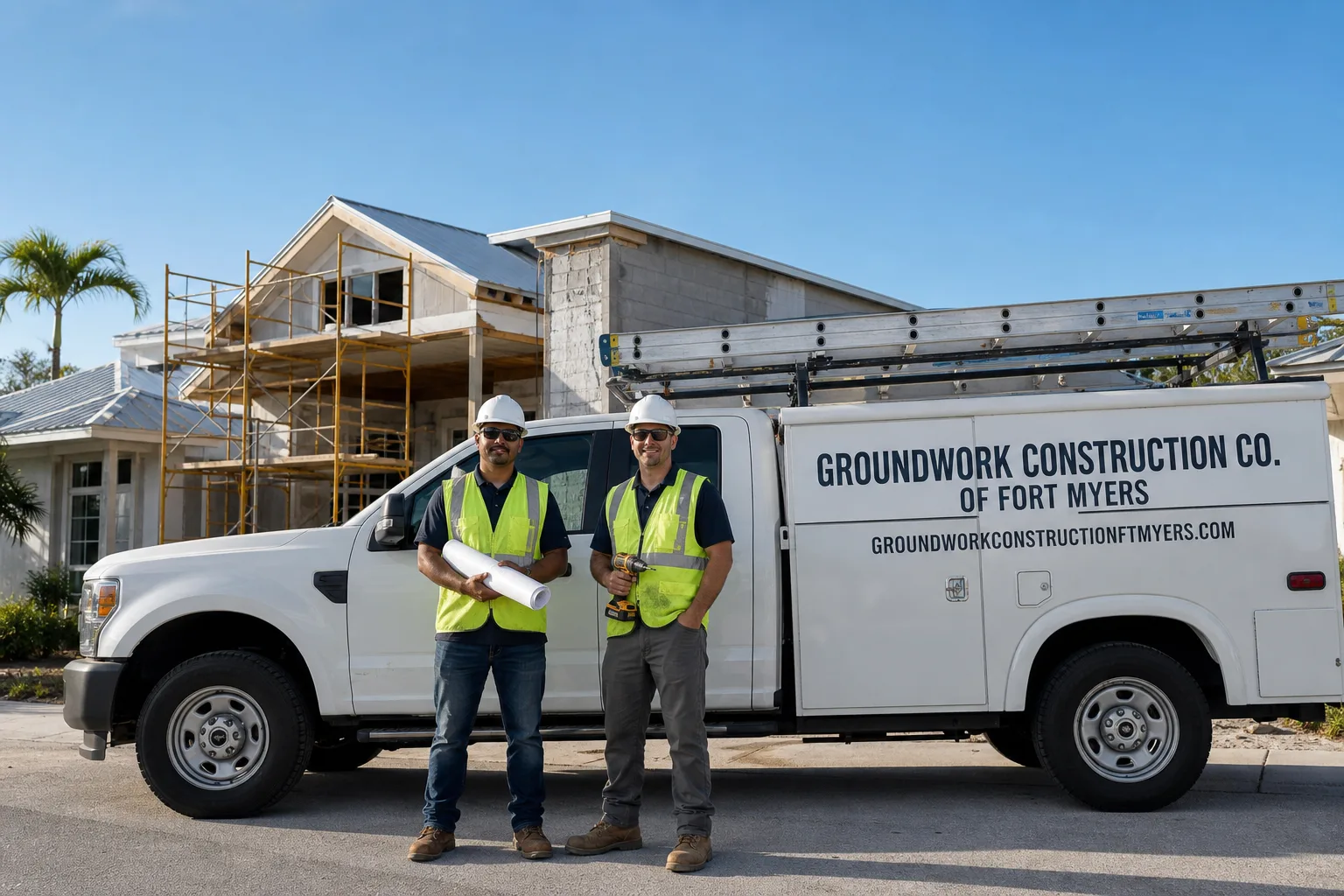
What Window Installation in Cape Coral Actually Costs and How Long It Takes
A full window installation in Cape Coral for a typical 3-bedroom home runs between $4,500 and $15,000, with most jobs landing around $8,500 for mid-grade vinyl or aluminum frames with impact-rated glass. The work usually takes three to five business days from tear-out to final trim, assuming the openings are sound and no hidden water damage is found once the old windows come out. Call us at (844) 638-7249 for a free, line-item estimate that spells out every dollar before you sign anything.
How We Install Windows: the Five-Stage Sequence
Window installation follows a predictable rhythm, but the details matter at every step. Here is what happens from the morning our crew pulls up to the final walkthrough.
Stage 1: Interior protection and exterior access (Day 1, 60-90 minutes). Before a single window gets touched, we lay floor runners, hang zip-wall dust barriers at room openings, and cover nearby furnishings. Outside, ladders and scaffolding get positioned, and we map the water shutoff points. This stage is unglamorous but it determines whether the rest of your week stays livable.
Stage 2: Tear-out and opening inspection (Day 1-2, 2-4 hours per window). The old window and its frame get removed down to the rough opening. This is where Cape Coral homes often reveal surprises: rotted buck wood behind stucco, corroded fasteners from canal-proximity salt air, or sill plates that took water during Ian and never fully dried. We will stop and show you photos of anything unexpected before we proceed, with a revised cost in hand, not a vague “we’ll figure it out later.”
Stage 3: Opening prep and waterproofing (Day 2-3, 30-45 minutes per opening). The rough opening gets checked for squareness, any damaged framing is sistered or replaced, and we apply a full-perimeter self-adhered flashing system that ties into the existing WRB (weather-resistive barrier) behind your siding or stucco. The sill gets pitched slightly outward with a sloped pan flashing. In Cape Coral’s humidity, skipping this step means you will see water stains on drywall within two rainy seasons.
Stage 4: Window setting, shimming, and fastening (Day 3-4, 45-60 minutes per unit). The new window goes into the opening, gets shimmed dead-level on all four sides, and is mechanically fastened through the frame into the framing per the manufacturer’s engineering spec - not just toenailed wherever it’s convenient. We back-check operation: the sash opens and closes without binding, the locks engage cleanly, and the weatherstripping compresses evenly all the way around.
Stage 5: Exterior sealing, interior trim, and cleanup (Day 4-5). Outside, we integrate the exterior flange or trim with the surrounding cladding, using backer rod and a high-grade elastomeric sealant that stays flexible in Cape Coral’s heat. Inside, we insulate around the frame with low-expansion foam, install trim or return drywall to the window edge, caulk the interior perimeter, and touch up paint. The site is swept, the windows get a final cleaning, and we walk the whole job with you before we call it done.
The Window Options You’ll Choose Between
Every window installation in Cape Coral forces a handful of decisions upfront. The right call depends on where your home sits relative to the canals, what your insurance carrier is demanding post-Ian, and how long you plan to own the property.
- Vinyl frames: The most common choice in Cape Coral. They handle humidity without corroding, they are thermally efficient, and they cost less than aluminum or wood-clad. The trade-off: darker colors can warp over decades in direct Florida sun, and the frame profiles are thicker, meaning slightly less glass area per opening.
- Aluminum frames: Strong, thin, and architecturally clean. They suit mid-century CBS homes and contemporary builds equally well. You need thermally broken aluminum in this climate or condensation becomes a problem on humid mornings. The cost is higher than vinyl, and salt-air corrosion requires diligent maintenance if you are within a half-mile of open water.
- Impact-rated glass vs. standard insulated glass: If your home is in a FEMA wind-borne debris zone east of the Caloosahatchee, impact glazing is not optional, it is code. Even outside mandatory zones, many Cape Coral HOAs and essentially every insurer now requires impact-rated windows as a condition of renewal. Standard insulated glass costs less upfront but will not satisfy the wind-mitigation inspection your carrier wants.
- Single-hung vs. casement vs. horizontal slider: Single-hung is the budget workhorse and the default in most Cape Coral bedrooms. Casements seal tighter against wind-driven rain and catch the cross-breeze better, a real advantage if you live on a canal with a reliable afternoon seabreeze pattern. Sliders work well in wide, low openings common to 1970s-era lanai-facing walls.
- Low-E coatings and tint packages: Cape Coral’s solar heat gain is brutal from May through October. A good Low-E coating cuts your cooling load measurably. We typically spec a mid-range spectrally selective coating that blocks infrared without making the glass look like a mirror from the street. Tint levels above a certain visible-light transmittance may conflict with some deed-restricted community architectural guidelines, so we check that before ordering.
What Window Installation Costs in Cape Coral, FL
A full-house window installation in Cape Coral typically lands between $4,500 and $15,000. The low end gets you 8-10 builder-grade vinyl single-hungs with standard insulated glass and no structural surprises. The high end covers 15-plus openings, impact-rated laminated glass, aluminum or premium vinyl frames, and some rot repair in the rough openings.
The factors that push the number one direction or the other are specific and measurable:
- Number and size of windows: This is the obvious driver. A 1,500-square-foot 3/2 will have 8-12 windows. A 2,800-square-foot waterfront home with a wall of glass facing the canal could have 20-plus, and several will be oversized units that require two-man setting and a lift.
- Frame material: Vinyl costs less; thermally broken aluminum costs roughly 40-60% more per unit; wood-clad or fiberglass is a specialty order that pushes toward the upper end of the range quickly.
- Glass package: Impact-rated laminated insulating glass is the single biggest per-unit adder in this market. It roughly doubles the material cost of the window versus standard insulated glass, and it is mandatory in an increasing share of Cape Coral homes.
- Condition of the rough openings: If the original 1970s windows were set directly into concrete block without proper flashing and the sill plates or bottom chord of the truss have been soaking up moisture for decades, you are looking at additional carpentry. We quote the window work separately from any framing repair so you see exactly where the money goes.
- Permit and inspection fees: Lee County and the City of Cape Coral require a permit for window replacement when the opening size changes or when impact-rated units are being installed as part of a wind-mitigation upgrade. The permit fee itself is modest, but the required elevation-certificate and wind-mitigation inspection package adds cost that unpermitted work simply avoids. We pull the permit every time, no exceptions.
Every written estimate we provide for window installation in Cape Coral includes the windows themselves, all flashing and sealants, installation labor, debris disposal, interior trim, and the permit fee. It does not include stucco repair beyond the immediate window perimeter, full-wall repainting, or upgrading your electrical panel to accommodate a new impact-shutter motor if that is part of a broader project. You will know all of that before we start. Call (844) 638-7249 for an exact quote on your home.
What Cape Coral Homes Specifically Do to a Window Installation
Cape Coral’s housing stock was built fast from the late 1950s through the 1980s, and the window openings in those original concrete-block homes were often framed out with untreated buck wood that has had sixty years of subtropical humidity working against it. When we open up a wall in the Pelican or Caloosahatchee neighborhoods, we expect to find at least some rot behind the stucco, and we budget the framing repair as a visible line item rather than burying it in a vague “contingency.”
The canal-proximity factor is real and it shows up in the hardware. Homes within a quarter-mile of the Bimini Basin or the Rubican Canal system see salt-air corrosion on window fasteners and sill flashings that inland homes off Del Prado Boulevard simply do not. We use 316-grade stainless fasteners on every exterior penetration for those jobs, plus an extra bead of sealant along the bottom flange. It costs more up front and it is the only way to keep the frames from oxidizing within a decade.
Permitting in Cape Coral post-Ian is a different animal than it was in 2021. The city now cross-checks window-installation permits against FEMA’s revised flood maps, and in some low-lying sections of the Yacht Club and Southwest Cape, an impact-window permit will trigger a requirement for an elevation certificate that was never needed on the original build. We coordinate with a local surveyor who knows the Lee County plan-review staff by name, so the permit process does not stall for three weeks while paperwork bounces between departments.
On top of all that, many older subdivisions around Cape Coral Parkway and the downtown core are still mid-transition from well-and-septic to city utilities. It is not unusual for a window job to overlap with a city water-main trench running down the street. We adjust the install schedule around the utility crew’s timeline and make sure our debris trailer can still get in and out without blocking the trench box. That kind of logistical choreography only matters in a city that is still actively building out its infrastructure fifty years after the first lots were platted, and it is part of why local experience counts here more than in most markets.
Homeowners in Cape Coral often pair a window installation with outdoor projects that harden the property against storms and improve curb appeal at the same time. We regularly coordinate window work with a new Wood Fence in Cape Coral or a sturdy Chain Link Fence in Cape Coral when the full exterior is getting refreshed. For the bigger picture on opening upgrades, see our Windows & Doors in Cape Coral page, and for the crew behind the work, our Windows & Doors team covers the whole Cape Coral service area.
Serving Cape Coral, FL - Our Local Coverage Area
We’re based in the Cape Coral area and know this community well. Use the map below to see our service coverage - if you’re nearby, we can almost certainly help.
Frequently Asked Window Installation Questions in Cape Coral
Three to five working days for a typical 10-14 window home. The variables that stretch the timeline are hidden rot in the rough openings, a permit review delay at the Lee County building department, or coordinating around an active utility expansion trench on your street. We give you a day-by-day schedule at the estimate stage so you know exactly when each phase happens.
Yes, the City of Cape Coral requires a building permit for window replacement when you are changing the opening size, altering the structural framing, or installing impact-rated products that become part of your home’s wind-mitigation system. We pull the permit as part of the job, schedule the inspections, and close it out. If a contractor tells you a permit “isn’t necessary” for impact windows in Lee County, walk away.
We will not claim zero damage because that is dishonest. Removing a window set in a stucco exterior will disturb the stucco around the perimeter, and we factor in the stucco patch as part of the job. Interior drywall returns typically need a skim coat and paint touch-up. What we can tell you is we protect the surrounding walls, contain the dust, and leave the finish work paint-ready. The damage is localized and repaired, not spread across the room.
For a 1,500-square-foot CBS home with 10-12 openings, figure $6,000-$10,000 with impact-rated vinyl single-hungs, including tear-out, flashing, trim, stucco patch, and the permit. Aluminum frames push it toward $10,000-$14,000. These are real ranges for homes in neighborhoods like Hancock, Pelican, and Southwest Cape that we have priced and built recently. Call (844) 638-7249 for a number tied to your actual window count and frame choice.
The window manufacturer warranties the frame and glass, typically for 10 years to lifetime depending on the brand and product line. Our workmanship on the installation is covered by the 730-Day Done Right Promise: if it is not done right, we make it right, no charge, no argument. That is one of the longest installation guarantees you will find in residential construction in Southwest Florida, and it is in writing on every contract.
Get a Fixed-Price Window Installation Estimate in Cape Coral
Window installation in Cape Coral is too big an investment to trust to a verbal ballpark. Call us at (844) 638-7249 and we will schedule a free on-site walkthrough. We measure every opening, check for rot, talk through frame material and glass-package options, and hand you a written, line-item price that covers the whole job from permit to final cleanup. There is no deposit required to get the estimate, and you will never hear a change-order pitch mid-project. Our background-checked install crews arrive in uniform, get the work done in the window we promised, and stand behind it with the 730-Day Done Right Promise.
Written by Derek Hollenbeck, Owner at Groundwork Construction Co., serving Cape Coral with upfront pricing and written workmanship guarantees.