
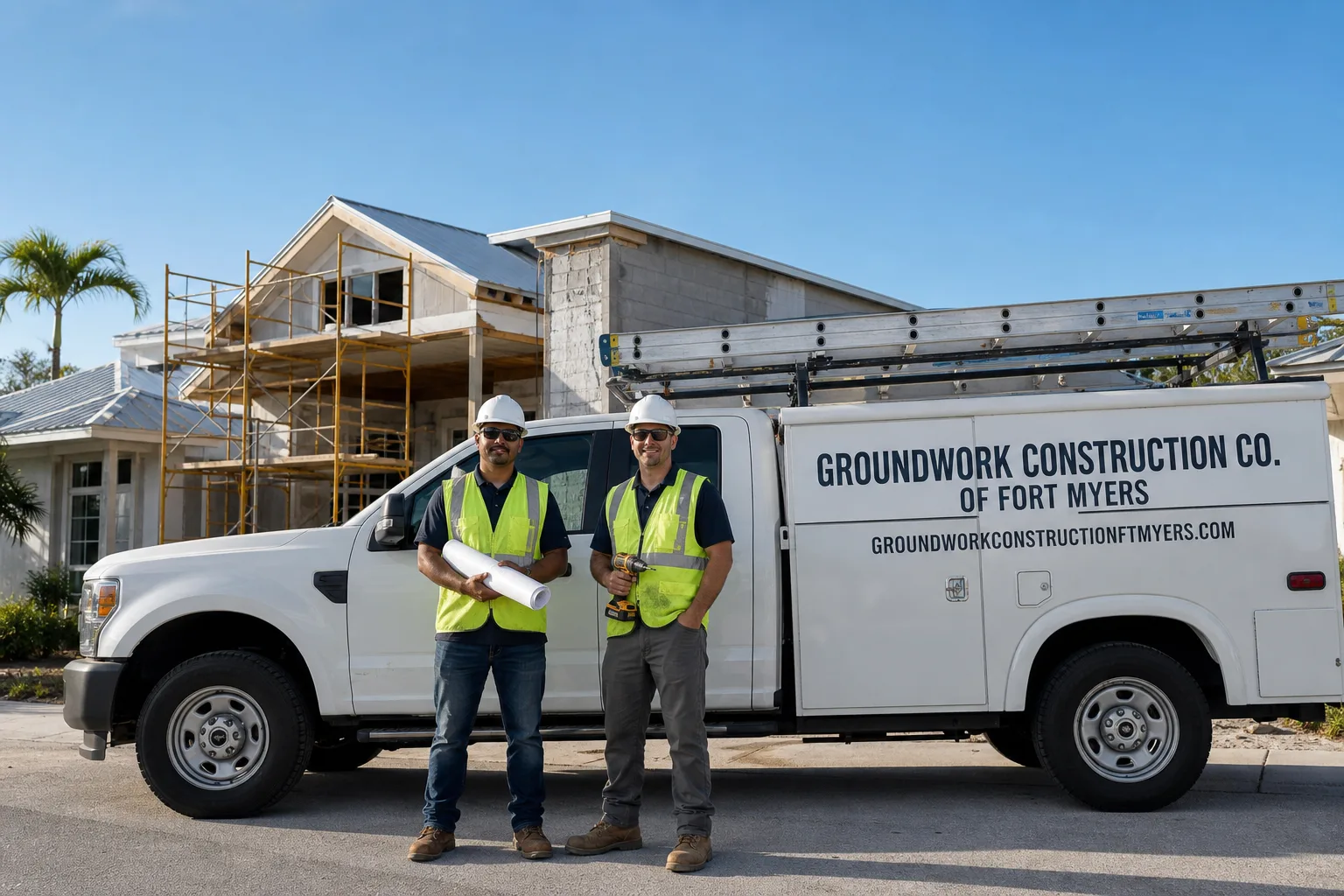
What Should You Expect From a Wood Fence in Cypress Lake, FL?
A wood fence in Cypress Lake typically runs between $3,500 and $9,000 for a standard residential lot, with most jobs finishing in three to five working days once materials are on site. That range covers pressure-treated pine pickets with pressure-treated rails and posts, set and concreted to Lee County’s minimum 24-inch depth. Call (844) 638-7249 to get a line-item written estimate for your property; it’s free, and you’ll have exact numbers before you decide anything.
How We Build a Wood Fence That Stands Up to Cypress Lake Conditions
The process is straightforward, but cutting corners on any of these steps is exactly how fences start leaning or rotting two years in. Here’s what the five-stage build actually looks like, and what you’ll need to approve at each point.
Stage 1: Property Walk and Utility Locate (Day 0-2)
Before a single post hole gets dug, we walk the entire fence line with you and mark it with stakes and string. This is when we verify the lot corners, discuss which side of the property line the fence sits on, and flag any trees, slopes, or drainage swales that affect the run. We call in an 811 utility locate the same day. In Cypress Lake, where many homes were built on slab-on-grade in the ’70s and ’80s, underground electric and cable lines for pool equipment and detached structures can run in places nobody expects. You’ll approve the final layout on the ground before we touch a shovel. This takes one visit, about 45 minutes, and the locate turnaround is typically two business days in Lee County.
Stage 2: Post Setting and Concrete Cure (Day 3)
All wood fence posts, regardless of fence height, are set a full 24 inches deep minimum with a concrete footer in every hole. That depth matters here. Cypress Lake’s soil runs sandy over limestone shelf, and shallow-set posts in the sand layer will start leaning after one heavy rainy season. We use pressure-treated southern yellow pine 4×4 posts, on eight-foot centers unless the layout demands a shorter spacing at a gate or corner. After the concrete is poured, we let it cure overnight. You can’t rush this part, and any crew that says they can hang pickets the same day they pour posts is one you should show the door.
Stage 3: Rail and Picket Installation (Day 4-5)
This is the day the fence actually becomes a fence. We use three horizontal pressure-treated 2×4 rails per panel on a standard six-foot fence - top, middle, and bottom - rather than the two-rail short cut you sometimes see on builder-grade installs. Pickets are fastened with ring-shank galvanized nails, not staples. You’ll have already chosen your picket style and grade by this point (we cover the options below). Gates get set during this stage too, with adjustable hinges and a pressure-treated frame that’s cross-braced from day one so it doesn’t sag before the season is out.
Stage 4: Gate Hardware and Final Adjustments (Day 5)
Every gate gets heavy-duty galvanized or stainless hardware; the latch, the hinges, the drop rod if it’s a double gate. We test each gate through a full swing arc, adjust for level, and check that the latch catches cleanly. If you’re adding any decorative post caps or a weather seal product, that goes on now. We also do a full perimeter walk with you before we call it done, so anything that doesn’t look right gets addressed while the crew is still on site.
Stage 5: Cleanup and Closeout
All concrete debris, picket off-cuts, old fence material (if it was a tear-out), and packaging leave with us. We carry a magnet bar over the work area to pull any dropped fasteners. You get a closeout packet with your permit close-out documentation if Lee County required a permit, plus care guidance for the wood. The 730-Day Done Right Promise covers the entire installation, so if anything settles, shifts, or fails due to our workmanship, we’re back to fix it.
The Wood Fence Options You’ll Choose Between
Pine isn’t just pine, and the choices you make here will determine whether your fence looks solid in a decade or starts showing its age in year three. Here are the real trade-offs.
- Pressure-treated pine (standard grade): The most common pick and what anchors the low end of our pricing. It’s kiln-dried after treatment, which reduces warp and twist compared to the wet-treated lumber you’ll find at big-box yards. Expect some natural checking and minor movement over the first year. Holds stain well once it’s dried out for a season. Best for homeowners who want a solid fence at a straightforward price.
- Pressure-treated pine (premium/#1 grade): Fewer knots, tighter grain, less wane on the picket edges. The finished look is noticeably cleaner, and because there’s less internal stress in the wood, you’ll see less twisting and bowing over time. Runs about 20-25% more in material cost than standard grade. Worth it if the fence faces the street or a pool deck where you’ll be looking at it every day.
- Cedar (Western Red, if available): Cedar brings natural rot resistance, a finer appearance, and lighter weight. It costs more than pine and availability in Southwest Florida isn’t always steady, so lead times can stretch. Cedar weathers to a silver-gray if left unstained, which some homeowners in Cypress Lake’s more landscaped neighborhoods prefer. If you want a stained finish, cedar takes color more evenly than pressure-treated pine.
- Picket profile: Dog-ear is the default and by far the most popular in Cypress Lake. Flat-top or French Gothic are available as upgrades. The profile choice doesn’t affect structural performance; it’s purely what you want to look at.
- Height: Six feet is standard and satisfies most HOA requirements in the area. Four-foot and eight-foot are options where site lines or privacy are the main concern. If you’re going eight-foot, expect to pull a permit and verify setback requirements with Lee County.
What a Wood Fence Costs in Cypress Lake, FL
A wood fence in Cypress Lake lands between $3,500 and $9,000 for a typical single-family residential lot. Here’s what pushes a job toward the low or high end of that range.
Linear footage is the biggest driver. A 50-foot side-yard run is a different job than enclosing a 200-foot perimeter. Most Cypress Lake lots fall somewhere in the middle, with fencing needs between 120 and 180 linear feet for a full backyard enclosure.
Material grade changes the number. Standard pressure-treated pine sits at the base; stepping up to #1 premium pine or cedar adds 20-35% to the materials line. Stain or sealant application, if you want it done at install, is an additional line item.
Tear-out and disposal of an existing fence adds labor and dump fees. If the old fence is chain link with concrete-set posts, demolition takes longer and costs more than pulling a rotted wood fence.
Gate count and hardware matter. A single walk gate is standard. Double drive gates, pool-equipment gates, or any custom-width gate opening adds structural framing and higher-grade hardware.
Permit fees are a pass-through cost. Not every wood fence in Lee County triggers a permit, but if yours does, the fee gets listed on your estimate as a separate line so you see exactly where the money goes. Same for any HOA architectural-review filing.
Every estimate we write is a line-item breakdown, not a lump sum scribbled on a clipboard. You’ll see the cost of posts, concrete, rails, pickets, hardware, tear-out (if applicable), permit fees (if required), and labor, each as its own number. Nothing gets buried.
What Cypress Lake Homes Specifically Do to a Wood Fence Job
Cypress Lake’s housing stock, mostly single-story concrete block stucco homes from the 1970s and 1980s on slab-on-grade foundations, creates a few realities for wood fence work that you don’t see in newer subdivisions east of I-75.
The first is lot shape. These older Lee County parcels tend to be wider and shallower than the postage-stamp lots in newer master-planned communities, which means longer fence runs along side yards and more total linear footage. More footage means more materials, more post holes, and a higher total project cost, but it also means you’re not trying to squeeze a fence into a zero-lot-line easement where neighbor setbacks get complicated.
The second is the soil profile. Sandy topsoil over limestone shelf, common across Cypress Lake, means that post holes sometimes hit rock at 18 or 20 inches. When they do, we go to the full 24-inch minimum by code, and if we’re still in rock, the hole gets a mechanical auger rather than a hand digger. This adds a small amount of time per post but ensures the fence is set in something solid rather than perched in loose sand above the limestone. Post-Ian, building inspectors in Lee County are paying closer attention to embedment depth on fence permits, and we’re not interested in red-tagging a job over a shortcut.
The third is the HOA landscape. Many Cypress Lake communities have architectural review committees that govern fence material, height, color, and placement. We’ve worked with enough of them to know that submitting the right documentation up front - a scaled site plan showing the fence location, a material sample or spec sheet, and the permit application if one is required, saves weeks of back-and-forth later. If your HOA has a fencing guideline document, we’ll review it with you at the estimate walk so the submittal is right the first time.
Serving Cypress Lake, FL - Our Local Coverage Area
We’re based in the Cypress Lake area and know this community well. Use the map below to see our service coverage - if you’re nearby, we can almost certainly help.
Frequently Asked - Wood Fence in Cypress Lake
It depends on height and location. Lee County generally requires a permit for fences over six feet, fences on corner lots where sight-line triangles apply, and fences near water or within FEMA-regulated flood zones, which includes portions of Cypress Lake. During the estimate walk, we’ll determine whether your job triggers a permit and, if it does, we pull it, close it out, and include the fee as a line item on your estimate. No hidden costs.
A pressure-treated pine fence built with properly set posts, three horizontal rails, and ring-shank fasteners should give you 15 to 20 years in Cypress Lake’s climate. The biggest enemies are ground-contact moisture at the post base and UV degradation of the picket face. Concrete-setting the posts below grade buys most of that lifespan. A penetrating stain or sealant applied every two to three years helps the pickets hold up against the Florida sun. We’ll give you a care schedule at closeout.
Yes, within reason. If you have an existing wood fence that’s structurally sound but you’re extending it or replacing a damaged section, we’ll match the picket profile, height, and spacing as closely as current materials allow. The new section will look different for the first six to twelve months, fresh pressure-treated pine is noticeably lighter than weathered wood, but it will blend as it ages. If you want an exact match immediately, we can discuss staining the entire fence line so everything reads as one uniform color.
It shouldn’t. Our estimates are written as fixed-price contracts. The only thing that changes the number is if you decide to add scope after we’ve started, say, extending the fence further than the original layout, or if we hit an underground obstruction that requires relocation that nobody could have seen before digging. In that case, we stop work, explain exactly what’s happening, and give you a change-order price before we proceed. You’ll never get a surprise bill at the end.
Every installation we do is covered by the 730-Day Done Right Promise. If your fence develops a workmanship issue within two years, a post lean, a gate sag, a failed fastener, we come back and make it right at our cost. That’s in writing. The wood itself is covered by the manufacturer’s warranty, and we’ll walk you through what that covers (typically defect and premature rot, not normal weathering).
Get a Wood Fence Estimate in Cypress Lake
You’ll get a line-by-line price, a clear timeline, and straight answers about permits, HOA requirements, and what your fence will look like after five Florida summers. Call (844) 638-7249 to schedule a free on-site estimate for a wood fence in Cypress Lake. A live person answers the phone, and we’ll have someone at your property to measure, discuss options, and put numbers on paper within a few days of your call.
Written by Derek Hollenbeck, Owner at Groundwork Construction Co., serving Cypress Lake homeowners with upfront pricing and the 730-Day Done Right Promise.