
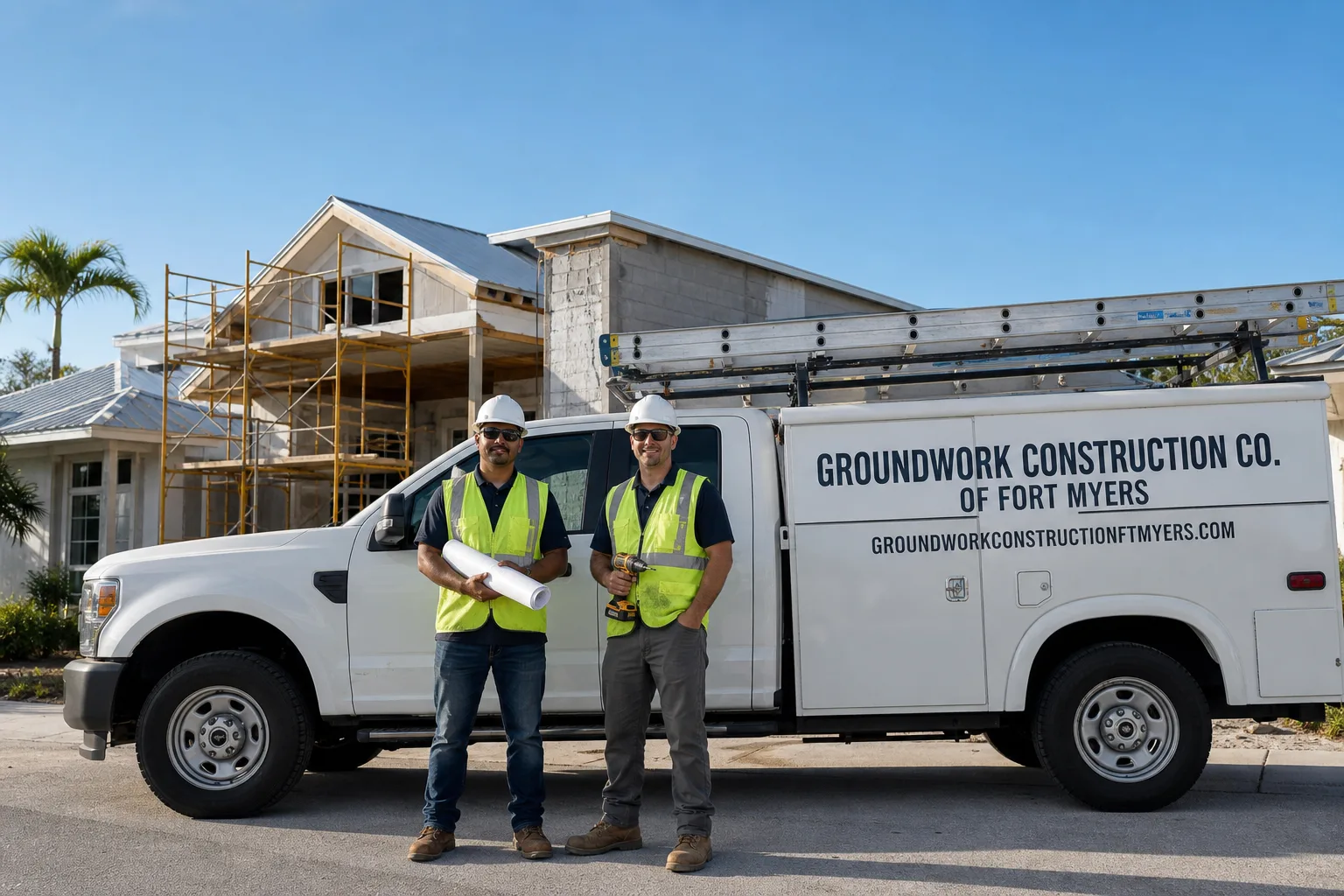
What You’ll Pay for a Wood Fence in Nokomis and When It Can Go In
A wood fence in Nokomis typically runs between $3,500 and $9,000, with most pressure-treated pine jobs on a standard quarter-acre lot landing around $5,200 to $6,800. From the day we set the first post to the final walkthrough, you’re looking at 5 to 10 working days depending on the linear footage and whether we’re pulling old concrete footers from a previous fence. Call (844) 638-7249 for a line-item quote specific to your property. We break the number down so you see exactly what goes into it before you commit to anything.
How We Build a Wood Fence That Stands Up to Nokomis Conditions
We run this job in five stages, and you’ll know what’s happening and why at each one. Here’s the real sequence, no contractor-speak.
1. Property Mark and Utility Locate (Day 1, half-day)
We walk the fence line with you and spray-paint the post locations right on the ground. You tell us which side faces out, where the gates go, and whether you want the rails showing on your side or the neighbor’s. While we mark, we call in a private utility locate for anything the public 811 service won’t flag: irrigation lines, landscape lighting, invisible dog fence wire. Nokomis has a lot of older homes with DIY irrigation additions, and we don’t guess. A locate delay here can push the schedule two days, so we book it before we ever put a shovel in the truck.
2. Dig and Set Posts (Days 2-3)
The crew digs every post hole to 24 inches minimum, 36 inches for gate posts that bear swing weight, with a 6-inch gravel base at the bottom so water drains away from the wood. In Nokomis we hit the water table at 30 to 36 inches on a lot of parcels, especially west of Tamiami Trail. When we do, we pump the hole and pour the concrete footer wet anyway. That footer gets a slight crown above grade so rain sheds outward instead of pooling against the post. Every post is set in a continuous string line, checked with a 4-foot level twice, and braced overnight while the concrete cures. If you’re replacing an old fence, this is the day we demo the existing line and haul the debris.
3. Frame the Rails and Pickets (Days 4-6)
Once posts are locked, we run three horizontal 2×4 rails between every post pair: bottom rail 6 inches off the ground, top rail flush with the post cap, middle rail splitting the difference. This keeps pickets from warping into a wave. Pickets go up one at a time, face-screwed with ceramic-coated deck screws that won’t bleed rust streaks onto the wood six months later. We set a consistent 1/8-inch gap between pickets using a spacing jig, and every fifth picket gets checked for plumb. On a typical 200-linear-foot fence, this phase takes two to three days with a three-person crew.
4. Gate Build and Hardware (Day 7)
Every wood gate we build gets a welded steel frame inside the wood skin so it won’t sag. Hinges are heavy-gauge, hot-dipped galvanized strap hinges that bolt through the post with carriage bolts, not lag screws. Gate weight dictates the hardware spec: a 4-foot walk gate gets two hinges and a gravity latch; a 10-foot double drive gate gets four hinges per leaf, a drop rod on the passive side, and a heavy-duty cane bolt to lock it open or closed. All gate hardware in Nokomis is stainless or hot-dipped galvanized. Salt air eats powder-coated steel in two years flat.
5. Trim, Stain, and Final Walk (Day 8-10)
Post caps go on, we trim any picket tops that aren’t dead level with a track saw, and the whole line gets a final screw-tighten pass. If you opted for stain or sealant, we spray or roll it on now, after the wood has had a few days to acclimate to the humidity but before it weathers. You walk the line with the crew lead, we nudge any gate that doesn’t swing true, and we hand you a care card that tells you when to re-seal based on the sun exposure your specific fence gets.
The Wood and Hardware Options You Decide Between
We don’t bury you in a catalog. You have three choices that actually matter, and here’s the honest trade-off on each.
- Pressure-treated southern yellow pine. This is the standard we price from: ground-contact rated, treated with an MCA preservative that resists rot and termites. It arrives with a greenish tint that fades to a silvery gray over 12 to 18 months unless you stain it first. It’s the most affordable option, it holds fasteners well, and with proper maintenance it runs 20 to 25 years in Nokomis. The trade-off is movement: PT pine shrinks as it dries, so you’ll see some minor picket gaps open in the first six months. We build to allow for that.
- Cedar. Western red cedar costs about 40 to 60 percent more than PT pine, but it’s naturally rot-resistant without chemical treatment, half the weight, and it stays straighter over time because it doesn’t hold moisture the way pine does. The color seasons to a soft driftwood gray, and the grain is tighter and cleaner. If the fence faces the street or you’re looking at it from a pool deck every day, cedar is the cosmetic upgrade. Maintenance is the same: re-seal every two to three years.
- Composite pickets on a PT frame. We can frame the fence in pressure-treated pine and face it with composite pickets from a manufacturer like Trex or Fiberon. Composite won’t rot, warp, or need staining, and the color runs through the board. The cost lands at the high end of the $9,000 range on a typical lot because the material is three to four times the per-linear-foot price of wood. The thing to know: composite is heavier, so we up-size the gate framing and add a mid-rail on runs over 6 feet to prevent sag under the extra load.
Hardware is a choice you don’t see but you live with. We default to Grip-Rite or Simpson Strong-Tie hot-dipped galvanized fasteners and connectors on every wood fence within three miles of the Gulf. Stainless is available if you’re right on the water or a canal off Lyons Bay, and it adds about 15 percent to the hardware line item. We’ll tell you if you need it after we’ve walked the site.
What Moves the Price on a Wood Fence in Nokomis
Every fence we quote lands somewhere in that $3,500 to $9,000 window. These are the five factors that push the number toward one end or the other.
Linear footage is the multiplier. A 75-foot side-yard run is a $3,500 job. A full perimeter on a half-acre lot with two gates can hit $9,000 before any material upgrades. Most Nokomis lots we work on fall between 160 and 240 linear feet.
Gate count and size. A single walk gate is bundled into the base price. A double drive gate wide enough for a boat trailer adds $600 to $800 in hardware, steel framing, and labor because the posts are bigger, the footers are deeper, and the hang takes half a day.
Demo and disposal. If we’re pulling an old wood fence with concrete footers, the crew spends a full day on demo and another $300 to $500 on dump fees. Chain-link posts set in concrete are worse: those footers can be 18 inches around and weigh 80 pounds each.
Access and grade. A fence line that runs through a flat, open side yard goes in fast. A line that runs behind a mature hibiscus hedge, or down a slope toward a canal, or through a narrow 4-foot side passage means we hand-dig every hole and carry material in and out by wheelbarrow. That’s a labor adder of $8 to $12 per linear foot.
Wood species and finish. PT pine is the baseline. Cedar pushes the material cost up 40 to 60 percent. A full stain job on all faces adds $4 to $6 per linear foot. We’ll give you the number for each option as separate line items so you can see the difference in black and white.
Your written estimate includes the full fence: posts, concrete, rails, pickets, gate hardware, dump fees, and a stand-alone line for any stain or sealant if you want it. Permit fees are listed separately so you know the county’s number versus ours. What’s not in the number: unforeseen stump removal if there’s an old oak right on the line, or a survey pin reset if the property corners aren’t findable. We flag both at the walk if we think they’re likely.
How Nokomis Properties Change the Way a Wood Fence Gets Built
We build differently here than we do even ten miles inland, and it comes down to three things: soil, salt, and the county’s coastal construction rules. The sandy fill common in neighborhoods like Mission Valley and along Colonia Lane saturates fast. We often hit water in a post hole before we reach our 24-inch minimum, which means we’re pumping and pouring wet more days than not. That’s normal for this slice of the coast, and it’s why we spec a gravel sump at the bottom of every hole. Posts that sit in standing water rot from the base up, even pressure-treated stock.
The salt exposure west of U.S. 41 means stainless or hot-dipped galvanized fasteners are not an upgrade option. They’re the floor. We’ve pulled failed fences in Nokomis where the wood was still solid but every electroplated screw had rusted through and snapped at the shank. A fence built with the wrong hardware here can start failing in 18 months, and you won’t see it until a storm gust pushes a whole panel over.
On the permitting side, Sarasota County requires a fence permit for any new installation, and if your property is inside a coastal high-hazard area or a mapped floodway on the FIRM panel, the county may limit the percentage of the fence face that’s solid versus open. A full-privacy wood fence with no gaps can exceed the 50-percent solid-to-open ratio in some flood zones. We check the panel for your parcel before we spec the picket spacing. Most Nokomis HOAs governing communities like Sorrento Woods or the bayside enclaves off Albee Farm Road also have material and height restrictions in their covenants. We’ll ask for the HOA fence spec at the estimate so we don’t submit a design that gets kicked back.
If your current fence predates the 1990s, there’s a decent chance the posts are set in shallow footers that no longer meet the 24-inch minimum, and the wood at the soil line has been wicking moisture for decades. We see it on the 1960s CBS ranches all through the neighborhoods east of the Trail: a fence that looks okay from 20 feet but snaps at ground level with one solid push. A full Fence Installation in Nokomis on those lots often means a clean-slate replacement, not a patch job.
Serving Nokomis, FL - Our Local Coverage Area
We’re based in the Nokomis area and know this community well. Use the map below to see our service coverage - if you’re nearby, we can almost certainly help.
Frequently Asked Questions About Wood Fences in Nokomis
Yes. Sarasota County requires a building permit for any new fence, and the application must include a site plan showing the fence location relative to the property lines, any easements, and the flood zone if applicable. We pull the permit as part of the job, and the cost is a line item on your estimate. The typical turnaround from application to issued permit is 5 to 10 business days, and it can stretch longer if the property is in a V or coastal A flood zone that triggers additional review. Most Nokomis properties east of the Intracoastal Waterway still carry flood-zone designations that affect the permit path.
A pressure-treated pine fence built with the right fasteners and maintained with a re-seal every two to three years will give you 20 to 25 years in Nokomis. Cedar runs on the same timeline but looks better doing it: less warping, fewer splits, tighter grain. Composite on a PT frame can go 30-plus with zero staining, but you pay upfront for the material. The variable that kills fences early here is ground contact and salt spray. Posts that sit in saturated sandy soil without a gravel sump rot out in 10 to 12 years, and the fence fails section by section.
Pressure-treated southern yellow pine with a ground-contact rating is the smart budget choice and what we install on 80 percent of Nokomis jobs. If the fence is on a canal or within a few hundred yards of the Gulf, and you want the best-looking option, cedar is worth the premium because it handles humidity swings with less movement and no chemical odor. For absolute longevity with near-zero upkeep, a composite picket on a PT frame is the top end. The one thing we steer people away from is untreated pine or spruce: it’ll be gray and cracking inside of three years in this salt air.
We do it either way. If you want us to stain or seal, we spray or roll it on after the fence is fully assembled and the wood has had a few days to dry to ambient moisture, which gives the best adhesion. A professional oil-based semi-transparent stain runs $4 to $6 per linear foot and adds a day to the schedule. If you’d rather handle it yourself, we’ll tell you exactly which product to buy for our climate and when the wood is ready to accept it. If you stain too early, the sealer sits on top of the mill glaze and peels within the year.
Almost always, yes. Bring us a photo or let us walk over and look at the existing fence line. We can match the picket style (dog-ear, flat-top, gothic point), the picket width, the rail configuration, and the stain color if one was used. The only time we can’t get a clean match is when the existing fence has been weathering for five-plus years. New wood, even with a custom stain, will look slightly different for the first season until the sun and rain even things out. If you’re adding a section that butts up to a neighbor’s fence, we pay extra attention to the top line so the transition doesn’t look like two different jobs.
Let’s Walk Your Fence Line and Get You a Real Number
A wood fence in Nokomis is a big enough investment that you should see the quote laid out clearly before you decide anything. Call (844) 638-7249 and we’ll schedule a free on-site estimate. Derek or one of our crew leads will walk the property, measure the line, talk through wood grades and gate placement, and hand you a written number that breaks out materials, labor, permit fees, and any options you’re considering. All our fence installation work across Nokomis is backed by our 730-Day Done Right Promise: if something isn’t right, we make it right. Homeowners in the area often pair a new fence with Paver Driveways in Nokomis or Concrete Driveways & Concrete Work in Nokomis when they’re sprucing up the whole front of the property. Estimates are free, we answer the phone live, and we don’t use high-pressure pitch tactics. We’re here to give you the facts and let you decide.
Written by Derek Hollenbeck, Owner at Groundwork Construction Co., serving Nokomis, FL.