
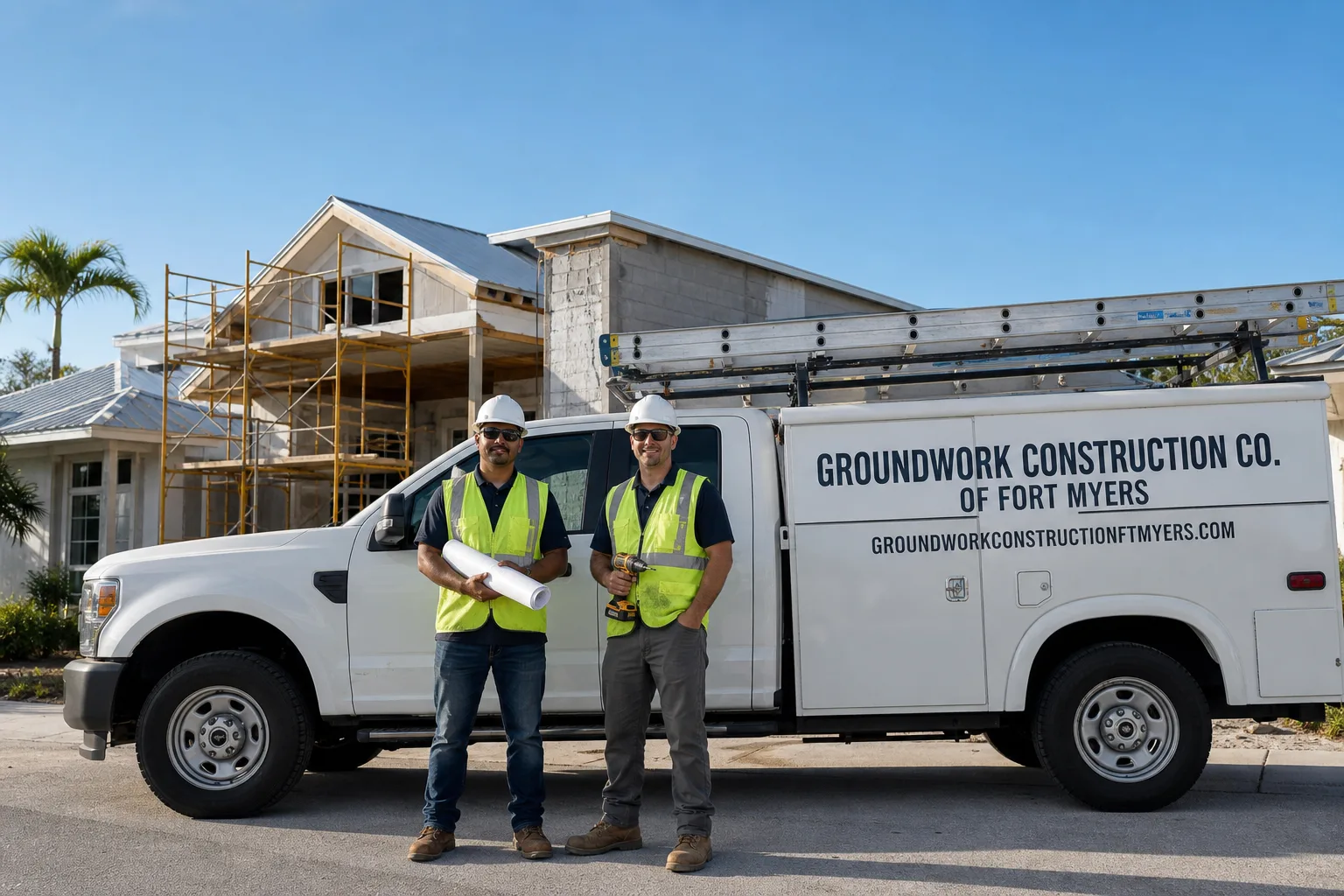
What Happens When Your Tice Home Takes a Hit - And What It Actually Costs to Fix
Emergency and storm damage repairs in Tice typically run $400 to $2,500 for targeted fixes like tarping, leak sealing, and structural triage, while full roof replacements on storm-damaged homes here range $8,000 to $20,000 depending on how much sheathing and framing got compromised. The real timeline splits into two phases: the emergency response that happens within 24-48 hours of your call to (844) 638-7249, and the permanent repair that follows permitting. Most Tice homeowners we work with need both, because the older CBS homes here rarely escape a direct hit without uncovering something that needs upgrading to current Florida Building Code.
How We Handle Emergency and Storm Damage in Tice - From First Call to Final Inspection
Stage one starts the moment you call. We dispatch a background-checked, uniformed technician to your Tice property, usually within hours. The priority is stopping active water intrusion. That means heavy-duty tarping over compromised roof sections, temporary board-up of blown-out windows, and if necessary, setting up a commercial drying system inside to halt mold colonization. The heat and humidity in Tice accelerate mold growth faster than most people realize - we have seen wall cavities colonize within 36 hours of exposure after a storm passes. The technician documents everything with photos and writes up a scope of triage work so your insurance adjuster has a clear starting point. This first visit typically takes two to four hours depending on the number of affected areas.
Stage two is the damage assessment and code-compliance audit. Because Tice is an older, unincorporated community, many of the homes we assess here were built between the 1950s and 1970s and predate modern wind-load requirements. When a storm compromises a roof plane or exterior wall, Lee County code enforcement will often require that the entire affected assembly be brought up to current standard as a condition of the repair permit. Our team walks you through exactly what the inspector will be looking for: hurricane strap retrofits, nailing-pattern upgrades on roof decking, and impact-rated openings where applicable. We give you a written line-item estimate that separates the storm repair dollars from the code-upgrade dollars so there is no confusion about what insurance covers and what falls under mandated betterment. This stage determines your real project timeline and budget, and you make the call on how to proceed before any work gets scheduled.
Stage three is the permanent structural and exterior repair. Once the permit is pulled and materials are staged, our roofing crew begins the tear-off of damaged materials down to sound sheathing. Here is where Tice’s older wood-truss roofs show their age: we regularly find dry rot around the eaves and gable ends that was not visible until the shingles came off. If your roof has original decking from the 1960s that took water during Hurricane Ian or a more recent storm, sections of it almost always need replacement before the new underlayment goes down. The same goes for any wall sheathing behind wet siding or stucco. We replace only what requires replacement, show you the removed material, and do not inflate the scope with unnecessary work. This phase runs anywhere from two days for a simple patch-and-flash to seven to ten days for a full reroof with structural upgrades.
Stage four covers interior water-damage repair and finish work. If ceiling drywall, insulation, or flooring got saturated, we open the affected areas, extract any remaining moisture, and treat framing with an antimicrobial agent before closing things back up. Tice’s high water table means crawlspaces and attached slabs stay damp longer after a storm event compared to inland locations with better drainage, so we often run commercial dehumidifiers for an extra day or two here to hit target moisture readings. This is also the point where some homeowners choose to roll additional improvements into the project, such as upgrading from batt insulation to spray foam in exposed ceiling cavities. The decision is yours; our job is to tell you what the baseline restoration requires and what each option adds to the cost.
Stage five is the final walkthrough and county inspection. Lee County permit backlogs post-Ian remain a reality, and we have learned to pre-schedule inspection slots the day the permit application goes in rather than waiting until the work is complete. That is one of those local scheduling nuances that catches out-of-area contractors by surprise and stalls Tice projects for weeks. You walk the property with our project lead, confirm every line item is resolved, and we close out the permit. Everything we do is covered by our 730-Day Done Right Promise: if something is not right, we make it right. No fine print, no chasing down a subcontractor.
The Material Choices That Actually Matter After Storm Damage
Most emergency and storm damage work in Tice ultimately leads to reroofing at least part of the home, and what you put back matters more here than in a dry inland market. Here are the real categories you will choose between and the honest trade-offs of each.
- Asphalt shingles - architectural vs. three-tab. Architectural shingles cost more per square but hold up far better to the wind-driven rain we get in Lee County. Three-tab is cheaper upfront and common on Tice’s older rental properties, but we rarely recommend it for owner-occupied homes anymore. Plan on $8,000-$14,000 for a full architectural reroof on a typical Tice ranch.
- Metal panel roofing - exposed-fastener vs. standing seam. Exposed-fastener metal gets you a tough roof at a lower installed cost, but the fasteners require re-torquing every decade or so in Florida’s thermal-expansion cycles. Standing seam, which starts around $15,000 on the low end here, eliminates exposed fasteners entirely and is the better long-term choice if you plan to stay in the home. Both options reflect heat well, which matters when your Tice block home sits under full afternoon sun.
- Synthetic underlayment vs. standard felt. This is one of those small-cost, big-difference decisions. Synthetic underlayment adds a few hundred dollars to the job but provides a far better water barrier during the reroof itself, which is exactly when a sudden afternoon thunderstorm can soak an exposed deck. For emergency and storm damage jobs where the roof is already compromised, we specify synthetic underlayment as standard on every project because the risk of additional water intrusion during the repair is real.
- Impact-rated ridge vents and edge metal. Older Tice roofs often lack continuous ridge ventilation, cooking the attic space and shortening shingle life. When we are already replacing storm-damaged sheathing, adding a continuous ridge vent is a low-incremental-cost upgrade - usually $400-$700 - that pays back in lower attic temperatures and longer roof life. We also upgrade edge flashing to a heavier-gauge metal than what was typical on 1960s construction.
What Emergency and Storm Damage Costs in Tice, FL
A targeted storm repair - tarping, replacing a few torn shingles, flashing a leak around a chimney or vent - runs $400-$1,800 in Tice. When the damage is widespread enough to require a full replacement, the range lands between $8,000 and $20,000. Here is what moves the number.
First, the condition of what is underneath the shingles. On a Tice home built in 1965 with original 3/8-inch plywood decking, storm water often saturates plywood that was already delaminating from decades of attic humidity. Replacing water-damaged decking adds $2-$4 per square foot of affected area. Second, the number of roof planes and the pitch: a simple gable ranch is the low end of the range; a house with hips, valleys, and a steep pitch adds labor hours. Third, code-required upgrades. If the repair scope triggers a full code-compliance review and the home lacks hurricane straps, those must be installed before the new roof goes on, typically adding $1,500-$3,000 depending on the number of truss-to-wall connections. Fourth, interior water-damage remediation: drywall, insulation, and paint in affected rooms. Fifth, permitting and inspection fees through Lee County, which vary by job valuation but rarely exceed a few hundred dollars on a reroof.
Every estimate we write for emergency and storm damage in Tice is a fixed-price, line-item document. You see the exact cost of each material, each labor phase, and each permit line. If nothing changes in scope, the price does not change. We also carry the documentation needed to submit a clean claim to your homeowners insurer, and we are comfortable meeting with your adjuster on site so the scope of work is agreed upon from the start.
What Tice Homes Specifically Do to This Job
Tice is an older, working-class unincorporated community where the dominant housing stock is modest CBS homes built between the 1950s and 1970s. These houses were constructed well before Florida’s modern wind-load codes took effect, and many still have their original wood-truss roofs fastened with toenails rather than steel hurricane straps. When a storm damages a roof here, the repair is not simply swapping out shingles. Lee County inspectors will flag the lack of tie-downs on any permit that involves more than a minor repair, which means a storm-damage job on, say, a 1963 home off Palm Beach Boulevard frequently becomes a structural-upgrade project alongside the reroof. We prepare Tice homeowners for that reality at the estimate stage so nobody is surprised when the permit conditions come back.
The other factor that distinguishes Tice work is the moisture load. Standing water after heavy rain events lingers because of the high water table and flat terrain, and the sustained humidity finds every unsealed penetration in an older roof assembly. When we open up a storm-damaged roof on a Tice home, we almost always find some degree of wood rot at the eaves and around the plumbing vent boots, hidden damage that had been quietly worsening for years before the storm made it undeniable. Addressing it during the emergency repair avoids a second project six months later when a new leak shows up in the same general area.
Permitting flows through Lee County’s building department in Fort Myers, not a municipal office, which brings its own timeline. Post-Ian inspection backlogs have improved but are still not back to pre-storm norms, so our practice here is to pre-schedule the rough and final inspections at the time of permit application, a step that keeps Tice projects moving while other contractors get stuck waiting. For homeowners considering a broader scope while the property is already opened up, this is also a natural moment to discuss how the roofline and exterior connect to other trades - our Roofing in Tice work frequently ties into exterior waterproofing and drainage that the Roofing crew coordinates from day one. Some clients also use the repair window to address older windows and exterior doors, the sort of envelope tightening our Custom Windows & Doors in Tice team handles alongside the roof crew. And if the storm took out sections of your yard enclosure, our Wood Fence in Tice service can quote that as part of the same project bundle. For any work we take on, we serve all of Tice with the same upfront pricing and warranty that applies to every project.
Serving Tice, FL - Our Local Coverage Area
We’re based in the Tice area and know this community well. Use the map below to see our service coverage - if you’re nearby, we can almost certainly help.
Frequently Asked - Emergency and Storm Damage in Tice
We answer calls with a live person 24/7, and we dispatch a uniformed technician to Tice properties within hours of your call for active water intrusion or structural compromise. The emergency response - tarping, board-up, water extraction - happens on day one. Permanent repair starts as soon as the permit is issued, which in Lee County currently takes anywhere from a few days to two weeks depending on the scope. Call (844) 638-7249 and we will give you a realistic arrival window based on where our nearest crew is at that moment.
Emergency tarping and temporary stabilization do not require a permit. The permanent repair almost always does if it involves structural work or roof replacement. Because Tice falls under Lee County jurisdiction rather than a municipal building department, the county determines permit triggers based on Florida Building Code thresholds. Our team handles the permit application and schedules inspections as part of the job; you do not have to navigate the county office yourself. If a previous contractor told you a permit was not needed for a full reroof, be cautious - that is a red flag in this county.
Insurance policies in Florida cover direct storm damage, but coverage for code-required upgrades varies by policy. Many Tice homeowners have a separate “law and ordinance” or “building code upgrade” rider that covers the cost of bringing an older home up to current code during a covered repair. We provide the documentation - photos, scope of work, line-item pricing - to support your claim and will meet your adjuster on site. The deductible is typically your responsibility, and we can discuss financing options including our 0% financing for 18 months for the portion you carry.
For a typical Tice ranch, you are looking at three to five working days for the tear-off and reroof once the permit is in hand and materials are delivered. Additional days get added if interior drywall or insulation needs replacement, or if the county inspection queue is running behind. We pre-schedule inspections at permit application to minimize that delay, and we keep you updated on the timeline as each phase completes. Call (844) 638-7249 for a specific estimate based on your home’s size and scope.
Every emergency and storm damage repair we complete in Tice is covered by our 730-Day Done Right Promise. If anything related to our workmanship is not right within two years, we make it right at no charge. The materials we install carry their own manufacturer warranties - we use leading roofing product lines including GAF and CertainTeed, and we register those warranties in your name so they are enforceable directly with the manufacturer if ever needed.
Free Estimate for Emergency and Storm Damage in Tice
If your Tice home took storm damage, do not wait for a slow leak to become a ceiling collapse. Call (844) 638-7249 to reach a live person - not a voicemail box - and we will schedule a free on-site assessment and written estimate. We walk the property with you, document the damage, explain exactly what needs to happen and what it will cost, and give you a fixed price before any work begins.
Written by Derek Hollenbeck, Owner at Groundwork Construction Co., offering upfront pricing and the 730-Day Done Right Promise for emergency and storm damage repairs throughout Tice, FL.