
What Glass Railing Systems Actually Cost and Take in Cypress Lake
A frameless glass railing system in Cypress Lake runs between $180 and $420 per linear foot, installed. Most decks, balconies, and pool enclosures in the area land between $4,500 and $14,000 total, depending on footage, mounting style, and glass spec. A 40-linear-foot second-story balcony with base-shoe mount and tempered glass will typically finish in eight to twelve business days, permit to punch list. Call (844) 638-7249 for a line-by-line written quote, free.
How We Build a Glass Railing System, Start to Finish
We break the work into five clear stages. You know what’s happening, who’s on site, and what decision you need to make before the next one starts.
Stage 1: Site measure, mounting substrate check, and permit prep. Day one, we come out and verify every linear inch against the design plan. For Cypress Lake homes, the mounting surface is almost always a concrete balcony slab or pool deck, and we sound it for spalling, delamination, or moisture intrusion leftover from Ian. If the concrete needs epoxy injection or a thin overlay before we can anchor, we flag it here. We pull the Lee County building permit concurrently; design drawings and product approvals go in with the application. This stage is one to two days, mostly off-site.
Stage 2: Layout and anchor drilling. We snap chalk lines for the base shoe or standoff locations, then core-drill into the concrete. The embedment depth and edge distance follow the manufacturer’s engineering and Florida Building Code Section 2406. If we hit rebar, we shift the anchor pattern, not the bar. We epoxy-set the anchors and let them cure overnight. This is typically a two-man crew for one day.
Stage 3: Base shoe and hardware installation. The aluminum base shoe or standoff clamps bolt down to the cured anchors. We shim to dead level because Cypress Lake concrete slabs are rarely perfectly flat after forty years of settling. If the design calls for a top rail, the posts go in now. One day on site.
Stage 4: Glass panel set and alignment. Tempered glass panels, cut to your specs, arrive from our fabricator. We set each panel into the base shoe or clamp system, torque the pressure plates, and dial in the alignment so the gaps are uniform. For balconies over occupied space, we confirm the laminated interlayer is intact and edge seals are clean. This stage takes one day per twenty linear feet, roughly.
Stage 5: Final walkthrough and Lee County inspection close-out. We walk the rail with you, check every anchor, every gasket line, and confirm deflection at the top corner meets code. Then we meet the inspector on site. Once the permit is signed off, we hand you the close-out package: permit card, glass cert, and our 730-Day Done Right Promise in writing. This is the day you pay the final draw, not before.
The Glass and Hardware Options You’ll Choose Between
Every railing system we install in Cypress Lake is built to Florida Building Code wind load and impact requirements. The choices come down to glass thickness, mounting style, and whether you want a handrail cap.
- ¾-inch tempered monolith glass. The standard for pool enclosures and low-wind-exposure balconies. Clear, economical, and hard-stops at around 48 inches in height without a top rail. Runs toward the lower end of the per-foot range. Scratches over time if you live sandy-side, so we recommend a glass treatment if you are within a mile of the Caloosahatchee.
- 9/16-inch laminated glass. Two lites of tempered with a PVB interlayer, the same concept as a car windshield. Required on balconies over occupied space by Florida code. If a panel ever cracks, the glass stays in the frame. Adds material cost but it is non-negotiable for second-story work.
- Base-shoe mount versus standoff clamps. A base shoe is a continuous U-channel anchored to the concrete; the glass sits inside it and is pinched with a pressure plate. Standoff clamps are discrete stainless steel pins that grip the glass at two points per panel. Base-shoe handles wavy concrete better without post-shimming. Standoffs give a lighter, floating look and drain water faster, which matters on pool decks that see afternoon thunderstorms six months a year. Standoffs typically add 15 to 20 percent to the hardware line.
- Top rail or frameless cap. A continuous aluminum or stainless handrail across the top adds grip compliance and stiffness. Many Cypress Lake HOA architectural guidelines require a visible top rail for street-facing balconies, so check your community standards before locking in the frameless look. If you go pure frameless, we can mill a subtle cap channel that meets the graspable-rail dimension without changing the sightline.
What Glass Railing Systems Cost in Cypress Lake, FL
A glass railing job in Cypress Lake typically falls between $4,500 and $14,000. The per-linear-foot rate, $180 to $420 installed, includes the aluminum base shoe or standoff hardware, tempered glass panels, stainless fasteners, and full permit close-out. Four main factors push the number toward the high end.
Linear footage. The single biggest driver. A 20-foot balcony might hit $5,600 on the mid-tier spec. A 50-foot pool enclosure wrapping two sides pushes north of $12,000 even with standard glass.
Glass spec. Moving from ¾-inch tempered monolith to 9/16-inch laminated adds $45 to $70 per foot. If the balcony overlooks a lanai or living space below, laminated is a Florida Building Code requirement, not an upsell.
Mounting surface condition. Concrete that spalled during Ian or just from forty years of Florida humidity needs repair before we anchor. Epoxy injection or a 2-inch concrete overlay typically adds $800 to $2,200 to the job, and we quote it as a separate line item so you see exactly what went into the substrate versus the rail system.
Permit and engineering complexity. A straightforward replacement using existing anchor points sails through Lee County permit review. A new balcony rail where none existed before, or a design that changes the structural load path, requires a sealed engineering letter and possibly a wind-load calc. That adds $400 to $900 in engineering and an extra week in permitting. We include the permit fee in the estimate; the engineering is a pass-through if required.
Every estimate from us is a fixed-price, line-by-line document. The hardware, glass, freight, labor, permit fee, and substrate work are spelled out separately. If you decide mid-job to add a gate section or switch to a top rail, we write a change order with the updated number before we touch it. No surprises after the anchors go in.
What Cypress Lake Homes Specifically Do to a Glass Railing Job
Cypress Lake’s housing stock, mostly single-story concrete block stucco homes built between 1970 and 1985, creates a very specific set of conditions for glass railing work. The balcony and pool decks we mount to are almost always poured-in-place concrete slabs that have been settling for forty years. Rarely are they flat or un-cracked. We bring a laser level to the first site visit because shim stacks on a base-shoe rail in this neighborhood are not optional, they are standard practice.
The other factor that defines glass railing work here right now is the post-Ian rebuild environment. Lee County’s permit office is still processing a heavy load, and many homeowners along McGregor Boulevard and the neighborhoods east of Winkler Road are deep into insurance-driven exterior renovations. A glass railing that looks purely aesthetic on paper often gets folded into a larger wind-mitigation scope, triggered when the adjuster flags an old aluminum picket rail as non-compliant. We work alongside your Windows & Doors in Cypress Lake crew when the balcony door and the guardrail need to meet the same wind-load engineering package. And if your fence also took a hit, we regularly coordinate with our Fence Repair in Cypress Lake team so the site work happens in one sequence, not two.
Lee County requires a building permit for any guardrail replacement that alters the anchoring system, which is virtually all of them. The inspector will verify embedment depth, glass type, and top-rail deflection. If the rail serves a balcony over three feet above grade, the permit trigger is automatic. We pull it, we meet the inspector, and we close it. You get the signed permit card in the close-out packet.
Serving Cypress Lake, FL - Our Local Coverage Area
We’re based in the Cypress Lake area and know this community well. Use the map below to see our service coverage - if you’re nearby, we can almost certainly help.
Frequently Asked Questions About Glass Railing Systems in Cypress Lake
Most projects finish in eight to twelve business days from the start of on-site work. Permitting adds one to three weeks depending on Lee County’s current queue. The actual installation, drilling anchors to final walkthrough, takes four to five site days spread across the curing and glass-fabrication windows.
Yes. Lee County requires a building permit for any guardrail replacement that modifies the anchoring system or changes the structural load path. A like-for-like glass-to-glass swap with identical anchor points might technically fall under repair, but virtually every job we do involves new embedments, which triggers the permit. We handle the entire permit process as part of the job. Call (844) 638-7249 and we can confirm whether yours falls under repair or full replacement during the site visit.
Yes, when engineered and installed correctly. We use ¾-inch tempered or 9/16-inch laminated glass with aluminum base shoes anchored into concrete at the embedment depth the manufacturer’s Miami-Dade NOA specifies. The system is designed and tested for the wind pressures Cypress Lake sees. The glass itself will not blow out; the failure point on a poorly installed rail is always the anchor embedment or edge distance, which is why we core-drill and epoxy-set every anchor rather than wedge-anchor into forty-year-old concrete of unknown internal condition.
Glass runs roughly double to triple the per-foot cost of a basic aluminum picket rail. A 40-foot aluminum rail might land around $2,800 to $4,500 installed, while the same footage in a base-shoe glass system starts around $5,200 and climbs with glass spec. The trade is the sightline, the long-term corrosion resistance of stainless-and-glass versus painted aluminum in a salt-humidity environment, and resale value. Homeowners near the water often pair glass railings with a Paver Driveways in Cypress Lake upgrade when they are reworking the whole exterior hardscape at once.
The glass carries the fabricator’s warranty against delamination and seal failure, typically ten years. The aluminum hardware carries a manufacturer’s finish warranty. Our workmanship, every anchor, every shim, every gasket line, is covered by the 730-Day Done Right Promise. If something moves, shifts, or fails because we installed it wrong, we fix it at our cost for two full years. Call (844) 638-7249 and we’ll walk you through exactly what’s covered line by line in the contract.
Get a Free, Fixed-Price Estimate for Glass Railing in Cypress Lake
If you are planning a glass railing project at your Cypress Lake home, start with a written, no-obligation estimate. We come out, measure, check the concrete substrate, discuss glass and hardware options, and hand you a line-by-line price that holds. No ballparks, no change orders hiding in the fine print. Our Windows & Doors team has been serving Cypress Lake with the same upfront process across every trade. Call (844) 638-7249 to schedule yours, a real person answers, day or night.
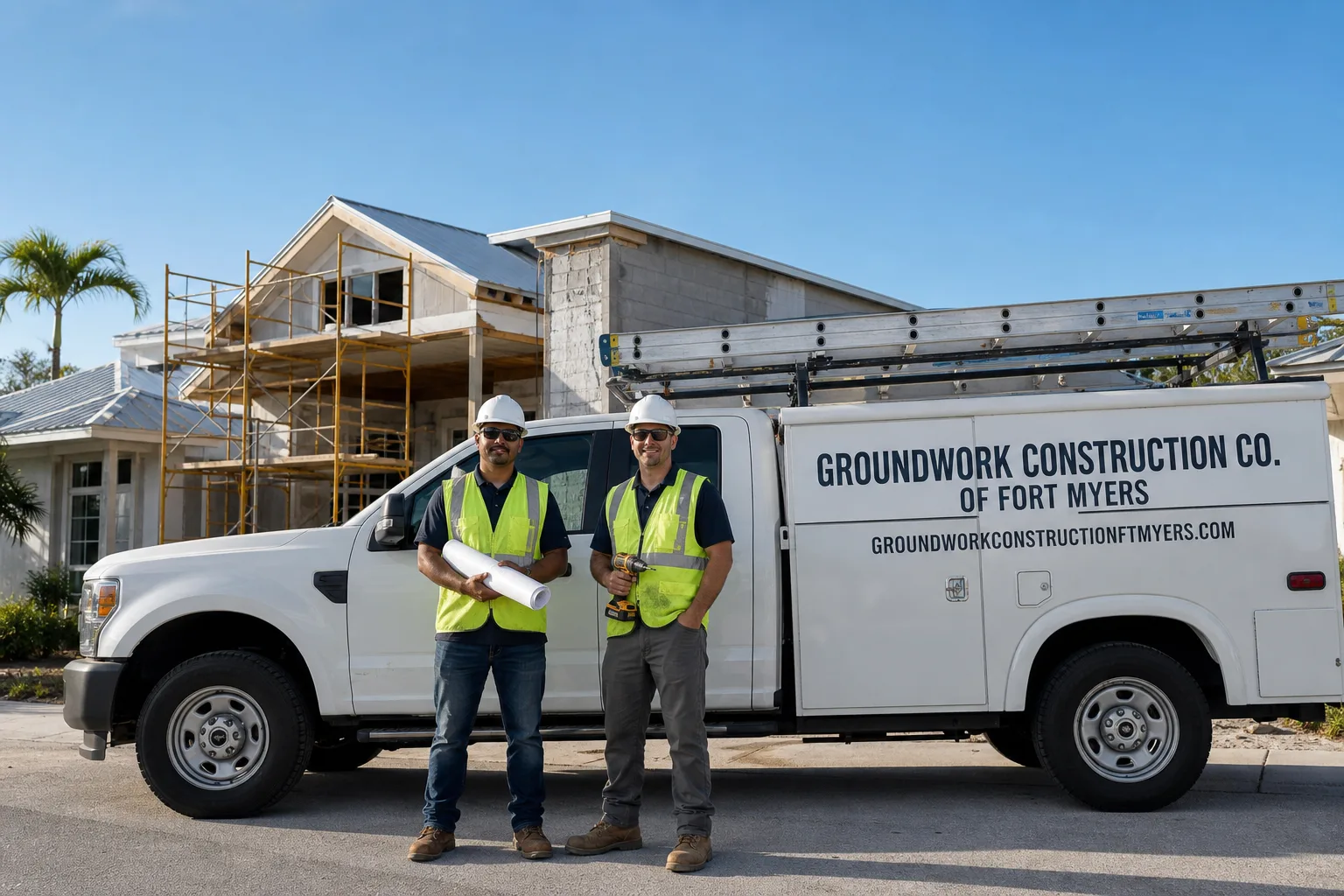
Written by Derek Hollenbeck, Owner at Groundwork Construction Co., serving Cypress Lake with fixed-price, permit-close-out glass railing installations backed by the 730-Day Done Right Promise.