
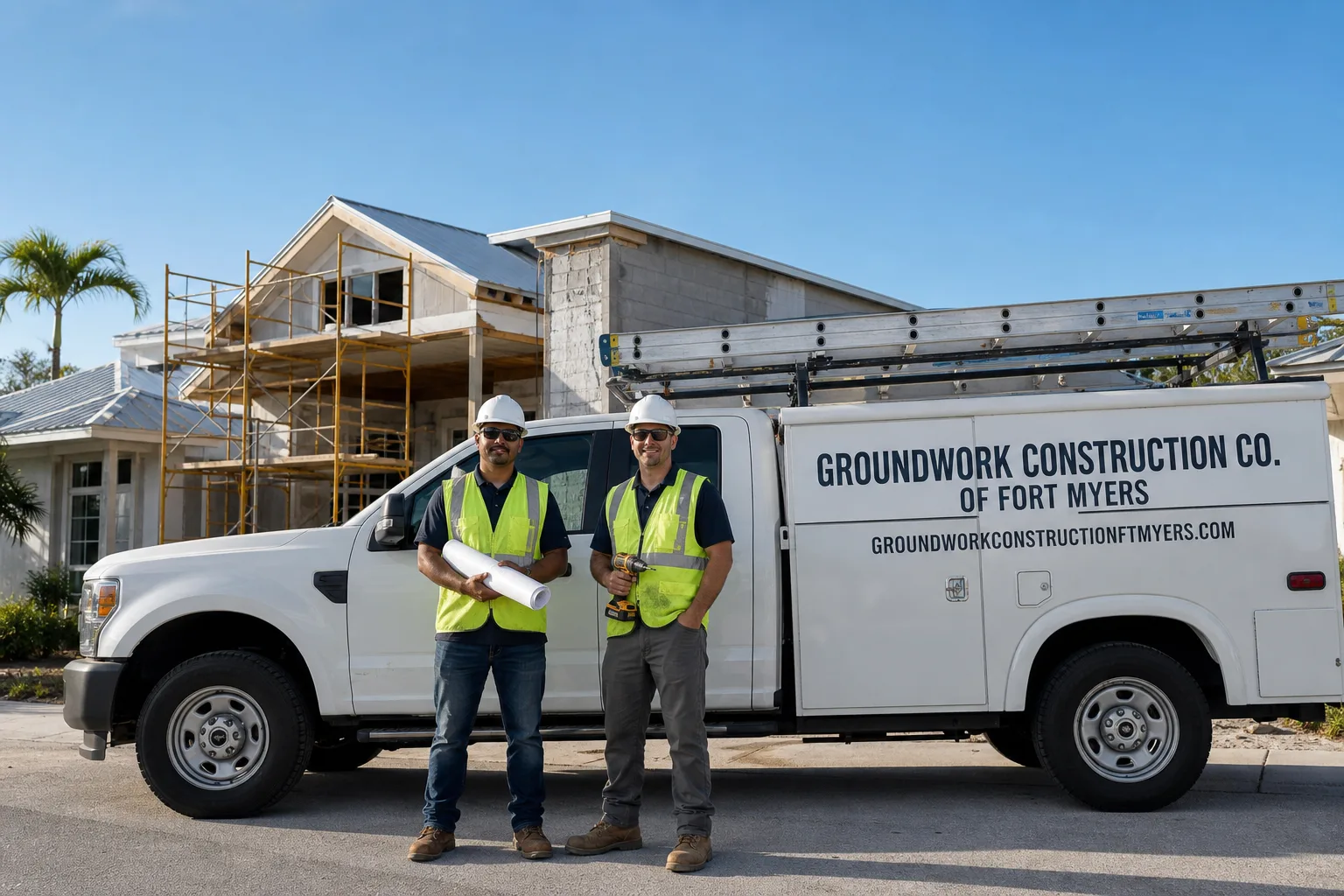
What a Chain Link Fence in Harlem Heights Actually Costs and How Long It Takes
A chain link fence in Harlem Heights typically runs $3,500 to $9,000 for a standard residential lot, installed. Most jobs wrap up in two to four days. The big swing factors are linear footage, gate count, and whether the old fence has concrete-set posts that have to be jackhammered out. Call (844) 638-7249 and we’ll give you a written line-item quote for your specific yard, free. No pressure, just numbers on paper.
How We Build a Chain Link Fence, Step by Step
You’re not just buying materials. You’re paying for a sequence that has to happen in the right order, on schedule, with a crew that shows up when they say they will. Here’s exactly how it goes with us.
Day one: layout, mark, and dig. We walk the property line with you before anything goes in the ground. We flag utility lines via 811, then mark every terminal post (corners, ends, gates) and every line post at the spacing the manufacturer specifies for your chosen gauge. Holes go to code depth, which in Lee County is 30 to 36 inches depending on post height. If we hit old concrete from a previous fence, that adds half a day and a couple hundred in labor. We’ll tell you before we start whether that’s on the table. Most Harlem Heights yards we dig are sandy loam with some shell fill, so post-hole work goes faster than in clay-heavy inland soil.
Setting posts and waiting on concrete. Terminal posts go in first, set in concrete. Line posts follow. We check every post for plumb twice, once during the pour and once after. Concrete needs a minimum cure window. In southwest Florida humidity, that means overnight. If your fence line runs near a drainage swale or a low spot that held water during Ian, we may recommend a deeper set or a heavier concrete collar. We don’t upcharge for that call, we just tell you why it matters.
Framework and fabric. Once posts are locked, top rails and tension wire go on. Then the chain link fabric is unrolled, stretched, and fastened. Tension bands and brace bands get torqued to spec. A sagging chain link fence three months in is a tensioning problem, not a materials problem, and we tension correctly the first time. Fabric height and gauge are what you chose at the estimate stage, so nothing changes mid-job.
Gate installation. Gates are the part that fails first on a cheap install. We use heavier-gauge gate frames and industrial-grade hinges and latches. A single walk gate or a double drive gate each require their own terminal-post layout and diagonal bracing. If you’re replacing an old chain link gate that’s been dragging, the post footing failed, not the gate, and the new footing gets the same cure time as the fence posts.
Final walk, clean, and wind check. Before we leave, we run the line again with you. We check gate swing, latch catch, and fabric tension. We haul off all demo debris and scrap. In Harlem Heights, we pay extra attention to how the fence stands up to wind load because a loose chain link panel in a tropical storm becomes a hazard. Every tension wire is verified tight. This whole process, start to finish, is why we back the work with the 730-Day Done Right Promise. If something shifts, we come back and make it right.
Spec Decisions You’ll Make Before We Order Materials
Chain link isn’t one-size-fits-all. The choices below directly change durability, security, and price. We walk you through each at the estimate, but here’s the landscape.
- Gauge (wire thickness). Residential jobs typically use 11½ or 12½ gauge. 11½ is thicker, costs more, and holds up better against kids, dogs, and storm debris. 12½ is lighter and keeps you closer to the low end of the price range. For most Harlem Heights yards, we recommend 11½ on the perimeter and 12½ only if it’s a purely decorative interior run.
- Height. Standard residential heights are 4, 5, and 6 feet. 4-foot keeps sight lines open but does nothing for privacy or security. 6-foot is the practical choice for backyards. Lee County code allows residential fences up to 6 feet in rear yards without a variance, which covers most of what we install here.
- Galvanized vs. vinyl-coated. Galvanized is silver, lower cost, and holds up fine. Vinyl-coated (black or green) adds a polymer layer that resists salt-air corrosion. Given Harlem Heights sits inside the Gulf-spray humidity corridor, the coated wire buys you extra years before surface rust appears. It’s not a must, but for fence lines that face prevailing winds, it’s money well spent.
- Gate configuration. A single walk gate is standard. A double drive gate for boat or trailer access adds $600 to $1,200, depending on width and hardware grade. Cantilever rolling gates cost more again and require a concrete track pad. We’ll spec the right hardware from brands like Oldcastle for the gate post footings where the load demands it.
What a Chain Link Fence Costs in Harlem Heights, FL
For a typical 150-linear-foot residential perimeter with one walk gate, expect to land between $3,500 and $6,500. Larger lots, multiple gates, or 6-foot height with vinyl-coated fabric push into the $7,000-$9,000 range.
The four things that move the number most:
- Linear footage. This is the primary driver. More fence line means more posts, more concrete, more fabric, more labor.
- Demo and haul-off. If an old chain link or wood fence has posts set in concrete, removal adds $300 to $800, depending on how many posts and how stubborn the concrete is. We do not leave old post concrete in the ground and set next to it. That creates a weak point.
- Gate count and type. Each gate beyond the first has its own post footings, frame, hardware, and labor. A double drive gate essentially doubles the gate cost line item.
- Fabric grade and coating. Going from 12½ gauge galvanized to 11½ gauge vinyl-coated can add $800 to $1,400 on an average yard. It’s the largest materials-only variable.
What you get in our written estimate: the total price, broken down by line item, with no allowances for “unforeseen conditions” that turn into change orders. Upfront pricing means the number you see is the number you pay. We also offer 0% financing for 18 months and $1,000 off projects over $10,000. If your chain link fence is part of a full Fence Installation in Harlem Heights that crosses that threshold, those savings stack.
Why Building in Harlem Heights Changes the Job
Harlem Heights sits squarely in Lee County’s Hurricane Ian reconstruction zone. That’s not just a historical footnote. It defines how every fence job gets permitted, inspected, and wind-rated today. Many of the homes we work on here are 1950s-to-1980s block-and-frame construction that predates the Florida Building Code’s post-Andrew wind-load standards. When we pull a fence permit, the county wants to see terminal post embedment and concrete collar sizing that meets current wind-mitigation requirements, even for a chain link fence. The same post depth that sufficed in 1985 won’t pass a Lee County inspection in 2026.
The soil, the salt, and the storm history all converge here. Post-Ian, the county’s inspection backlog on Colonial Boulevard is real. We keep a dedicated permit expediter relationship with that office specifically so a Harlem Heights fence permit doesn’t stall for weeks. A missed rough-inspection window can push a final sign-off back by ten business days in the current queue. That’s not a problem you’ll hear about from an out-of-town crew who doesn’t work this unincorporated pocket regularly. It’s the kind of local logistics that separate a two-day install from a two-month headache. Homeowners often pair this work with Concrete Driveways & Concrete Work in Harlem Heights or Asphalt Driveways & Resurfacing in Harlem Heights when they’re already investing in the property’s curb-to-fence-line appearance.
Our Fence Installation crew has worked on properties throughout Harlem Heights long enough to know what’s in the ground before we dig. Concrete-block fence footings from the 1970s, abandoned irrigation lines, and post-Ian fill dirt that compacts differently than native soil. None of that is a surprise, and none of it turns into an extra charge on your estimate.
Serving Harlem Heights, FL - Our Local Coverage Area
We’re based in the Harlem Heights area and know this community well. Use the map below to see our service coverage - if you’re nearby, we can almost certainly help.
Frequently Asked Questions About Chain Link Fence in Harlem Heights
For a standard residential lot, two to four days. Day one is layout and post-hole digging. Day two is setting posts and letting concrete cure. Day three is framework, fabric, and gates. If we’re removing a fence with concrete-set posts, add a half day. Harlem Heights’ sandy soil helps on the digging side, but the humidity means concrete cure time stays consistent year-round, so we don’t compress that step in summer.
Yes. Lee County requires a fence permit for any new fence or full replacement. We pull the permit, schedule the inspections, and close it out. You don’t touch the paperwork. A chain link fence that’s installed without a permit and later flagged during a wind-mitigation inspection can jeopardize an insurance discount. It’s not worth skipping. Call (844) 638-7249 and we’ll handle it from day one.
A properly tensioned chain link fence with deep-set terminal posts handles wind far better than a solid-panel fence, because wind passes through it instead of pushing against a wall. The failure point in a storm is almost always a post footing that was too shallow or a gate frame that was under-braced. We size both to current Lee County wind-load standards. After Ian, we saw chain link fences still standing next to collapsed wood privacy fences all through the Harlem Heights area. The fabric wasn’t the problem. The post embedment was.
Yes. We match height, gauge, and coating to blend with an existing chain link run, as long as the existing fence is structurally sound at the tie-in points. If the old posts are rusted or leaning, we’ll recommend replacing that section rather than attaching new fabric to a failing structure. The per-foot cost for matching an existing fence is the same as a new run; the savings come from reusing usable footage, not from cutting corners on the new work.
Every fence we build is covered by the Groundwork Construction Co. 730-Day Done Right Promise. If workmanship causes a problem within two years, we fix it at no charge. The galvanized or vinyl-coated fabric itself carries a manufacturer warranty against rust-through, typically 12 to 15 years for coated wire. Concrete footing failures, sagging fabric, and gate misalignment caused by our install are on us. We put it in writing before the first post goes in.
Get a Written Estimate for Your Chain Link Fence in Harlem Heights
A chain link fence in Harlem Heights should come with a fixed price, a clear timeline, and a crew that knows Lee County permitting inside and out. We show up in uniform, we answer the phone when you call, and the number on the estimate is the number you pay. Call (844) 638-7249 to schedule a free on-site estimate. You’ll walk the line with us, choose your specs, and get a line-item quote before you commit to anything.
Written by Derek Hollenbeck, Owner at Groundwork Construction Co., serving Harlem Heights and the surrounding Lee County communities.