
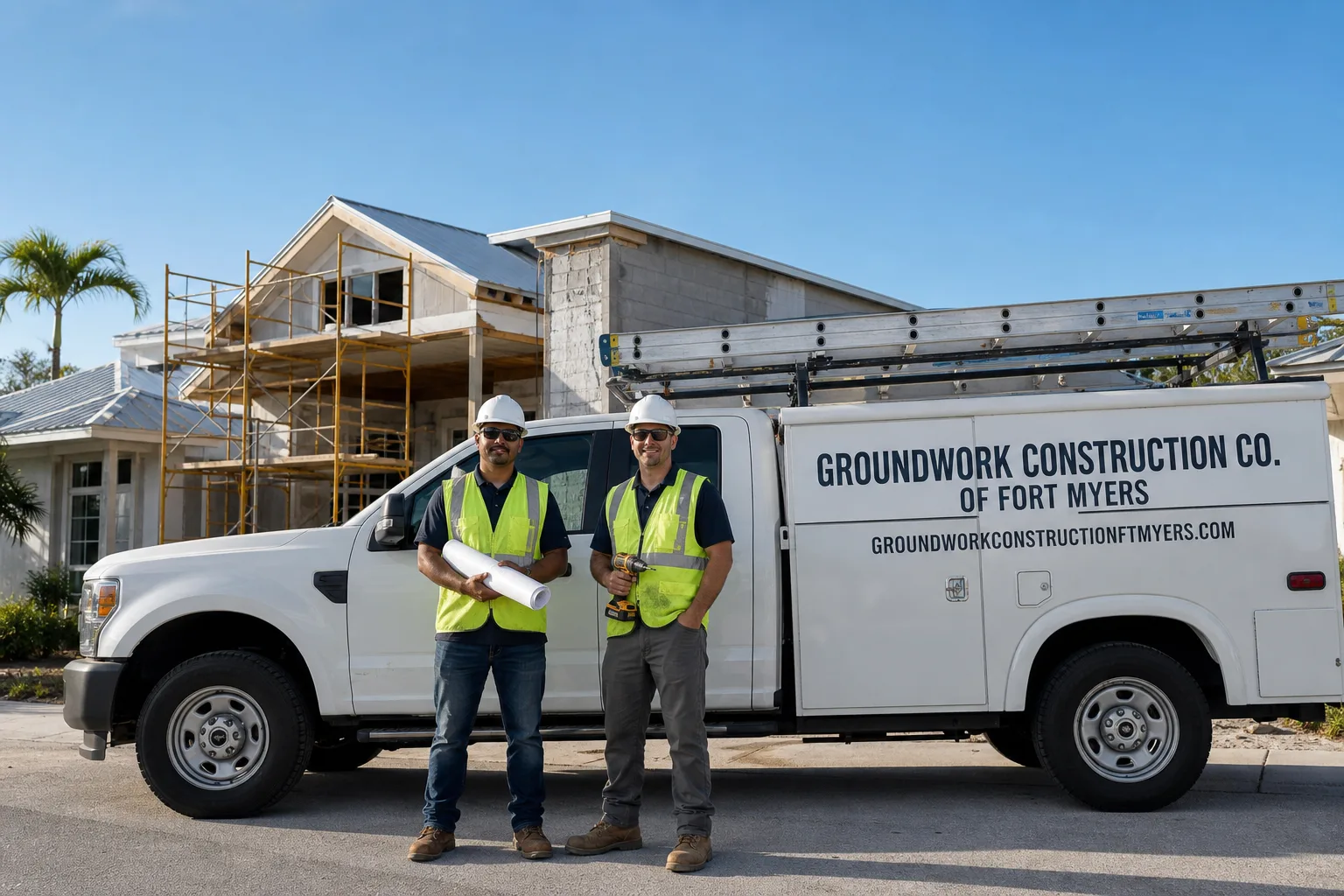
What a Paver Driveway Actually Looks Like in Harlem Heights, FL - Timeline and Real Cost
A paver driveway in Harlem Heights, FL typically runs between $7,000 and $18,000 and takes about five to eight working days from demolition to final compaction. The job removes your old concrete or asphalt slab, regrades the base with compacted crushed stone, and installs interlocking concrete pavers on a sand setting bed. You can drive on it the same day we finish compacting. Call (844) 638-7249 to get a written, line-item quote for your property - we give you the number before you commit to anything.
How We Build a Paver Driveway - Day by Day
Most homeowners in Harlem Heights haven’t been through a paver installation before, and knowing what to expect each day removes the anxiety. Here’s the real sequence we follow, and what you’ll need to decide at each stage.
Day 1 - Demo and rough grade. We saw-cut and remove the existing driveway surface - concrete, asphalt, or whatever’s there - and haul it off. Then we excavate down roughly eight to ten inches below the finished grade, depending on the soil we hit. In Harlem Heights, older homes often have a thin, unreinforced slab poured right on sand, so demo moves fast. If we find buried stumps or saturated soil from Ian’s flooding, we stop and let you know what it means for the base prep. You don’t need to decide anything today, but we’ll confirm the paver style and color you picked at the estimate.
Day 2 - Sub-base and compaction. We lay a geotextile fabric down first to keep the sandy native soil from migrating up into the stone base over time. Then we bring in roughly six inches of crushed limestone or recycled concrete base, compacted in lifts with a plate compactor. This is the part that makes a paver driveway survive southwest Florida’s wet-dry cycles and the occasional tropical storm without settling. You’ll see a lot of dust and hear the compactor - standard stuff.
Days 3 and 4 - Edge restraints and sand bed. We install concrete or aluminum edge restraints along the entire perimeter and spike them in. This keeps the pavers from drifting outward under vehicle load. Then we screed a one-inch layer of coarse bedding sand. The sand layer is what lets us get the final grade and slope just right so water sheets off toward the street or a yard drain. If your Harlem Heights lot is flat - many are - we’ll talk slope at this point to make sure you’re not getting puddling near the garage door.
Days 4 through 6 - Paver laying and cutting. The pavers go down in your chosen pattern - herringbone, running bond, or a basketweave - starting from a fixed edge and working across. We cut pavers to fit around drains, the garage slab, and any curved borders with a wet saw. You don’t need to be home for this, but if we hit an unexpected utility box or an irrigation line the previous contractor buried too shallow, we’ll call you before we touch it.
Day 7 or 8 - Joint sand, compaction, and walkthrough. We sweep polymeric sand into the joints, run the plate compactor over the entire surface to lock everything together, and mist it to activate the polymer. That joint sand is what stops weeds and ants from colonizing the driveway - a big deal in Harlem Heights, where fire ants are relentless. We do a final walkthrough with you, check the slope with a level, and hand you a care sheet. You can park on it that evening.
The Paver Options You’ll Choose Between
When we price a paver driveway in Harlem Heights, you’re really picking across three dimensions: the paver itself, the pattern, and the finish. These choices move both the look and the cost. Here are the ones that matter most.
- Concrete pavers vs. clay brick. Concrete pavers - brands like Oldcastle and Belgard - cost less, come in more shapes and colors, and handle southwest Florida’s heat without fading. Clay brick costs more but gives a genuine Old Florida look that some Harlem Heights homeowners want for mid-century houses. Both hold up. Concrete is the pick nine times out of ten here, simply because it matches the neighborhood’s practical, no-fuss aesthetic.
- Tumbled vs. smooth finish. Tumbled pavers have roughed-up edges that look like old European stone. Smooth, precision-cut pavers give a cleaner, more modern line. Tumbled hides tire marks and minor stains better - relevant if you’ve got a shaded driveway where mildew forms fast in our humidity.
- Standard-thickness vs. permeable pavers. Most driveways use standard 60mm pavers on the sand-and-base system. Permeable pavers are thicker (80mm) with wider joints and a deeper stone reservoir underneath. They let water drain straight through, which can reduce runoff onto the street - something Lee County stormwater reviewers sometimes ask about. They add cost but can simplify a drainage swale requirement.
- Color and blend. Harare Heights homes lean toward earth tones - buff, tan, charcoal, and a warm red blend. We keep sample boards in the truck so you can see full-size pavers against your house color in natural light. Color doesn’t change the price, but custom blends take an extra day to order.
- Border and inlay details. A soldier-course border - a single row of pavers set perpendicular around the edge - frames the driveway nicely and costs a little extra in labor and cutting. Inlay patterns, like a contrasting diamond or compass rose, are pure design calls. We’ve done a few on newer Harlem Heights rebuilds where the homeowner wanted the driveway to feel like an entry, not just a parking pad.
What Paver Driveways Cost in Harlem Heights, FL
Paver driveway installation in Harlem Heights lands between $7,000 and $18,000 for most jobs. A typical two-car driveway, roughly 500 to 700 square feet, with a standard concrete paver and a straightforward site, runs $10,000 to $14,000. That’s the number most of our estimates cluster around. Here’s what pushes a job toward the low or high end of that range.
Square footage. This is the biggest lever. A single-car driveway might be 350 square feet; an oversized three-car with an apron and a walkway can hit 1,200. Every extra hundred square feet adds roughly $1,200 to $1,800 in materials and labor.
Existing slab removal and hauling. A thin 3-inch slab on sand - common on pre-1980s Harlem Heights homes - breaks out fast. A thicker, wire-mesh-reinforced slab that some rebuilds poured post-Ian takes longer to demo and dump. The difference can be $800 to $1,500.
Base depth and soil correction. If the native soil is pure sand and drains well - and much of Harlem Heights is - our standard base depth works. If we hit mucky, organic soil or evidence of past flooding saturation, we excavate deeper and bring in more stone. That can add $1,000 to $3,000 depending on the square footage.
Paver type, thickness, and pattern. A tumbled concrete paver in a running-bond pattern is the most cost-effective choice. A clay brick herringbone with a permeable base system, a soldier-course border, and a contrasting inlay is the high end. The material upgrade alone can swing the job $2,000 to $5,000.
Permitting and inspections. Lee County requires a permit for a paver driveway replacement. The permit fee itself is modest, but the associated inspection schedule - base compaction, final - takes coordination time, and in Harlem Heights the post-Ian inspection backlog is real. We include permit management in our price. Jobs that trigger additional stormwater review, typically because the lot is near a FEMA flood zone or the driveway area exceeds a certain impervious-surface threshold, add plan-review time and sometimes a small engineering letter.
Every Groundwork Construction Co. estimate is a line-item document you can read through at your kitchen table. It shows the paver product, the square footage, the base depth, the edge restraint type, the permit fee, and the total - no allowances, no “to be determined” lines, no change orders unless you ask us to add scope. Call (844) 638-7249 to schedule a free on-site estimate, and we’ll measure and price your exact driveway while you’re standing there.
How Harlem Heights Homes Change the Paver Driveway Job
We work on a lot of concrete-block and wood-frame homes built from the 1950s through the 1980s in Harlem Heights, and the driveway is almost never a straightforward swap. Most of the original driveways we pull up are thin, unreinforced slabs poured directly on sand, with no control joints and no perimeter footing. They’ve cracked and settled for forty or fifty years, and the base underneath is often contaminated with organic material. We routinely remove a layer of decayed roots and saturated sand before we start building back up.
Harlem Heights also sits in Lee County’s post-Ian reconstruction zone, which means the permitting and inspection rhythm here is different from what you’d find ten minutes away in Fort Myers or Pine Manor. Lee County’s building department on Colonial Boulevard is still running a phased inspection backlog, and our permit expediter stays on top of the schedule so your base-inspection window doesn’t slip. A missed call can push a final by two weeks in this queue. For a paver driveway, the permit is straightforward - a site plan showing the new impervious area and drainage direction - but if your property falls within a revised FEMA flood zone, we may need to document that the new pavers aren’t increasing runoff toward a neighbor or the street. We handle that paperwork end to end; you don’t chase anything.
We also see a lot of driveway projects here that are part of a larger post-storm rebuild. A homeowner replaced the roof and windows through insurance, and now the cracked driveway is the last piece. Sometimes that conversation leads toward a full Driveway & Pavers in Harlem Heights scope - patios and walkways tied into the new driveway pattern. Others are pairing the paver work with a Garage Conversion ADU in Harlem Heights, where the driveway access and parking layout have to be replanned around a new living unit. If you’re thinking bigger-picture, we can scope the whole project at once and give you one estimate that sequences everything logically.
Serving Harlem Heights, FL - Our Local Coverage Area
We’re based in the Harlem Heights area and know this community well. Use the map below to see our service coverage - if you’re nearby, we can almost certainly help.
Frequently Asked - Paver Driveways in Harlem Heights
Plan on five to eight working days. Demo and base prep take the first two days, laying pavers takes two to three, and joint sand and final compaction happen on the last day. You can park on the driveway the evening we finish compacting the sand. Weather can stretch the schedule - a heavy summer afternoon storm stops outdoor work for the day, and we won’t lay pavers in standing water. We build a weather pad into our schedule when we give you a start date.
Yes. Lee County requires a permit to replace or install a driveway surface, including pavers. We pull the permit as part of the job. The county inspects the compacted base before we lay pavers and does a final inspection after joint sand. We coordinate all of it, and permit cost is in your estimate. Call (844) 638-7249 if you want to know what the current permit timeline looks like - it shifts month to month.
Not if the base is done right. Harlem Heights sits on sandy native soil that drains well, which is actually an advantage for paver work - water moves through it instead of sitting and swelling like clay would. The key is the compacted stone base and the geotextile separator we install. Together they spread the load and keep the sand subgrade from migrating upward. We also spike concrete edge restraints along the full perimeter so the pavers don’t drift laterally. Settling comes from shortcuts on base depth, not from the soil type.
A paver driveway in Harlem Heights runs $7,000 to $18,000, while a poured concrete driveway with basic broom finish typically runs $4,500 to $12,000. Pavers cost more upfront because of the extra labor in base prep, laying, and cutting. The trade-off is durability and repairability: if a paver cracks or stains, you lift that single unit and replace it. If a concrete slab cracks, the repair line never fully disappears. In a community where the water table and storm-driven ground saturation are facts of life, pavers give you a driveway that flexes without failing. The Driveway & Pavers crew at Groundwork can price both options for your house so you can compare real numbers side by side.
Usually, yes - if the original product is still manufactured. We take a photo and a measurement of your existing paver and match it to current Belgard or Oldcastle lines. Color lots change slightly over the years, so a ten-year-old patio won’t be a perfect shade match, but we can get it close enough that only you’d notice. If the original pavers are discontinued, we’ll show you the nearest current equivalent and let you decide whether to match or redo the whole hardscape as one cohesive layout. A few Harlem Heights homeowners have used this moment to tie the driveway into a new ADU Design & Permitting in Harlem Heights project, where the paver selection unifies the primary house, the ADU, and all the connecting paths.
Let’s Price Your Paver Driveway in Harlem Heights
We’ll come to your house in Harlem Heights, measure the driveway area, check the base conditions, and hand you a printed, line-item estimate before we leave. No ranges, no allowances, no callbacks three days later with a higher number. Groundwork Construction Co. has been doing this since 2014, and every paver driveway we install is covered by our 730-Day Done Right Promise - if something isn’t right, we make it right. Call (844) 638-7249 to schedule a free estimate. A live person answers, any time of day.
Written by Derek Hollenbeck, Owner at Groundwork Construction Co., providing paver driveway installation across southwest Florida since 2014.