
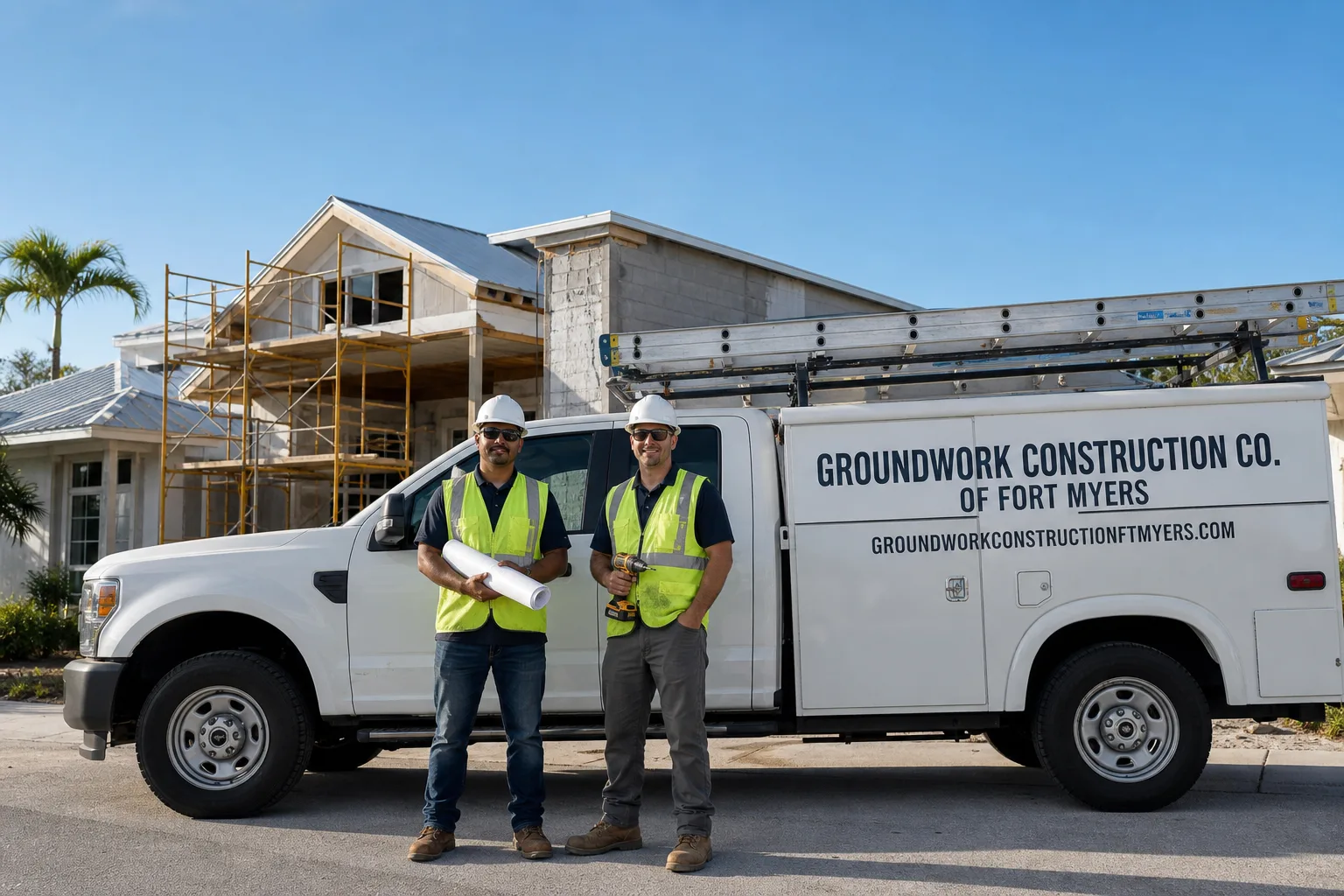
What Specialty Roofing in Harlem Heights Actually Involves, What It Costs, and When We Can Start
Specialty roofing in Harlem Heights means any roof system beyond a standard asphalt shingle tear-off and replacement, and the price range for these projects typically runs from $15,000 to $40,000, depending on material and structural scope. Most specialty roofing jobs here involve metal standing-seam, tile (concrete or barrel), flat/low-slope TPO or modified bitumen, or architectural metal accent roofs tied into a larger Roofing in Harlem Heights project. We schedule a free on-site estimate within days, and once materials are ordered and permits secured through Lee County’s current backlog system, the physical work takes between 5 and 14 working days on site. Call (844) 638-7249 and we will walk the roof with you, take measurements, and return a written, line-item quote.
How We Take a Specialty Roof Through the Lee County Process, Start to Finish
The sequence matters more in Harlem Heights right now than it does in most places. Ian changed the permitting timeline, and an out-of-order step will cost you weeks. Here is how we move a specialty roofing job from the first call to the final inspection:
Stage 1: On-site roof assessment and material consultation (Day 1-3). We come to the property, measure every plane, photograph existing flashing and penetration details, and document the current underlayment condition and decking type. For specialty roofing in Harlem Heights, we are almost always looking at older concrete-block or wood-frame homes built between the 1950s and 1980s, so we check for the undersized tie-downs and corroded fasteners that Lee County inspectors will flag. This is the stage where you decide between material families like standing-seam metal versus barrel tile, and we give you real lead-time estimates for each. We also confirm whether the existing deck can carry the weight of tile or whether it needs reinforcement, which is a common finding on the older homes off Gladiolus Drive and in the Pine Manor-adjacent blocks.
Stage 2: Permit package and wind-mitigation engineering (concurrent, 2-4 weeks). Specialty roofing triggers a structural review in Lee County: tile and metal both require a signed-and-sealed engineering letter confirming the roof-to-wall connections meet current uplift standards for the 150+ mph wind zone. Our permit expediter walks the package into the county office on Colonial Boulevard so it does not sit in the general queue, which remains backed up from the post-Ian rebuild surge. This is also when we order materials, because specialty metal panels, custom tile profiles, and TPO membrane rolls are not sitting on a shelf at a supply house; they are manufactured to order with lead times running 2 to 6 weeks depending on the product.
Stage 3: Tear-off, deck inspection, and dry-in (Days 1-2 on site). The crew strips the existing roof down to the decking. On Harlem Heights homes that took Ian wind or water, we regularly find soft or delaminated plywood and rusted-out fastener heads that were not visible from below. We replace any compromised deck boards by the sheet and then install the high-temperature self-adhered underlayment required by Florida code for metal and tile systems. The dry-in is complete by the end of day two, and the roof is watertight even before finish material goes on. You will see a county inspector at this stage for a nail-pattern and nailable-surface check; a missed inspection window here is what delays projects in unincorporated pockets, so our team confirms the appointment before the tear-off even begins.
Stage 4: Material installation and flashing (Days 3-10+). This is the phase where the roof becomes what you picked. For standing-seam metal, panels are roll-formed on site or delivered pre-cut and mechanically seamed; the crew sequences from eave to ridge, installing closure strips, Z-flashing at walls, and vented ridge caps. For tile, the sequence goes batten grid first, then tile laid and fastened course by course, with all hips and ridges set in a mortar or adhesive bed. Specialty roofing in Harlem Heights almost always includes custom flashing at the boxed eaves and soffit returns common to 1960s-era homes here. We are also replacing pipe boots, attic ventilation, and drip edge. If a homeowner is pairing roof work with new Sliding & Patio Doors in Harlem Heights, we coordinate the door install so the flashing ties in without rework.
Stage 5: Final inspection, cleanup, and close-out (Days 12-14). The county inspector verifies the finished assembly against the permitted plans: fastener pattern, tile attachment, underlayment exposure, and the wind-mitigation details called out in the engineering letter. We walk the property with you, run a magnetic sweeper for fasteners, and hand over the manufacturer warranty registration and our 730-Day Done Right Promise in writing. A specialty roof adds real weight to the structure; we make sure the paperwork reflects the wind-mitigation credits your insurer will want.
The Options You Will Choose Between for a Specialty Roof
Every specialty roofing project in Harlem Heights starts with two big decisions: the material family and the attachment method. The right answer depends on your home’s framing, your insurance goals, and how long you plan to own the property. Here are the real-world choices:
- Standing-seam metal (24- or 26-gauge steel, often Galvalume or Kynar-finished). This is the top choice for wind resistance and insurance discounts. Panels run continuously from ridge to eave with no horizontal seams. The trade-off is cost: metal sits at the upper end of the specialty roofing range, and on a cut-up roof with lots of valleys and dormers, the waste factor and labor jump noticeably. It also requires a solid deck or purlin grid and high-temperature underlayment. For a 1950s concrete-block ranch in Harlem Heights, metal will likely outlast the next two hurricanes without a shingle lost.
- Concrete or barrel tile (flat profile or S-tile). Tile is heavy, 600 to 1,100 pounds per square, which means the trusses or rafters must be checked. Many older Harlem Heights homes need supplemental bracing to carry the load, adding $1,500 to $4,000 to the project before the first tile is set. Tile handles the salt air better than metal in some ways; it does not corrode, though the fasteners holding it eventually will. The look is classic Florida, and it does very well with HOAs that require a specific profile.
- TPO or modified-bitumen for flat and low-slope sections. A lot of the older homes here have a flat patio roof, a carport, or a low-slope addition off the back. These sections cannot use shingle, metal, or tile without a slope change. TPO (white, heat-reflective, heat-welded seams) is our standard recommendation because it cuts attic temperatures in southwest Florida’s sun. Modified bitumen is a torch-down alternative that works well but costs more to repair if it is ever punctured.
- Architectural metal accent roofing (painted steel or copper-look aluminum). When a homeowner wants a metal eyebrow over a front entry, a standing-seam porch roof, or a cupola feature, this is a smaller specialty roofing scope. The decision points are gauge, finish, and whether we are matching an existing roof color or starting fresh. Lead times on custom-finished coil can stretch to 6 weeks, so we order early.
We do not push one material over another. We give you the per-square cost, the lead time, the wind-mitigation credit potential, and the expected service life in Harlem Heights’ salt-air and hurricane corridor, and you decide.
What Specialty Roofing Costs in Harlem Heights, FL
A specialty roofing project in Harlem Heights runs from $15,000 to $40,000, with most falling between $18,000 and $28,000. The five variables that genuinely move the number are:
Roof size and complexity. A 1,500-square-foot ranch with a simple gable costs less to roof in metal or tile than a 3,000-square-foot two-story with hips, valleys, and dormers. More cuts equal more labor and higher waste.
Material choice. Standing-seam metal costs more per square than concrete tile, and within metal, a Kynar 500 finish costs more than a standard SMP paint system. Barrel tile profiles cost more than flat tile because of the labor to set and cap the curved pieces.
Deck and structural condition. On the 1960s and 70s homes common in Harlem Heights, we often replace 30% to 60% of the deck boards once the old roof comes off. If the trusses need reinforcement for tile weight, that is an engineered line item. Both add real dollars the day of tear-off, and we flag the likely scope during the estimate so you are not surprised.
Flashing and penetration scope. Every pipe, vent, skylight, and chimney requires custom flashing, and on older homes there are often abandoned plumbing stacks or old swamp-cooler curbs that need to be decked over and sealed. A straightforward roof with no penetrations costs less than a roof with six plumbing vents, a masonry chimney, and two skylights.
Permit and inspection fees. Lee County permit fees scale with project valuation, and specialty roofing valuations trend higher because the materials cost more. Our written quote includes the permit line item so you see exactly what goes to the county and what goes to the roof.
We hand you a fixed-price, line-item estimate that covers tear-off, deck repair allowance, underlayment, material, flashing, trim, freight, permit fees, and cleanup. The only thing that changes the number after we start is if we open the deck and find structural damage well beyond what we could see from below, and we never proceed on that without your approval.
What Harlem Heights Homes Specifically Do to a Specialty Roofing Job
Harlem Heights sits squarely inside Lee County’s Hurricane Ian ground-zero reconstruction zone, and that fact touches every specialty roofing project here. The housing stock is predominantly modest concrete-block and wood-frame homes built from the 1950s through the 1980s, most of which predated the post-Andrew 1994 code revisions and the 2002 Florida Building Code. When we open a roof on a home off Park Meadows Drive or in the streets north of Gladiolus, we routinely find undersized hurricane straps, corroded H-clips, and decking nailed with smooth-shank fasteners that have lost their grip. Lee County inspectors will not sign off on a new specialty roof until the tie-downs meet current uplift standards, so the project scope almost always includes retrofit strapping and a nailing-pattern upgrade. That is not a surprise to us; it is baked into the way we estimate Harlem Heights jobs.
The salt air here is another factor people do not think about until fasteners start rusting. Harlem Heights sits in the high-humidity, high-salt-air corridor just inland from the Gulf, and embedded steel in older block walls and roof-to-wall connections corrodes faster than it does five miles inland in Fort Myers. We use stainless or high-grade coated fasteners on every specialty roof because anything less fails early in this environment. The post-Ian permitting reality also means we keep a dedicated relationship with the county office on Colonial Boulevard: the phased inspection backlog that built up after the storm continues to delay final inspections in unincorporated pockets, and a missed appointment can push a completion date back by weeks. For our Harlem Heights customers, we confirm the inspection window before the tear-off even starts, and we are on site when the inspector arrives.
Homeowners here who are investing in a specialty roof often ask us about tying the project into other exterior upgrades, and it makes sense. While we have the crew and equipment on site, it is the right time to look at Glass Railing Systems in Harlem Heights for a lanai or balcony that was damaged in the storm. Our roofing division handles the roof, and the railing crew can work concurrently. We cover every part of Harlem Heights, and we know which blocks needed FEMA elevation recertifications and which did not.
Serving Harlem Heights, FL - Our Local Coverage Area
We’re based in the Harlem Heights area and know this community well. Use the map below to see our service coverage - if you’re nearby, we can almost certainly help.
Frequently Asked Questions About Specialty Roofing in Harlem Heights
The on-site work for specialty roofing in Harlem Heights takes 5 to 14 working days, depending on roof size, material, and structural surprises. The full timeline from signed contract to final inspection runs 4 to 10 weeks, driven mostly by Lee County’s permit backlog and material lead times. Metal panels and custom tile profiles are made to order and cannot be pulled from inventory, so expect a 2- to 6-week wait for materials after the order is placed.
Yes. Lee County requires a building permit for any specialty roofing project that involves a material change, structural attachment, or underlayment replacement. A signed-and-sealed engineering letter confirming wind-uplift compliance is part of the submittal package. We pull the permit as part of the job, and the cost is a line item on your estimate. Call (844) 638-7249 and we can discuss the exact permit scope for your roof.
Florida code allows a metal retrofit roof to be installed over a single layer of existing shingles in certain conditions, but we rarely recommend it on the older Harlem Heights homes we see. The existing deck and fasteners are often in worse shape than they look from below, and skipping the tear-off means we cannot inspect or upgrade the tie-downs, which defeats the purpose of investing in a wind-resistant specialty roof. For tile, we never overlay; the weight requires a clean deck and verified structural capacity.
In most cases, yes, and meaningfully. A standing-seam metal roof with the appropriate wind-mitigation documentation often qualifies for the highest premium credits available under Florida’s wind-mitigation discount schedule. Tile roofs also qualify, though the credit varies by insurer and attachment method. We give you the completed wind-mitigation inspection form at close-out so you can submit it directly to your carrier. The savings typically recover a portion of the material premium within a few policy cycles.
It comes in two layers. The manufacturer covers material defects: metal finish warranties run 25 to 40 years on a Kynar system, and tile manufacturers warrant against cracking and color fade. Our workmanship is covered by the Groundwork Construction Co. 730-Day Done Right Promise: if something is not installed correctly, we fix it on our dime. After two years, workmanship issues typical of poor install like leaks at penetrations or loose flashing have shown themselves, and our work holds. For a free, written estimate on specialty roofing in Harlem Heights, call (844) 638-7249.
Get a Fixed-Price Specialty Roofing Estimate in Harlem Heights
You will get a written quote with every line broken out: tear-off, deck allowance, underlayment, material, flashing, trim, permit fees, and cleanup, no lump sums and no change orders unless you ask for a scope change. We schedule the on-site walkthrough around your availability, measure the roof in person, and talk through material options and lead times while we are there. Call (844) 638-7249 or request a call through our site, and a real person answers, day or night. The estimate is free, and the 730-Day Done Right Promise covers every specialty roofing project we do in Harlem Heights.
Written by Derek Hollenbeck, Owner at Groundwork Construction Co., serving Harlem Heights and Lee County with full-scope home construction since 2014.