
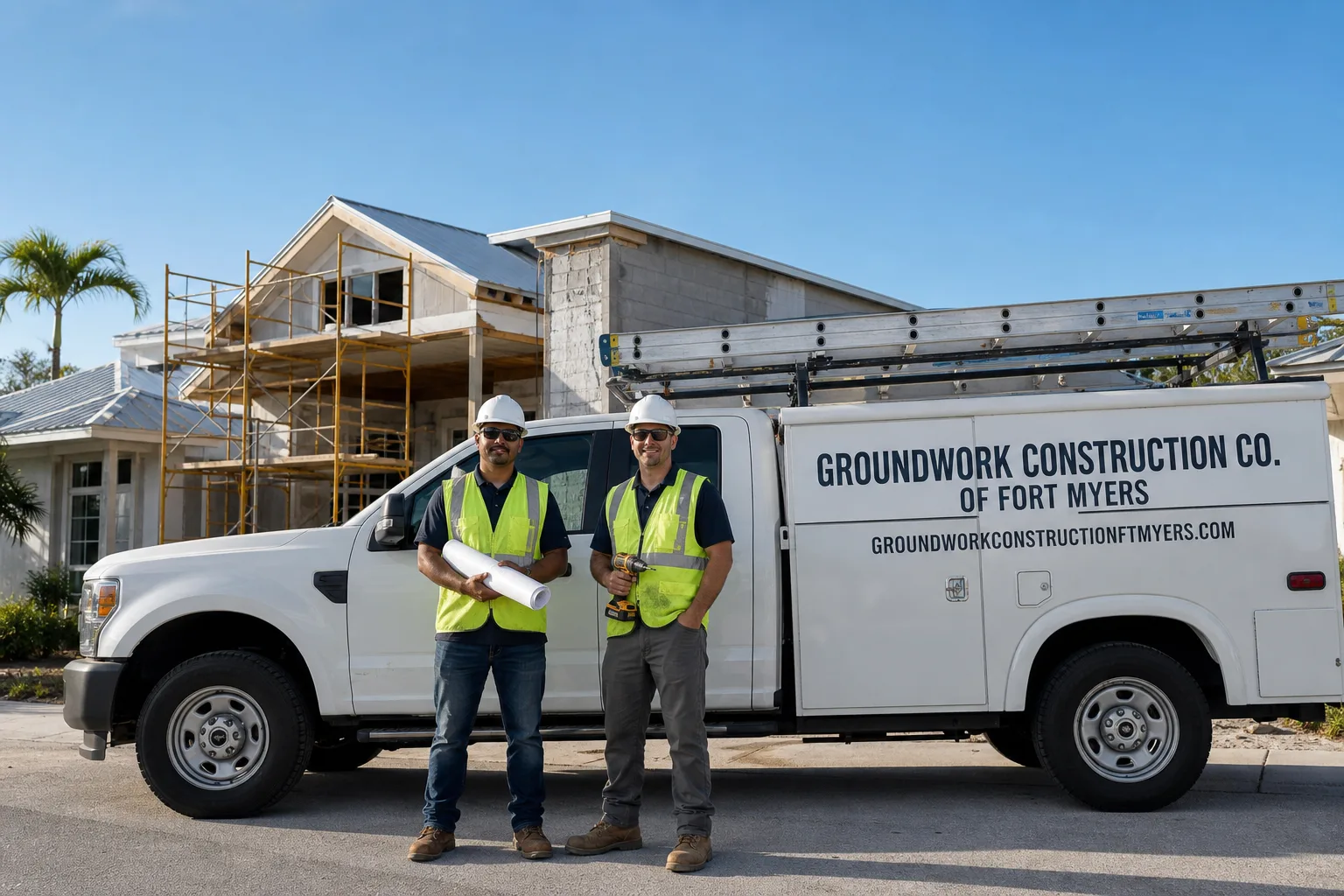
What an ADU Site Prep & Utilities Project Really Entails in Iona
ADU site prep and utilities in Iona means turning a raw piece of your property into a fully connected, permitted build site ready for foundation work and vertical construction. The job covers everything from clearing and grading to trenching, running sewer laterals, pulling new electrical service, and extending domestic water lines. A typical site-prep phase here runs 3-6 weeks, depending on utility distance and whether Lee County requires seawall certification first, and most Iona homeowners spend between $45,000 and $130,000 before the first wall goes up. For an on-site estimate that accounts for your specific lot’s setbacks and base flood elevation, call (844) 638-7249 - we walk the site, measure the runs, and give you a fixed number, not a range to grow into.
How We Take a Raw Lot to a Build-Ready Site
The process for ADU site prep and utilities in Iona follows the same sequence every time, because skipping a step here means ripping work out later when the inspector flags it. Here is how it goes on the ground, stage by stage.
Stage 1: Site survey and utility-locate day. We bring in a surveyor to stake the ADU footprint, setbacks, and easements, then dial 811 to mark existing gas, electric, water, and sewer lines. This takes one day, and it is the single most important day of the project. For Iona canal-front lots, we also coordinate with a marine engineer if the seawall certification is still outstanding - Lee County will not issue a building permit without it, and we won’t cut earth until the permit is in hand. You decide: confirm the ADU placement within the staked lines before we go further.
Stage 2: Clearing, grubbing, and lot grading. We remove vegetation, root balls, old concrete, and anything else sitting where the ADU will go. Then we rough-grade the pad area to direct drainage away from the future slab. On Iona’s low-lying finger-canal parcels, this often means importing fill to get the finished slab elevation above the current base flood elevation - a post-Hurricane Ian reality we deal with on nearly every job here. This stage typically takes 3-5 working days. You decide: whether to retain any mature trees within 20 feet of the footprint, knowing their root systems may need root-barrier protection later.
Stage 3: Trenching and utility rough-in. We dig the trenches for sewer, water, and electrical service, lay the bedding material, and install the lines per Lee County code. Distances matter here. If your ADU sits 80 feet from the main panel, the wire-gauge and conduit cost jumps fast; if the sewer lateral needs to run 120 feet to the street tap with a specific fall rate across a flat lot, that requires deeper trenching and often a pump-up system. Stormwater drainage - swales, catch basins, or dry wells - gets installed during this stage, too, because Iona’s afternoon thunderstorms in the wet season will turn an un-drained work site into a pond in 30 minutes. Allow 5-8 working days for this stage. You decide: main panel amperage upgrade (200A to 400A, for example) if the existing service cannot carry the ADU load, which we verify before we pull the wire.
Stage 4: Backfill, compaction, and underground inspection. Once the utilities are in the ground and before a single shovel of dirt covers them, Lee County performs the underground inspection. We call it in, the inspector signs off, and only then do we backfill and mechanically compact the trenches and pad area in lifts. Compaction matters more here than a lot of people realize - Iona’s sandy soil drains fast but settles unevenly if it is not compacted right, and a settled sub-base under a slab-on-grade ADU is a repair nobody wants. This stage wraps in 2-3 days, including inspection scheduling. You decide: nothing at this stage, which is exactly how it should be.
Stage 5: Foundation prep and final site cleanup. We form the slab perimeter, install the vapor barrier and steel reinforcement, and pour the slab. The utility stub-outs for water, sewer, and electric come up through the slab exactly where the ADU plans call for them, ready for the vertical-construction crew to connect. Final exterior grading and erosion control go in, and we schedule the slab inspection. From the first survey stake to a poured, inspected slab, the site-prep phase on a typical Iona ADU runs 3-6 weeks; the most common variable we see is the time Lee County takes to process the permit and schedule the underground inspection. You decide: slab-edge treatments and any conduit stubs for future outdoor lighting or a detached garage feed, because it’s cheaper to put the pipe in now than to saw-cut concrete later.
The Choices That Shape the Final Number
ADU site prep and utilities in Iona is never a one-price-fits-all job. The spread between a lower-end project and a higher-end one comes down to the materials and configurations you choose - and each option has a trade-off worth understanding before you commit.
- Electrical service: sub-panel vs. new separate service. A sub-panel off the main house is the lower-cost path and works fine when the existing panel has capacity to spare. The trade-off is shared reliability - a trip on the main panel can take the ADU down, too. A new separate service with its own meter and disconnect costs more upfront but isolates the ADU electrically, which matters if you plan to rent the unit and want separate metering and billing. In Iona, where many 1970s-era panels are already near their amp limit, we often recommend upsizing the main service to 400A and running a 100A sub-panel to the ADU - it’s the middle path that balances cost and future-proofing.
- Sanitary sewer: gravity lateral vs. pump-up system. If the elevation from the ADU’s lowest drain to the municipal tap allows a gravity fall of at least 1/8 inch per foot, a gravity lateral is the simpler, less expensive choice. On Iona’s flat canal-side lots where the street tap sits higher than the slab drain, you’ll need a pump-up (grinder-pump) system with a holding basin and discharge line. The pump-up adds $6,000-$12,000 to the utility budget, but it is not optional when gravity will not work - and Lee County will not sign off on an improper fall. We’ll survey the invert elevations and show you the numbers before we order the first length of pipe.
- Domestic water: single feed vs. dedicated meter with backflow. Most Iona ADUs tie into the existing house water service after the meter, with a separate shutoff valve and a backflow preventer. That’s the lean, straightforward option. If the ADU is truly a separate rental-grade dwelling, a dedicated water meter with its own RPZ backflow assembly gives you clean utility separation, but it means tapping the water main and paying Lee County’s meter-set fee - a few thousand dollars more. Either way, we install a building-level shutoff accessible from outside so you can isolate the ADU without walking into the tenant’s space.
- Stormwater management: swales vs. underground retention. A graded grass swale directing runoff toward the street or canal is the least expensive path and works on lots with sufficient frontage and slope. Where space is tight - a common situation on Iona’s 0.15- to 0.25-acre finger-canal parcels - an underground retention system (perforated pipe in gravel, or a chamber system) takes up far less yard and handles the same volume of water. The underground approach costs more but preserves usable outdoor space, which matters on a small lot where every square foot counts.
What ADU Site Prep & Utilities Costs in Iona, FL
The majority of ADU site prep and utilities projects in Iona fall between $45,000 and $130,000. That range covers a standard 600-1,200-square-foot detached unit, from the first survey stake through a poured, inspected slab with all utility stubs in place. It is a wide band because the variables are real and specific to your lot, not because the price is loose.
The four things that move the number most: the distance from the house’s existing panel and water/sewer taps to the ADU pad - longer runs mean more copper, more conduit, more trenching, more labor. Whether the sewer lateral can go gravity or requires a pump-up system - a flat lot near the canal can add five figures in a single decision point. Whether Lee County’s substantial-improvement threshold gets triggered by the combined value of post-Ian repairs and the new ADU, which can force a whole-structure elevation and turn your site-prep job into something heavier. And the soil condition once we open the ground - Iona’s sandy loam drains well, but we occasionally hit muck pockets along the canals that need over-excavation and engineered fill, which adds days and dollars.
A written estimate from us includes the survey, clearing, grading, fill if needed, trenching and utility installation, backfill and compaction, slab form and pour, all required Lee County inspections, and a clean, graded site ready for framing. What it typically does not include: Lee County impact or meter-tap fees, which go straight to the county; seawall certification from a third-party marine engineer, if your lot requires it; and any requested upgrades outside the permitted scope that surface mid-project. We price the work you need, we show you the line items, and the number we give you is the number you pay - no change orders because we guessed wrong on a trench length.
What Iona Homes Specifically Do to This Job
ADU site prep and utilities in Iona is shaped by the water, the wind, and the regulatory layer that came after both. This is unincorporated Lee County, which means every permit on every canal-side lot runs through the same Building Department that has been processing a flood of Ian-related substantial-improvement reviews since late 2022. For a lot of our neighbors on streets like McGregor Boulevard, Coconut Road, and the cross-streets feeding the Caloosahatchee estuary, that means the ADU is not just a new structure - it is the event that triggers a full property reassessment against the 50% substantial-improvement rule. If your 1978 CBS rancher has an assessed value of $140,000 and you have already put $40,000 into a post-Ian roof and drywall repair, adding a $100,000 ADU pushes you past the threshold, and suddenly the whole property - existing house included - has to meet current Base Flood Elevation. We flag this in the estimating phase because it changes the job from site prep to a combined-elevation project, and you deserve to know before the first survey stake goes in.
The housing stock here matters, too. Nearly every home we work on in Iona is a concrete-block-on-slab build from the 1970s through the 1990s, with original electrical panels that were sized for a single-family load in 1983, not for a fully electrified ADU with a mini-split, induction range, and EV charger forty years later. Upgrading the main service is not a maybe on these lots - it is almost always necessary - and we factor that into the site-prep estimate from day one. The dry-season construction window (October through May) also concentrates demand for permitting and inspections, so we schedule early and set realistic timelines that account for Lee County’s current review-cycle pace. A site-prep project planned to start in October means we have the permit application in by July, and nobody is surprised.
Many Iona properties - especially those off the canals east of the causeway - also sit in neighborhoods with active HOA design-review boards that must approve the ADU footprint, exterior materials, and setback compliance before Lee County will even open the permit file. We have navigated enough of them to know that a complete, code-clean submittal on the first round avoids weeks of back-and-forth, and we prepare the site-plan package accordingly.
Serving Iona, FL - Our Local Coverage Area
We’re based in the Iona area and know this community well. Use the map below to see our service coverage - if you’re nearby, we can almost certainly help.
Frequently Asked - ADU Site Prep & Utilities in Iona
Yes. Every aspect of ADU site prep and utilities in Iona - clearing, grading, trenching, underground plumbing and electrical, slab pour - requires a Lee County building permit and multiple inspections, and you cannot legally proceed without one. The work falls under the same Florida Building Code jurisdiction as the vertical construction, and Lee County’s post-Ian permitting environment means plan-review timelines can stretch longer than they did pre-2022. We handle the permit package as part of the project and do not break ground until the permit card is posted.
On a typical Iona lot without extensive fill requirements or seawall delays, you are looking at 3-6 weeks from the day we set the survey stakes to the day the slab passes inspection. The biggest variable we cannot fully control is Lee County’s inspection-scheduling window, but we call in the underground and slab inspections as early as the code allows and adjust the work sequence to minimize idle days. A gravity-sewer site with a short utility run trends toward the 3-week end; a pump-up system with a service upgrade and fill import trends toward 6 weeks.
The utility portion of an ADU site prep job in Iona - trenching, conduit, wire, water line, and sewer lateral - typically lands between $18,000 and $45,000, depending on run lengths, panel capacity, and whether sewer can go gravity or needs a pump. The remaining site-prep budget covers clearing, grading, fill, compaction, and the slab itself. We itemize the utility and site-work lines separately in every estimate so you see exactly where the dollars go. Call (844) 638-7249 and we will walk your lot and build a real number.
Rarely, but sometimes yes - if the ADU pad sits close enough to the existing house that you can tie into the same sewer lateral downstream of the house cleanout and share the domestic water feed with a single backflow preventer, you avoid a dedicated long run. However, most Iona lots put the ADU 40-80 feet from the main house, which means new trenching and separate laterals are the practical reality. We evaluate tie-in options during the site survey and only recommend separate runs when they are necessary for code compliance or long-term reliability. Homeowners often pair an ADU build with a Full Bathroom Remodeling in Iona in the main house to coordinate utility shutoffs and trades across both projects at once.
All site-prep and utility work we do in Iona is covered by our 730-Day Done Right Promise - if something is not done right, we make it right, no fine print and no runaround. The slab, compaction, trench backfill, and underground connections are all included. For the materials themselves - the conduit, wire, pipe, and slab reinforcement - manufacturer warranties apply, and we use products from established suppliers with track records in Southwest Florida’s soil and climate conditions. This kind of ground-up utility work is often part of a larger Home Additions & ADU in Iona scope, and we carry the same guarantee across the entire project, from utilities to finish.
Let’s Walk Your Iona Lot Together
The best way to get a real price for ADU site prep and utilities in Iona is to have us out to the property. We’ll put eyes on the lot, measure the utility runs, check the panel, look at the grade, and ask about the seawall cert if you are on the water. Then we’ll hand you a written, line-by-line estimate - upfront pricing, no surprises - and you decide if the timing and numbers work. Call (844) 638-7249 to schedule your free on-site estimate. A live person answers, 24/7, and we can often have someone out within a few days to walk the site with you. From foundation to finish line, our home additions & adu crew handles the whole thing, and we stand behind every foot of trench and every yard of concrete with the 730-Day Done Right Promise. If you are also considering interior work down the road, some Iona homeowners ask us about a Small & Partial Kitchen Remodels in Iona while we are already on site - we are happy to walk through that, too. We cover all of Iona, and we know the permitting and site conditions here better than anyone who does not work this side of the causeway every day. Built to last, backed in writing.
Written by Derek Hollenbeck, Owner at Groundwork Construction Co., serving Iona and Southwest Florida.