
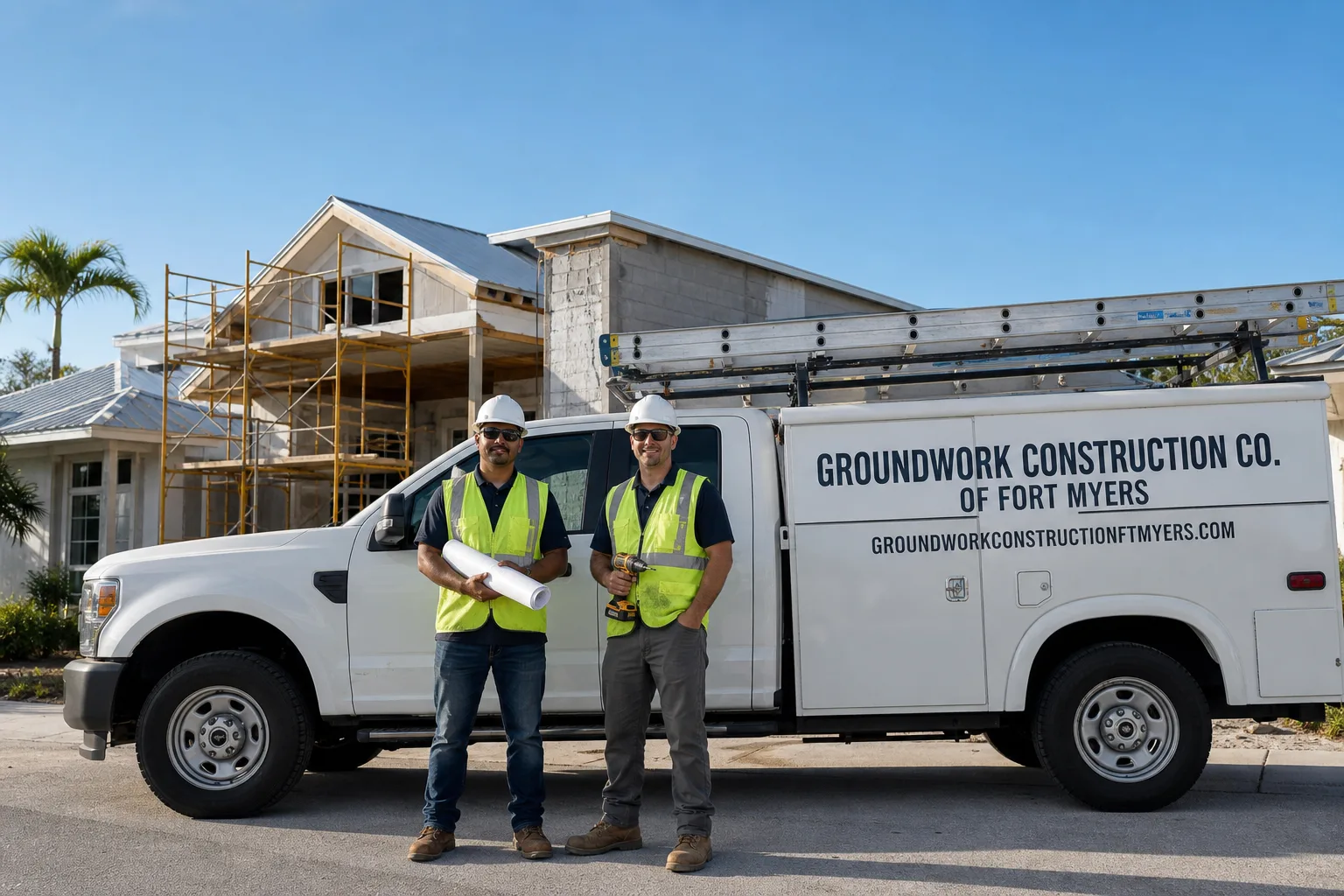
What ADU Site Prep & Utilities in Three Oaks Actually Costs and How Long It Takes
ADU site prep and utilities in Three Oaks typically runs $45,000 to $130,000, with most jobs completing the underground rough-in and slab in 14 to 21 working days once permits clear. That spread covers everything from trenching and new service drops to the finished foundation ready for framing. Call (844) 638-7249 if you already have a survey in hand - we can usually give you a hard number within two business days.
What you’re paying for is turning a patch of yard into a buildable lot within your lot. In Three Oaks, that almost always means cutting through sandy loam over limestone shelf, running new water and sewer laterals, dropping a separate electrical service or sub-panel feed, and pouring a slab tied to engineered anchor bolts. This is not a landscaping job. It’s the underground half of a small house, and getting it wrong means cutting back into concrete later.
How we handle ADU Site Prep & Utilities - the stages
We break every ADU groundwork job into five stages so the inspector sees clean work and you know what’s happening under your feet. Here’s the real sequence, week by week.
Stage 1: Survey, mark-out, and clearing (Days 1-3). We pull a fresh boundary and topo survey if you haven’t already, then locate all existing underground lines in Three Oaks. Trees, shrubs, old shed slabs - anything inside the footprint plus a five-foot work zone comes out. You decide at this stage whether we’re shaving grade to match slab height to the main house or stepping down slightly for drainage. That one decision changes the whole water-flow pattern between the two structures.
Stage 2: Trenching and utility rough-in (Days 4-8). This is the loudest, dustiest week. We trench for water supply, sewer lateral, and electrical conduit - depth varies, but Lee County’s coastal water table means we’re often hitting saturated soil at four feet, so trench safety and dewatering pumps are standard here, not optional. Your new water line ties in at the meter or the main house manifold; sewer either ties to the existing cleanout or gets its own run to the street tap depending on slope and distance. Electrical gets its own trench to a new meter pedestal or sub-panel feed from the main panel. You’ll sign off on panel location, hose bib placement, and any future gas stub-out now - adding it later costs triple.
Stage 3: Underground inspection and backfill (Days 9-11). Lee County inspectors look at every joint, every bedding layer, every tracer wire before one shovelful of dirt goes back. We don’t cover anything until they sign off. Once we get the green tag, backfill happens in compacted lifts - we use a jumping jack, not just bucket-dumping, because settling under a slab foundation is a callback nobody wants. This is also when any required home additions & adu anchor retrofit ties into the existing house get set, if the ADU is attached.
Stage 4: Forming, reinforcing, and slab pour (Days 12-16). Forms go up, vapor barrier goes down, rebar and mesh get tied to the engineered spec, and all hold-down anchor bolts - required by Florida Building Code for uplift resistance - get set in wet-set or epoxy, depending on the structural engineer’s detail. The pour itself is usually a single-day event with a pump truck. We order a minimum 3,000 PSI mix; on Three Oaks sites where we know the soil has limestone variability, we often bump it to 3,500 PSI and add fiber reinforcement. Flatness matters here because you’re eventually flooring over this - we finish to a FF 25 minimum so your future floor installers aren’t cussing us out.
Stage 5: Cure, strip forms, and final rough-in verification (Days 17-21). Concrete cures to design strength in 28 days, but framing can start after seven with proper moisture curing. We keep the slab damp under curing blankets for the first week, then strip forms, check all stub-outs against the architectural set, and do a water-pressure test on the supply line before handing the pad off. This is when homeowners often pair the groundwork stage with a Small & Partial Kitchen Remodels in Three Oaks inside the main house - if you’re already living through site work, bundling interior work is smart sequencing.
The choices you’ll make during ADU Site Prep & Utilities
Every ADU foundation starts with a set of real trade-offs. Here are the big ones, explained honestly - what each costs, what it delivers, and who it makes sense for.
- Slab-on-grade vs. stem-wall foundation. Slab-on-grade is the default for Three Oaks and runs on the lower end of the price range - it’s fast, it’s proven in our sandy soils, and it works well when the lot is already flat or needs minimal fill. A stem-wall foundation costs more - figure a $6,000 to $12,000 adder on a typical 600-square-foot ADU - but buys you a crawlspace for future plumbing access and gets the finished floor elevation up by 18 to 24 inches, which matters in any part of Lee County where the FEMA flood map got redrawn post-Ian. If your lot is in an AE flood zone, stem-wall may not be optional - it may be what the permit requires.
- Separate vs. shared utilities. Running a new dedicated water service and electrical meter is more upfront cost - trenching to the street isn’t cheap - but gives you clean legal separation if you ever sell the ADU as a condo or rent it with a sub-meter. Sharing the main house’s panel and water line is lower initial cost but ties the two structures together permanently on one bill and one shutoff. For most homeowners building an ADU for family, sharing makes sense. For a pure income property, separate is smarter.
- Concrete mix and reinforcement specs. Standard 3,000 PSI with #4 rebar at 18 inches on center meets code. Upgrading to 3,500 PSI with fiber mesh and tighter bar spacing adds about $1.50 to $2.50 per square foot but dramatically reduces shrinkage cracking and gives you a denser finished surface. In our experience on Three Oaks lots - where we’ve seen older slabs spall from years of wet-dry cycling - the fiber upgrade pays for itself in avoided floor-prep labor later.
- Rough-in for future systems. It costs a few hundred dollars in materials to stub out for a future outdoor kitchen gas line, an EV charger conduit, or a mini-split condenser pad drain now - and thousands to trench it back in after the slab is poured and the landscaping is done. We map every stub-out photographically before backfill and give you a digital file. You’ll reference it for years.
- Branded vs. commodity materials. We use Quikrete and Sakrete bag mixes for small pours and pier work, and we spec Oldcastle precast when retaining walls or grade beams are part of the site prep. For the slab itself, the ready-mix plant’s batch ticket matters more than the brand name on the bag - we verify the mix design and slump on-site before the pour starts. If you’re working with an ADU shell provider like Abodu, we coordinate our foundation bolt pattern to their chassis spec precisely.
What ADU Site Prep & Utilities costs in Three Oaks, FL
In Three Oaks, ADU site prep and utilities falls in the $45,000 to $130,000 range. That’s the honest spread from a simple backyard slab with a short utility tie-in on a flat cleared lot, up to a complex prep that requires engineered retaining walls, deep sewer runs against grade, flood-zone elevation, and a new dedicated electrical service from the street. Most of the jobs we price here land between $55,000 and $80,000.
What moves the number:
- Lot access and clearance. A wide-open backyard with a clear side yard for a mini-excavator is fast. A tight lot with fence lines, mature landscaping, and only a 36-inch gate means hand-digging and smaller equipment - and that adds days of labor.
- Soil and water table. Three Oaks sits on a mix of sandy topsoil and underlying limestone. Some lots excavate cleanly. Others require rock-breaking - which means a hoe-ram attachment and slower trenching. High water table, especially in the wet months from June through October, means dewatering pumps running continuously during excavation. These aren’t surprises we can predict from the curb; they show up on day two of digging.
- Distance from existing utilities. If your ADU pad is 20 feet from the main house panel and water main, the trench cost is modest. If it’s 120 feet away on the far property line, material and labor costs scale linearly with every foot of conduit, pipe, and wire. Copper isn’t getting cheaper.
- Retaining walls and grade changes. A flat lot needs minimal earthwork. Any lot with more than 18 inches of grade change across the building footprint will require a retaining wall or stepped footing - and in Lee County, retaining walls over three feet trigger their own engineered design and permit review. That can add $7,000 to $20,000 before the first yard of concrete is ordered.
- Permit and impact fees. Lee County charges water and sewer connection fees, impact fees, and plan review fees that vary by ADU size and fixture count. We line-item these in our estimate. You’ll know exactly what goes to us for labor and materials and what goes to the permitting authority - no lump-sum mystery.
Every written estimate from us includes a line-by-line breakdown: excavation and clearing, utility trenching by linear foot, bedding and backfill, slab formwork and reinforcing, concrete material and placement, stub-outs, and permit fees. What it does not include - and we flag this clearly - is any scope that can’t be priced until the ground is open, like unexpected rock, undocumented buried debris, or soil conditions that require an engineer to revise the foundation spec. We tell you before we do anything that wasn’t in the original quote. Call (844) 638-7249 for a free estimate built the same way.
What Three Oaks homes specifically do to this job
Three Oaks was built out largely in the 1990s and early 2000s with concrete block homes on slab foundations. That era of construction was generally solid, but it predates the high-wind anchoring standards Florida adopted after Hurricane Andrew and strengthened again after Ian. When we prep an ADU site here, we’re almost always working next to a primary structure that may or may not have hurricane straps connecting the trusses to the walls. If the ADU is attached - a breezeway connection or a shared wall - the building department will require us to verify the existing structure’s continuous load path before we tie in. That can mean opening ceilings and adding Simpson straps at a cost you hadn’t planned for, and it’s a uniquely Three Oaks reality.
Permitting in Lee County right now moves at two speeds, depending on the scope: simple foundation-and-utility plans clear relatively quickly if they’re stamped and complete, but anything touching FEMA flood-map revisions or substantial-improvement thresholds - common here since Ian - enters a slower review track. We handle the paperwork, but you should budget four to eight weeks for permit review on an ADU, not the two weeks you might get in a quieter inland county. The good news is that the local inspectors know our work, and they appreciate a clean trench with tracer wire and bedding material visible. We don’t make them guess what they’re looking at. That consistency is part of what you’re buying when you hire someone who’s done a hundred of these across Home Additions & ADU in Three Oaks.
Also worth knowing: several Three Oaks neighborhoods have HOA architectural review committees with their own approval window. Even if the county says yes, the HOA may have input on ADU placement, driveway access, and exterior finish - and we’ve seen jobs stall for weeks waiting on a board meeting. We can usually coordinate the submittal so the HOA review runs parallel with county plan check, not after it.
When the ADU pad is done, some homeowners shift focus back to the main house - a Full Bathroom Remodeling in Three Oaks is a common pairing if the ADU is being built for an aging parent and the primary bathroom needs accessibility upgrades at the same time.
Serving Three Oaks, FL - Our Local Coverage Area
We’re based in the Three Oaks area and know this community well. Use the map below to see our service coverage - if you’re nearby, we can almost certainly help.
Frequently asked - ADU Site Prep & Utilities in Three Oaks
Plan on 14 to 21 working days for the physical work - clearing, trenching, utility rough-in, inspection, backfill, forming, pour, and cure. Permit review before that runs four to eight weeks in Lee County depending on scope. We’ll give you a dated schedule at contract signing and update it if anything changes underground.
Yes. Every part of this job - excavation, plumbing, electrical, and the foundation - requires a separate permit or is bundled under the ADU building permit in Lee County. We pull all permits and schedule all inspections. No part of our work gets buried without a green tag.
Sometimes. If the ADU footprint is close enough to the main house to share the existing water line and panel capacity, we can tie in without running new services to the street. The trade-off is permanent shared utilities - fine for family, more complicated for a rental. We’ll walk you through both options during the estimate.
Our 730-Day Done Right Promise covers workmanship on every part of the underground and foundation scope. If something settles, shifts, or leaks due to our installation within two full years, we fix it - no charge, no argument. That includes slab cracking beyond normal shrinkage, conduit separation, and plumbing leaks at joints we made. It’s one of the longest guarantees in residential construction, and it’s in writing. Call answered by a live person, 24/7 - if something concerns you at 9 p.m. on a Saturday, you’ll reach a human.
It should not, and with our upfront pricing model, it typically doesn’t. The estimate you approve is the number you pay - unless we uncover something no reasonable contractor could have predicted (buried demolition debris, unexpected rock, a collapsed old septic tank nobody disclosed). If we do find something, we stop, show you photos, explain the fix, and get your approval on a change order before we touch it. You never get a surprise invoice. To talk through your specific lot and get a free, line-itemed estimate for ADU site prep and utilities in Three Oaks, call (844) 638-7249.
Written by Derek Hollenbeck, Owner at Groundwork Construction Co., serving Three Oaks with upfront pricing and the 730-Day Done Right Promise.