
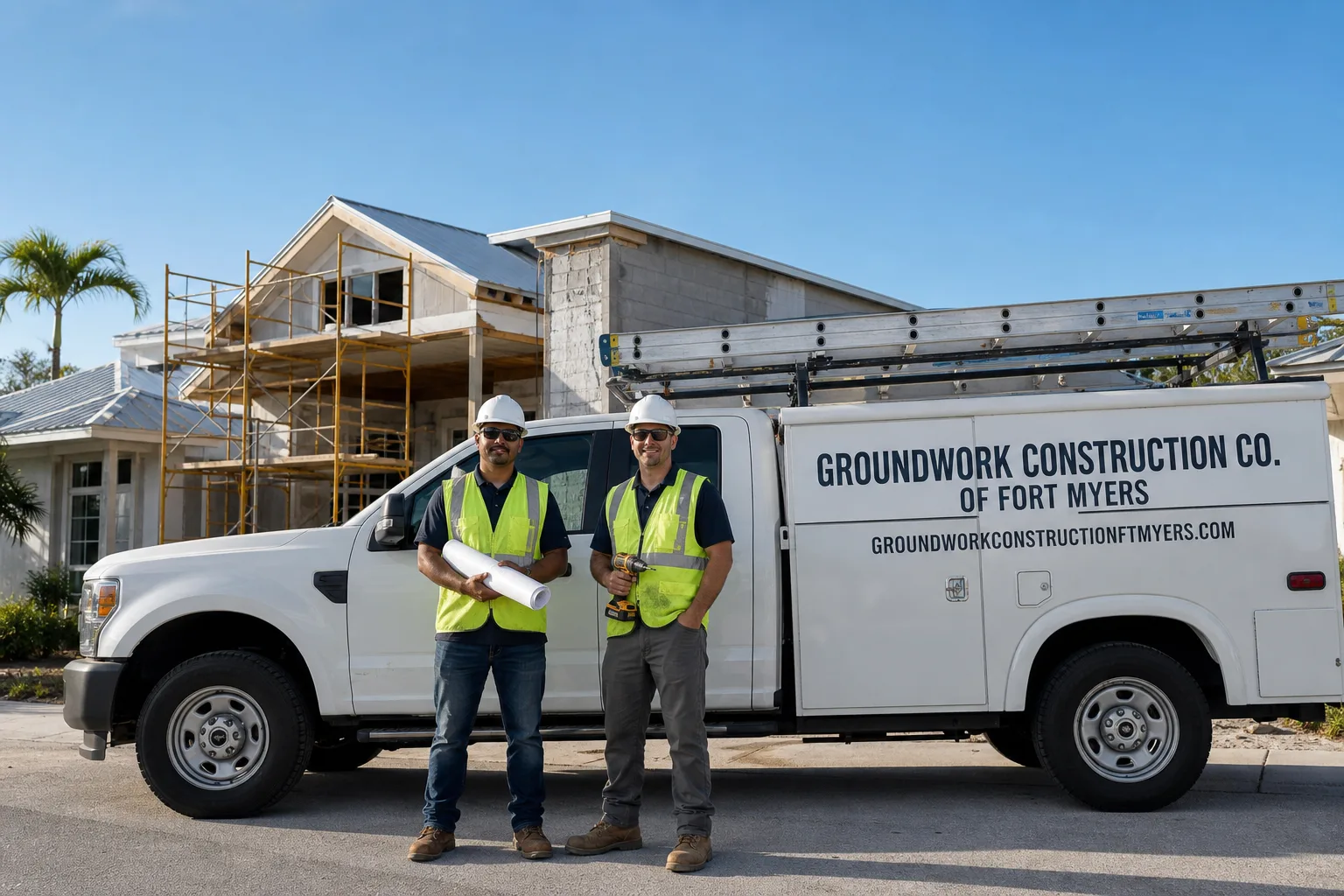
What Sanibel Homeowners Can Expect From a Professional Tile Roofing Job
A professional tile roofing installation or large-scale repair in Sanibel typically runs $600 to $2,500 for targeted repairs and $15,000 to $40,000+ for a full replacement on an elevated island home. Most projects take three to seven working days once materials land on the island, though Sanibel’s own building department permit queue and the single-causeway logistics gate add lead time that mainland jobs never see. Call (844) 638-7249 for a free on-site estimate with a line-item price before you commit - we don’t ask you to sign blind.
Sanibel is still rebuilding. Walk down any stretch of West Gulf Drive, Middle Gulf Drive, or East Gulf Drive and you see the scaffolding, the raised piling foundations, and the unmistakable sight of fresh tile roofs going up on homes that Ian tore apart. In our experience, homeowners here are choosing tile roofing not just for the look - that classic Mediterranean or barrel-tile silhouette that fits the island’s character - but because a properly installed and strapped tile roof tested to Florida High-Velocity Hurricane Zone standards is one of the few roofing assemblies that has a real shot at surviving the next Category 4. That’s the conversation we have almost daily with Sanibel homeowners: not “if” another storm comes, but what your roof will do when it does.
This is specific, technical work that goes far beyond swapping out shingles. Tile roofing on a barrier island means fastening every tile to a reinforced deck with stainless or hot-dipped galvanized clips and screws, because salt air eats standard hardware in a few seasons. It means coordinating dumpster swaps and crane deliveries around causeway backups during tourist season so your project doesn’t stall mid-install. And it means working with the City of Sanibel’s municipal building department - not Lee County’s - which enforces its own inspection calendar. If you have been looking for a contractor who already knows the tile-roof chapter of the island’s post-Ian story, we are already in it, and we would be glad to walk you through exactly how it works.
How We Build a Tile Roof in Sanibel - Stage by Stage
Stage 1: Structural and Deck Inspection (Day 1, 2-4 hours). Before a single tile gets ordered, we pull back existing roofing - or inspect the bare deck on a new build - to confirm the sheathing, trusses, and strapping can carry the dead load of tile, which is substantially heavier than asphalt shingles. On Sanibel’s post-Ian elevated homes, the engineered piling-and-beam system is typically already designed for tile, but on an older 1970s ranch that survived the surge and is now being reroofed, we often find decking that needs reinforcement. We also measure the roof’s slope and eave-to-ridge dimensions to finalize tile layout and underlayment spec. You decide nothing at this stage, but we give you a Go/No-Go report before we spend your money on materials.
Stage 2: Underlayment and Secondary Water Barrier (Days 1-2, 1-2 days). Tile is a water-shedding system, not a waterproof skin - the real water barrier is what goes underneath. On Sanibel jobs we install a high-temperature self-adhered or mechanically fastened underlayment per current Florida Building Code HVHZ requirements, lapped and sealed at all penetrations, with a secondary barrier at eaves and valleys. This stage typically runs one to two days, weather permitting, and the underlayment gets its own rough inspection before tiles go down. The homeowner’s only decision here is whether to upgrade to a premium peel-and-stick underlayment, which adds about $800 to $1,800 depending on roof size but provides substantially better protection against wind-driven rain - a real concern when the next hurricane pushes Gulf water horizontally across the island.
Stage 3: Fastener and Attachment System (Day 2 or 3, concurrent with underlayment finish). Every tile roof in Sanibel must meet the wind-uplift requirements of the HVHZ, which means the attachment method is not optional and not up for interpretation. We use stainless steel or hot-dipped galvanized tile screws, clips, or adhesive-foam-set systems depending on the tile profile and deck type - on concrete decks common to mid-island condos, the method differs from the plywood-sheathed decks on single-family homes along Sanibel-Captiva Road. This is also when we install perimeter edge metal, drip edge, and valley metal, all in corrosion-resistant materials. You don’t pick the fastener spec - the engineering does - but we walk you through why we spec what we spec so you see exactly where the money goes.
Stage 4: Tile Installation and Cutting (Days 3-6, 3-4 working days). Tile goes down row by row, starting at the eaves and working up toward the ridge on a layout chalked from the measurements we took on Day 1. Hip and ridge tiles get set in a mortar or mechanically fastened with the same corrosion-resistant hardware, and every cut around vents, plumbing stacks, and chimneys gets custom-fitted on site - there is no mass-produced trim piece that accounts for Sanibel’s mixed rooflines. On a typical 2,500-4,000-square-foot island home, this stage runs three to four working days with a four-to-six-person crew. The homeowner’s main decision here is cosmetic: tile profile (barrel, flat, or S-tile) and color, which we finalize before ordering so the batch matches across the entire roof.
Stage 5: Final Inspection and Post-Install Review (Day 6 or 7, 2-3 hours). Sanibel requires a final building inspection on every tile roof - not an optional courtesy, a permit sign-off the City’s inspector performs in person. We walk the roof with the inspector, confirm every fastener, verify underlayment laps at all flashing points, and document the completed assembly. After sign-off we do our own walkthrough with you, pointing out what we did, what to watch for during the first year of seasonal thermal movement, and how the manufacturer’s material warranty interfaces with our 730-Day Done Right Promise on workmanship. By the end of this stage, your roof is closed, permitted, and documented - and we have already scheduled the one-year follow-up check.
The Material and Style Choices You Will Make
A tile roof is not one product - it is an assembly of materials you pick before the first truck crosses the Sanibel Causeway. Here are the real decisions, with the honest trade-offs:
- Barrel tile (two-piece or S-tile): The classic Mediterranean look - rounded cap-and-pan or interlocking S-profiles. Heavier than flat tile, requires a stouter deck, and costs toward the higher end of the range in Sanibel, but delivers the strongest wind-uplift performance when mechanically fastened. This is what we install most often on elevated single-family rebuilds along the Gulf-facing streets.
- Flat tile (one-piece interlocking): Cleaner, more contemporary, slightly lighter, and generally less expensive per square foot than barrel profiles. Performs well in wind testing but can hold more standing water in low-slope applications, which matters on some older Sanibel ranch homes where the roof pitch is minimal. We recommend this for homeowners who want the tile performance without the overt Mediterranean look.
- Concrete tile vs. clay tile: Concrete tile is the workhorse - half the material cost of clay, widely available, color-through so chips don’t show, and heavy enough that the deck engineering matters. Clay tile is lighter, more expensive, more brittle during installation (breakage adds to waste cost), and holds its color essentially forever without fading. On Sanibel, we see concrete chosen about 4-to-1 over clay strictly because of cost and impact resistance, but on a high-end Gulf-front rebuild near Bowman’s Beach or Blind Pass, clay is common.
- Color and finish: Tile color affects attic heat gain measurably on a Florida roof. Light terracotta, white, or buff reflects more solar radiation than dark brown or charcoal - on a Sanibel home where air-conditioning runs nine months a year, the lighter colors pay back in energy cost over the roof’s life. We order from manufacturers who provide solar reflectance index ratings so you choose with data, not just a brochure photo.
What Tile Roofing Costs in Sanibel, FL
In today’s Sanibel market, expect to budget $15,000 to $40,000+ for a full tile roof replacement, with targeted tile repairs running $600 to $2,500 depending on the number of tiles and the underlayment condition underneath. These are the numbers we write in estimates for Sanibel homes right now, and they reflect island-specific reality - not mainland Fort Myers pricing plus a Sanibel markup, but the actual costs of getting materials, crews, dumpsters, and a crane across a toll causeway onto a barrier island with its own permit and inspection system.
What moves the number - the five variables that matter:
- Roof size and complexity: Square footage is the base multiplier, but cut-up rooflines with multiple valleys, dormers, or turrets add labor hours for cutting and flashing every tile termination. A simple rectangular hip roof on a 2,200-square-foot home lands near the low end; a multi-gable roof with a tower element and integrated gutter system pushes toward the high end.
- Existing deck condition: If your original sheathing is water-damaged or delaminated - common on Sanibel homes that took Ian’s wind-driven rain even if the structure survived - sheathing replacement adds $1,500 to $4,000+ before a single tile is set, and that number is not knowable until we strip the old roof.
- Tile profile and material: Barrel tile costs more per square than flat interlocking tile, and clay costs roughly double what concrete costs, as noted above. A full clay barrel roof on a large home can push past the $40,000 mark quickly.
- Underlayment grade: Code-minimum underlayment is included in our base number, but upgrading to a premium high-temperature peel-and-stick underlayment adds $800 to $1,800 depending on roof area. Homeowners who watched Ian’s storm surge push water through every seam in 2022 rarely question this upgrade.
- Sanibel permit and inspection logistics: Sanibel’s municipal building department operates its own permit queue independent of Lee County, and the inspection timeline is subject to the department’s caseload - which, given the island’s ongoing reconstruction volume, adds lead time and coordination cost that a Cape Coral or Fort Myers Beach job simply does not carry. Our estimate includes this cost transparently; it is not a hidden line item.
Every estimate we write for tile roofing in Sanibel is a fixed-price, line-item document - you see the underlayment cost, the tile cost, the fastener cost, the waste factor, and the permit line, each broken out. The number you see is the number you pay. No change orders because we “discovered” something we should have priced on Day 1. That is the point of a free on-site estimate: we look at your actual roof, not a satellite image, before we put a number in front of you. Call (844) 638-7249 and we will schedule a time to walk the roof together.
What Sanibel Specifically Does to a Tile Roof Job
Sanibel is not Cape Coral, and a tile roof installed to Cape Coral assumptions fails early on this island. The salt-air corrosion cycle is relentless - we pull off standard galvanized fasteners on ten-year-old island roofs that look forty years old, oxidized to the point where the threads are gone and the tile is held on by nothing but its own interlock. This is why we spec stainless or hot-dipped galvanized hardware on every Sanibel tile roofing job, and why we always include a corrosion inspection as part of our annual follow-up. If your last roofer used electroplated fasteners from a big-box supplier, you likely have a fastener failure problem that is invisible until the next named storm tests it.
The Sanibel building department adds another layer of reality. Every tile roof here requires a permit pulled through the City of Sanibel, not Lee County, and the inspectors know tile assemblies cold. They check fastener type, they check underlayment lap at eaves, and they check the engineered attachment schedule against the wind-zone map. This is not bureaucratic friction - it is the reason Sanibel’s rebuilt stock will perform better in the next storm than the pre-Ian homes did. Our team schedules inspections as a standard part of every job, because we have done it enough times to know exactly what the inspector will want to see and in what order.
The causeway is the wildcard no mainland roofer plans for. Every bundle of tile, every pallet of underlayment, every dumpster we swap out, and every crane we bring in for a steep or high-elevation roof crosses the Sanibel Causeway on a truck that can get stuck in tourist-season traffic just like your car. We schedule material deliveries and crane days for the early-morning window before the backups build, and we build a one-to-two-day buffer into every project timeline to absorb a causeway delay without blowing your completion date. If you are comparing bids and one number looks suspiciously low, ask whether the contractor is pricing causeway logistics or pretending Sanibel is just another mainland neighborhood.
Many of the homes we tile-roof on Sanibel are also getting Impact Windows & Doors in Sanibel as part of a full storm-hardening package, and we often coordinate the roof and fenestration schedules so the dried-in shell is complete before window trim goes on. Homeowners who are already reframing exterior walls for impact openings will sometimes pair the roof work with Sliding & Patio Doors in Sanibel to open the rear elevation to a new elevated deck. These are not upsells - they are logical concurrent projects when the house is already scaffolded and the crew is already on the island. If the scope of work on your home extends to a full Roofing in Sanibel replacement that includes flat-roof sections or metal accents alongside the tile, we run the entire roof package under one permit set and one project manager so you are not juggling two contractors on one house.
Serving Sanibel, FL - Our Local Coverage Area
We’re based in the Sanibel area and know this community well. Use the map below to see our service coverage - if you’re nearby, we can almost certainly help.
Frequently Asked Questions About Tile Roofing in Sanibel
Most tile roofing installations on Sanibel take three to seven working days on site once materials are delivered and the permit is issued. The City of Sanibel’s permit queue adds variable lead time - anywhere from a few days to a few weeks depending on the department’s current caseload - and we build the causeway logistics buffer into the schedule so a single traffic backup does not stall the job mid-week. Call (844) 638-7249 with your project timeline and we will give you a realistic start-to-sign-off window based on where the permit queue sits right now.
Yes, every tile roof installation or structural repair in Sanibel requires a permit pulled through the City of Sanibel’s municipal building department, not Lee County. The permit process includes plan review for wind-uplift attachment engineering, a rough inspection after underlayment, and a final inspection after tile is fully installed. We pull the permit, schedule the inspections, and walk the roof with the inspector - you do not handle any of the paperwork. This is not a corner you want cut on a barrier island that just took a direct Category 4 strike.
Targeted tile repair on a Sanibel roof typically runs $600 to $2,500, depending on how many tiles are broken or missing and whether the underlayment underneath is still intact. If wind-driven rain has gotten under the tile and damaged the underlayment, a repair can grow into a partial underlayment replacement, which pushes the number higher. The only way to price it accurately is to get on the roof and look - which we do during the free estimate. Call (844) 638-7249 and we will walk it with you and give you a written number the same day.
Many Sanibel HOAs - particularly in communities along West Gulf Drive, Middle Gulf Drive, and in the private beach-access neighborhoods - have architectural review requirements that govern roof material, tile profile, and color palette. We have worked with most of the island’s major associations and can provide the spec sheets, color samples, and wind-test documentation your HOA board will ask for. The approval step goes into our project timeline before we order materials, so your tile order does not show up in the wrong color.
Tile roofing carries two separate warranties: the manufacturer’s material warranty on the tile itself (typically 50 years or limited lifetime on concrete and clay tile from the major producers) and our 730-Day Done Right Promise on workmanship - if anything we installed fails due to our work in the first two years, we fix it at no cost. The salt-air corrosion issue on Sanibel makes the workmanship warranty especially relevant, because a fastener installed to the wrong spec will not show symptoms in month one - it will fail in year two or three. We spec the hardware correctly from Day 1 so the warranty is a backstop, not a prediction.
Get a Fixed-Price Estimate for Tile Roofing in Sanibel
Your roof is the single most exposed surface on your home, and on an island that absorbed a near-direct Category 4 hurricane, you want a contractor who has already done the Sanibel-specific homework - stainless fasteners, causeway logistics, City permit coordination, and a written price before the first tile is ordered. Call (844) 638-7249 to schedule a free on-site estimate. We will walk the roof, talk through material options, and hand you a line-item number you can take to your HOA board, your insurance agent, or your lender. No pressure, no blind quotes, just a real number from someone who actually looked at your roof.
Written by Derek Hollenbeck, Owner at Groundwork Construction Co., providing Roofing and full-scope home construction to homeowners across Sanibel and the surrounding Gulf-front communities.