
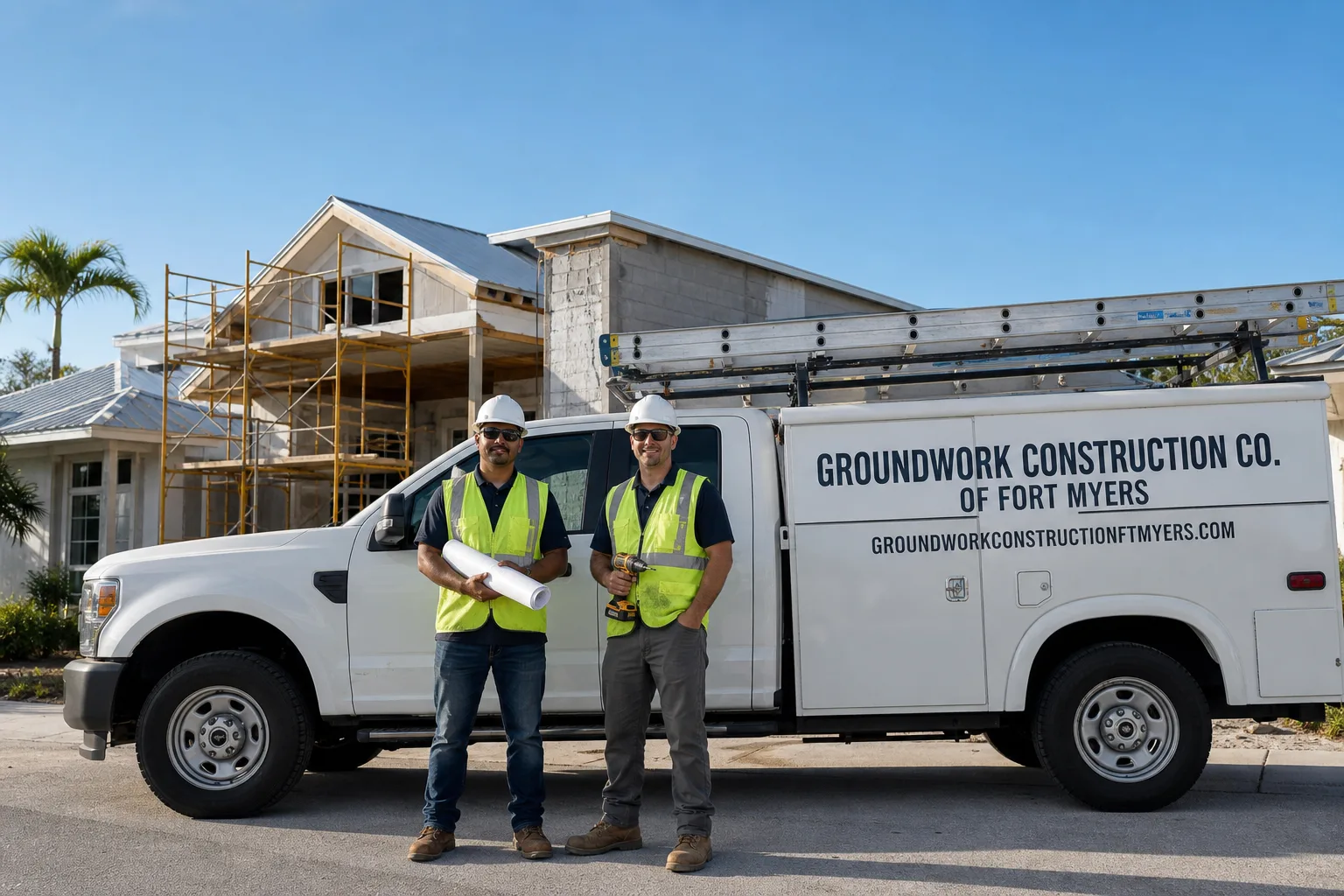
What ADU Site Prep & Utilities Actually Takes in Lehigh Acres - and What You’ll Spend
ADU site prep and utilities in Lehigh Acres typically runs $45,000-$130,000 and covers everything from clearing and grading the build site to trenching sewer, water, and electric lines back to the main house or street taps. You’re not building the ADU yet. You’re making the land ready so the foundation pour and framing aren’t a guessing game. A realistic timeline runs four to eight weeks, with the wide spread driven almost entirely by what’s hiding underground on a lot that may have sat vacant since the 1960s. Call (844) 638-7249 for a free on-site estimate, and we’ll walk the property with you before you commit to anything.
How Site Prep and Utility Trenching Unfold on a Lehigh Acres Lot
Every build starts with what’s underfoot, and in this part of Florida, the ground itself makes the first decision. Here’s how we take a raw or long-vacant parcel and turn it into a build-ready site, stage by stage.
1. Site survey, soil probe, and utility locate (Days 1-3)
We stake the ADU footprint based on your approved site plan, then run a soil probe to check the water table depth and bearing capacity. Lee County won’t issue a foundation permit without a soils report, and on the flat pine flatwoods that define Lehigh Acres, the seasonal high water table can sit just 18 inches below grade. Simultaneously, we call in private utility locates and cross-check against county records for any abandoned septic tanks or dry wells left from a previous build attempt - those surprises are common on the legacy lots platted in the 1950s and 60s.
2. Clearing, grubbing, and rough grading (Week 1-2)
Most Lehigh Acres lots need significant clearing - saw palmetto, pine scrub, and decades of unmanaged undergrowth come out first. Then we strip and stockpile the topsoil so it can be respread after construction. Rough grading follows: we cut and fill to establish a level building pad, and we build up the pad elevation so finished floor sits above the base flood elevation. In neighborhoods like Mirror Lakes or Westminster, where drainage swales were cut into the original plat but never maintained, we’ll often add engineered fill and a compacted lift to keep the ADU from sitting in a bowl every summer.
3. Trenching and running wet utilities (Week 2-4)
Now we open trenches for the sewer lateral, water service line, and storm drainage. If the main house is on septic and you’re tying the ADU into the existing system, Lee County Health Department requires a system capacity verification - and many older systems in the 1960s-era concrete block homes don’t have the capacity for an additional bedroom unit without a tank upgrade or drainfield expansion. Water lines get sleeved and buried below the local frost line, which is shallow here, but we go deep enough to stay clear of future landscaping, pavers, or a Small & Partial Kitchen Remodels in Lehigh Acres down the road. All trench work stays open until the first inspection clears pipe bedding and fall.
4. Electrical service and dry utility trenching (Week 3-5)
You’ll decide early whether the ADU gets its own meter and service drop or feeds from the main panel via a subpanel. On a detached ADU more than about 70 feet from the house, a separate service often makes more sense once you factor voltage drop and trench footage. LCEC serves most of Lehigh Acres, and their engineering requirements for a new temporary pole and permanent service are specific: overhead clearance setbacks, meter-can placement visible from the street, and grounding rod specs tied to the sandy soil composition here. We coordinate the trench inspection, service rough-in, and meter-set sequencing so you’re not paying for a second utility crew visit.
5. Final grading, compaction, and foundation prep (Week 5-8)
With utilities stubbed out and inspected, we bring in final fill to fine-grade the building pad, compact in lifts, and install any required termite pre-treatment or vapor barrier. A compaction test confirms the pad meets the structural engineer’s bearing spec. This is the inflection point where the site work transitions cleanly into foundation forming - and it’s the moment we walk you through a detailed scope confirmation so the slab pour doesn’t start with any open questions. If the larger project is part of a full Home Additions & ADU in Lehigh Acres, we’ll sequence the trade schedule so the concrete crew isn’t waiting on a trench backfill to cure.
The Real Choices You’ll Make During ADU Site Prep
Site prep isn’t one-size-fits-all, and the decisions below directly affect your final number. We walk through each of these at the estimate stage so you know what you’re buying and why.
- Separate meter vs. subpanel feed. A new LCEC service drop and meter gives the ADU independent billing and avoids pulling heavy-gauge feeders across a long trench, but it adds roughly $2,500-$5,000 in material, trenching, and utility fees. A subpanel off the main house is cheaper up front, though voltage drop on longer runs can push wire gauge and conduit cost higher than expected.
- Septic tie-in vs. new system. If the existing septic tank and drainfield have the capacity, tying in saves $8,000-$15,000 over a new dedicated system. When the existing system won’t pass a health department capacity review, you’re looking at a new tank, distribution box, and drainfield sized for the ADU’s bedroom count - a major line item that accounts for the biggest single cost swing on Lehigh Acres jobs.
- Grading and engineered fill volume. Lots that sit low relative to the street or neighboring parcels need more fill to meet freeboard requirements. Buildable lots in areas like Greenbriar or Meadowbrook frequently need 12-18 inches of imported select fill across the entire pad just to get above the seasonal water table. That material and compaction isn’t optional, and it adds $4,000-$9,000+ on the spot.
- Access road and construction entrance. The plat map may show a paved road, but reality on the ground can be an overgrown two-track that won’t support a concrete truck. We’ll stabilize a construction entrance with crushed stone or millings so equipment can get in and out without getting bogged during the afternoon rains. On legacy lots where the platted road was never improved, we coordinate with Lee County Public Works early to confirm access status before the first yard of fill arrives.
- Foundation type and slab spec. A standard monolithic slab-on-grade is the go-to for most ADUs in Southwest Florida, but if your soils report shows loose or organic material, we may need to go to a stem-wall foundation or deeper footings - a switch that can add $5,000-$10,000. We only make that call after the probe data is in, never before.
What ADU Site Prep & Utilities Costs in Lehigh Acres, FL
The lead range for adu site prep and utilities in Lehigh Acres is $45,000 to $130,000. The low end covers a clean, build-ready lot with close utility taps, good drainage, and a simple subpanel feed off an adequately sized existing service. The high end covers a legacy lot requiring significant fill, a new septic system or tank upgrade, a separate meter and service drop, and extensive clearing plus an engineered construction entrance. Every estimate we write comes with a line-by-line breakdown - you see the dirt work, the trenching, the material specs, and the permit fees as separate numbers. No lump-sum mystery.
What’s included: full site survey and staking, clearing and grubbing, rough and final grading, all trenching and backfill for water, sewer, and electric laterals, utility stub-outs with inspection coordination, compaction testing, and a written scope confirmation before foundation work begins. What’s typically not included unless we flag it up front: off-site road improvements required by the county, major drainage infrastructure beyond the building pad, and upgrades to the main house service panel if it lacks capacity for the ADU feed. Our Home Additions & ADU crew handles everything from that first stake-out through final trim, so you’re not juggling a site-work contractor, an electrician, and a plumber on your own.
What Lehigh Acres Homes Specifically Do to This Job
The 1950s and 60s mass plat laid out tens of thousands of lots across pine flatwoods, and many sat vacant for half a century. When we open a site on a legacy parcel off a road like Gunnery or Richmond, we’re often the first crew to put a shovel in the ground since the plat was recorded. That means no utility stub was ever pulled, no grading pad was ever established, and the dirt itself hasn’t been tested in 60 years. We’ve opened sites where the county water main stopped two lots short of the property line - something the plat map never flagged - and that single discovery pushed the waterline extension cost into five figures before the ADU trenching even started.
The flat topography here offers no natural runoff, so stormwater ponding is a design constraint on every job. Lee County requires a site-specific drainage plan as part of the ADU permit package, and the engineered solution - swale, dry well, or retention area - has to work with the finished floor elevation. Homes built in the 2003-2008 boom, common in tracts along Joel Boulevard and Beth Stacey Boulevard, often have existing electrical services that were minimally sized for the original square footage. Adding a detached ADU on those properties usually triggers a main panel upgrade alongside the site work, something the 1960s-era homes needed anyway because their original panels are long past their service life. A Full Bathroom Remodeling in Lehigh Acres project frequently comes up in the same conversation when homeowners are trying to sequence renovations on the main house and the ADU build.
Serving Lehigh Acres, FL - Our Local Coverage Area
We’re based in the Lehigh Acres area and know this community well. Use the map below to see our service coverage - if you’re nearby, we can almost certainly help.
Frequently Asked - ADU Site Prep & Utilities in Lehigh Acres
Four to eight weeks from first stake to final compaction test. The biggest variable is the septic review timeline with Lee County Health Department - a tie-in approval on an existing system can move in two weeks, while a new system design and permit can take six. We keep the trenching crew and electrical rough-in moving in parallel so the back half of the job isn’t waiting on one inspection. Call (844) 638-7249 and we’ll map out a realistic schedule for your specific lot.
Yes. Site work requires a building permit with site plan approval, a separate electrical permit through LCEC’s service planning department, and a health department permit if any septic work is involved. Lee County also requires a soils report and drainage plan as part of the ADU permit package. We pull every permit and schedule every inspection - you won’t chase paper on this job.
Water can share a single meter with a properly sized service lateral. Sewer can share an existing septic system only if the system has sufficient capacity per a health department evaluation; if it doesn’t, the ADU needs its own tank and drainfield. On a sewer-connected lot, a new lateral with its own cleanout is standard. We test and document everything in the estimate so there’s no mid-job redesign.
Five things: whether you need a new septic system or can tie into an existing one, how much engineered fill the pad requires to meet flood and drainage requirements, whether you choose a separate electrical service or a subpanel, how far the utility trench runs from the street or house taps, and what the existing access road condition demands for a stabilized construction entrance. A legacy lot with poor drainage, a long trench run, and a required septic upgrade lands at the top of the range. Call (844) 638-7249 for an exact quote - estimates are free, and we walk the property with you.
Every site prep and utility installation we complete is backed by our 730-Day Done Right Promise - if something isn’t right, we make it right, no fine print and no runaround. That covers trench settlement, grading issues, and utility stub-out defects for two full years. Permits are pulled, inspections are passed, and all work is documented. You get a written scope and upfront pricing before the first machine rolls onto the lot.
Get a Free On-Site Estimate for ADU Site Prep & Utilities in Lehigh Acres
If you’re sitting on a Lehigh Acres lot and ready to get it build-ready, we’ll come out, walk every foot of the property, and give you a written, line-item estimate that spells out the dirt work, utility runs, and permit path. No vague bids and no change-order games later. Call (844) 638-7249 - a live person answers, day or night - and we’ll schedule a visit that fits your calendar. From the first soil probe to the final compaction test, you’ll know exactly where your money is going.
Written by Derek Hollenbeck, Owner at Groundwork Construction Co., serving Lehigh Acres and surrounding communities.