
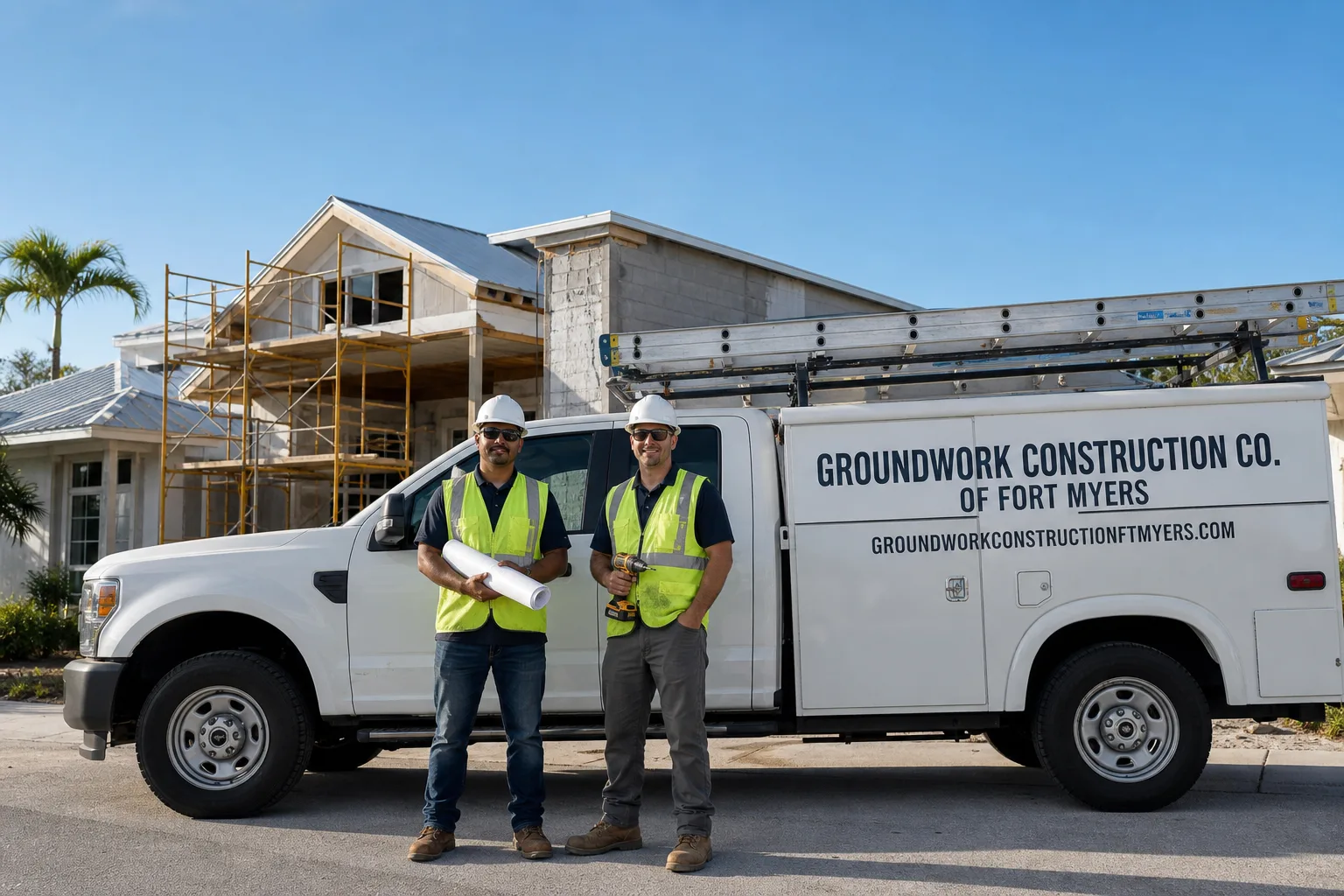
What ADU Site Prep & Utilities in Alva Actually Involves, and What You’ll Pay
ADU site prep and utilities in Alva typically costs $45,000-$130,000, with most projects completing the rough-in and foundation phase in 4-8 weeks before vertical construction begins. The job covers clearing and grading your lot, excavation for the foundation, trenching and connecting water, sewer or septic, and electrical service from the street or an existing panel, then pouring the slab or footers so the structure build can start on solid, code-compliant ground. Call (844) 638-7249 to get a line-by-line estimate for your specific parcel; every Alva lot behaves differently once the dozer shows up.
On Alva’s large, rural parcels and post-Ian rebuild sites, this isn’t a simple dig-and-pour. We’re often working on acreage with no existing utility stubs, high water tables near the Caloosahatchee River floodplain, and FEMA elevation requirements that didn’t exist when the original house went in. The prep phase is where half the project risk lives, and getting it wrong means an ADU that settles, floods, or fails rough-in inspection. Derek Hollenbeck and our team at Groundwork Construction Co. treat site prep as the structural foundation of the entire project, and that changes how we sequence the work.
How We Run ADU Site Prep and Utilities in Alva - Stage by Stage
Every Alva site prep job follows a repeatable sequence, but the specifics shift depending on whether you’re building a detached ADU on raw pasture, replacing a storm-damaged structure, or tying into an existing septic field. Here’s the real order of operations, with honest timelines.
Stage 1: Site survey, soil test, and utility locate (Week 1). Before any dirt moves, we bring in a surveyor to stake the ADU footprint and verify setbacks from property lines, existing structures, and any easements. On Alva’s larger equestrian and agricultural lots, setbacks are rarely the bottleneck, but easement discovery can be. We pull a soil percolation test if you’re on septic (common across Alva) and call 811 to mark existing underground lines, even on apparently raw land. You’ll decide the final building orientation in this stage, and that one choice dictates how much trenching you’ll need for power and water later.
Stage 2: Clearing, rough grading, and access cut (Week 1-2). Alva lots often have dense palmetto, pine, or old pasture grass that needs scalping before we can grade flat. We cut a temporary construction driveway if the ADU sits back from the road, which is standard on longer rural parcels. Rough grading establishes positive drainage away from the future slab; on flat river-adjacent land, we may bring in fill to get the pad elevation right before anything else. This is where you’ll see the first hard cost variable: if we hit buried debris from an old structure or illegal dumping (not uncommon out here), that adds a day or two of bucket work.
Stage 3: Foundation excavation and underground utility rough-in (Week 2-4). Once the pad is at grade, we trench for water laterals, sewer or septic stub-outs, and the electrical conduit from the nearest tie-in point. In Alva, that may mean running power 200 feet from a pole-mounted transformer, or tapping a well pump that sits on the opposite end of a five-acre parcel. If the property is in a FEMA AE flood zone with post-Ian elevation mandates, we form up for a stem-wall or pier foundation at this stage, not a simple slab on grade. The excavation also includes the footing trenches, which Lee County inspectors must sign off on before we pour any concrete.
Stage 4: Foundation pour and utility stub-up (Week 3-5). After footing inspection, we pour the footers and stem walls (or the monolithic slab, on high-and-dry lots with no flood code trigger). Plumbing stubs protrude through the slab form, electrical conduit is capped and marked, and any underslab insulation or vapor barrier goes in per code. Concrete cure time is baked into our schedule. You won’t see dramatic progress during this window, but this is where the structure becomes a permanent, insurable asset. We coordinate the Lee County foundation inspection before backfill.
Stage 5: Backfill, final grade, and temporary service hookup (Week 4-8, permit-dependent). Once the foundation passes inspection, we backfill around the stem walls, complete the final grading for site drainage, and set the temporary power pole if needed so vertical construction crews can work. If the ADU is on septic, the drain field gets installed here. The meter base and main disconnect go on the exterior wall, the water line is pressure-tested, and the site is ready to hand off to framing. At this point, any ADU work is part of a full Home Additions & ADU in Alva build; the prep phase is complete when the slab and undergrounds are signed off and the site is graded to drain for the next hundred years.
The Options You’ll Choose Between for Site Prep and Utilities
ADU site prep in Alva isn’t one-size-fits-all. The choices you make during the first two weeks determine both the project cost and how long the underground phase takes. Here are the real trade-offs.
- Foundation type: slab on grade vs. elevated stem wall. Alva lots outside the floodplain can use a standard 4-inch reinforced slab with thickened edges, the lowest-cost option. Properties reclassified by FEMA after Ian into AE zones need an elevated stem-wall foundation with crawlspace or a pier-and-beam system. The elevated path adds $12,000-$25,000 but is non-negotiable if the parcel map triggers it; your flood insurance premium depends on getting this right.
- Sewer strategy: tie into existing septic vs. new drain field vs. aerobic treatment. If your main house already has a septic system, we can sometimes tie the ADU into it after a Lee County Health Department capacity review. A failed perc test or an undersized existing field means a new dedicated drain field or an aerobic treatment unit, which adds $8,000-$18,000 but is the only legal path on tight Alva soils with poor drainage.
- Electrical service: panel tap vs. separate meter. Tapping the ADU off the existing house panel is the cheaper route but requires the main service to have spare ampacity. A separate meter with its own weatherhead and disconnect costs more up front but gives you independent billing if you rent the ADU out later. On Alva properties where the house panel is already maxed, we’re running a new service line regardless.
- Driveway and site access. A basic gravel construction access lane is minimal cost, but if you want a permanent paved driveway apron from the road to the ADU, we typically use Tremron or Techo-Bloc pavers, or poured concrete, and that gets priced as its own line item. Longer driveways on deep Alva lots can add $4,000-$10,000 depending on material choice and length.
- Drainage and fill: native soil vs. imported engineered fill. Alva’s river-zone soils can be sandy or silty, sometimes both on the same lot. If the pad area needs compaction or organic stripping, we specify imported fill that meets Lee County structural standards. The volume needed is site-specific; we only know after the soil report comes back.
These choices are all part of our wider Home Additions & ADU process, and our crew walks you through each one with written pricing before any dirt turns. Some Alva homeowners pair the ADU prep with a Full Bathroom Remodeling in Alva inside the main house while we have heavy equipment on site, but that’s optional and separately scoped.
What ADU Site Prep and Utilities Costs in Alva, FL
We quoted the range above: $45,000-$130,000. The spread is wide because no two Alva lots are alike, and the site prep phase carries the most variables of any construction stage. Here’s what pushes a project toward the low end or the high end.
A $45,000 site prep in Alva looks like a modest ADU footprint on a flat, high-ground lot with an existing well, an existing septic system rated for the additional load, and a short electrical run from an underloaded main panel. The soil passes perc on the first try, the parcel isn’t flagged in a FEMA flood zone, and we’re pouring a standard slab on grade with minimal fill. There are no easement surprises and the property already has a useable access road.
The $130,000 end of the range typically involves a larger ADU footprint, a parcel deep in the Caloosahatchee River floodplain that requires a stem-wall foundation elevated 3 feet above the original slab grade, and a full new septic system because the existing one had saturated drain fields after Ian. The electrical service needs a new pole-mounted transformer drop and a separate meter. The lot needs significant clearing, imported fill, and a 200-foot paved driveway cut. If underground debris is discovered or bedrock is shallow (rare in Alva but not unheard-of on the east side of the county), excavation costs climb further.
Our written estimates include surveying, permit fees paid to Lee County, all excavation and grading, the foundation pour, water and sewer trenching, electrical conduit and weatherhead, backfill, final grade, and the required inspections. What it doesn’t include is the vertical framing, which starts on our Home Additions & ADU in Alva team’s scope. Every estimate comes with line-item pricing, not a lump sum, so you see exactly where your money goes. Call (844) 638-7249 to schedule a free on-site walkthrough and get your number.
What Alva Homes Specifically Do to This Job
Alva sits in the Caloosahatchee River floodplain in eastern Lee County, and Hurricane Ian’s 2022 inland river flooding destroyed or severely damaged a large portion of local homes. Construction here today is overwhelmingly defined by post-Ian rebuilds, home elevation mandates, and flood-resilient new builds governed by updated FEMA AE and X flood zone requirements. That single fact reshapes every ADU site prep we do in Alva.
On North River Road and properties along Telegraph Creek, we routinely encounter rebuilds where FEMA’s post-Ian map revisions have reclassified the parcel, forcing owners to elevate new construction 2 to 4 feet above the original grade. That means a stem-wall or pier foundation where a slab would have been standard ten years ago, and it adds both cost and curing time. Permitting runs through Lee County, and the flood elevation certificate is now a hard gate before the foundation inspection can be scheduled; no certificate, no concrete.
Alva’s housing stock is a rural mix of older ranch-style site-built homes, manufactured homes on acreage, and equestrian estate properties, many of which were built at grade before modern flood codes existed. The utilities on these older parcels are often undersized by current standards: we’ll find a 100-amp panel trying to feed a house and a 1990s well pump that can’t handle another dwelling. Upgrading the service entrance or drilling a higher-capacity well becomes part of the site prep scope more often here than in more recently developed parts of Lee County. For homeowners who are already tackling other upgrades around the property, we sometimes coordinate the ADU prep with a Small & Partial Kitchen Remodels in Alva if the main house needs the extra attention at the same time, but only if it makes scheduling sense.
The one thing that catches Alva property owners off guard is the time Lee County requires for septic permitting on parcels near the river corridor. The health department’s post-Ian review process is more thorough, and soil saturation data from the 2022 flood still influences drain field approvals. We budget that time into our schedule from day one so it doesn’t become a surprise. Our 730-Day Done Right Promise covers the full site prep scope; if water finds its way into a crawlspace because the drainage plan didn’t account for a summer monsoon, we make it right.
Serving Alva, FL - Our Local Coverage Area
We’re based in the Alva area and know this community well. Use the map below to see our service coverage - if you’re nearby, we can almost certainly help.
Frequently Asked Questions - ADU Site Prep and Utilities in Alva
Most Alva site prep and utility rough-in phases take 4 to 8 weeks from staking to final grade. The biggest variables are Lee County permit turnaround, septic health department review time, and how much fill or elevation work the specific flood zone requires. A flat, non-flood-zone lot with existing utilities ties in on the shorter end; a full elevated stem-wall foundation on a raw acreage parcel in the river corridor will push toward two months. We give you a day-by-day schedule at contract signing so there are no gaps you don’t see coming.
Yes. Every ADU in Alva requires a Lee County building permit for the foundation and underground utilities, plus separate sign-offs from the health department if septic is involved. The flood elevation certificate is mandatory on parcels inside the FEMA floodplain. We pull all permits as part of the job and manage every inspection from footing to final grade. No work starts until permits are in hand, and our upfront pricing includes the full permit fee so you don’t get a surprise line item later. Call (844) 638-7249 and we’ll walk through exactly which permits your parcel triggers.
Sometimes, but not always. If the ADU footprint avoids the existing septic drain field and the health department confirms the current system can handle the additional bedroom count, we can stub the ADU line into the existing tank or field. On older Alva properties where the system was sized for two bedrooms and the ADU adds a third, the county will require a capacity upgrade. The same goes for a well: if the pump and pressure tank can’t deliver consistent flow to both dwellings, we’re sizing up. We won’t know the answer until we pull the records and run the perc test, and we won’t cut corners to make a failing system work.
Our written estimate bundles surveying, permitting, clearing and grading, all foundation excavation and concrete work, water and sewer trenching and stubs, electrical conduit and meter base, backfill, final grading, and the full inspection package. What’s priced outside the standard scope includes permanent paved driveway installation, a new well or septic drain field if the existing one fails capacity review, long-distance electrical service runs (over 100 feet from the transformer), and any unexpected underground debris removal. Every variable gets disclosed in your estimate before you sign anything.
Our 730-Day Done Right Promise covers the entire site prep scope: foundation settlement beyond standard tolerance, drainage failures that cause water intrusion, and any utility rough-in defect discovered after the ADU is built. If it’s not done right, we make it right, and that’s a two-year guarantee you won’t find on most Alva contractors’ site-prep work. Derek Hollenbeck stands behind every foundation our crew pours because this phase doesn’t get a do-over later.
Get Your Free ADU Site Prep Estimate in Alva
If you’re planning an ADU on your Alva property, start with a free on-site estimate from a crew that understands floodplain elevations, septic capacity reviews, and the specific permitting path Lee County requires after Ian. We’ll walk the lot, discuss foundation options and utility routing, and hand you a written, line-item price before any dirt turns. Call (844) 638-7249 to schedule yours. Your call is answered by a live person, 24/7, and every technician who shows up is background-checked and in uniform.
Written by Derek Hollenbeck, Owner at Groundwork Construction Co., serving Alva with honest pricing and a 730-Day Done Right Promise on every job.