
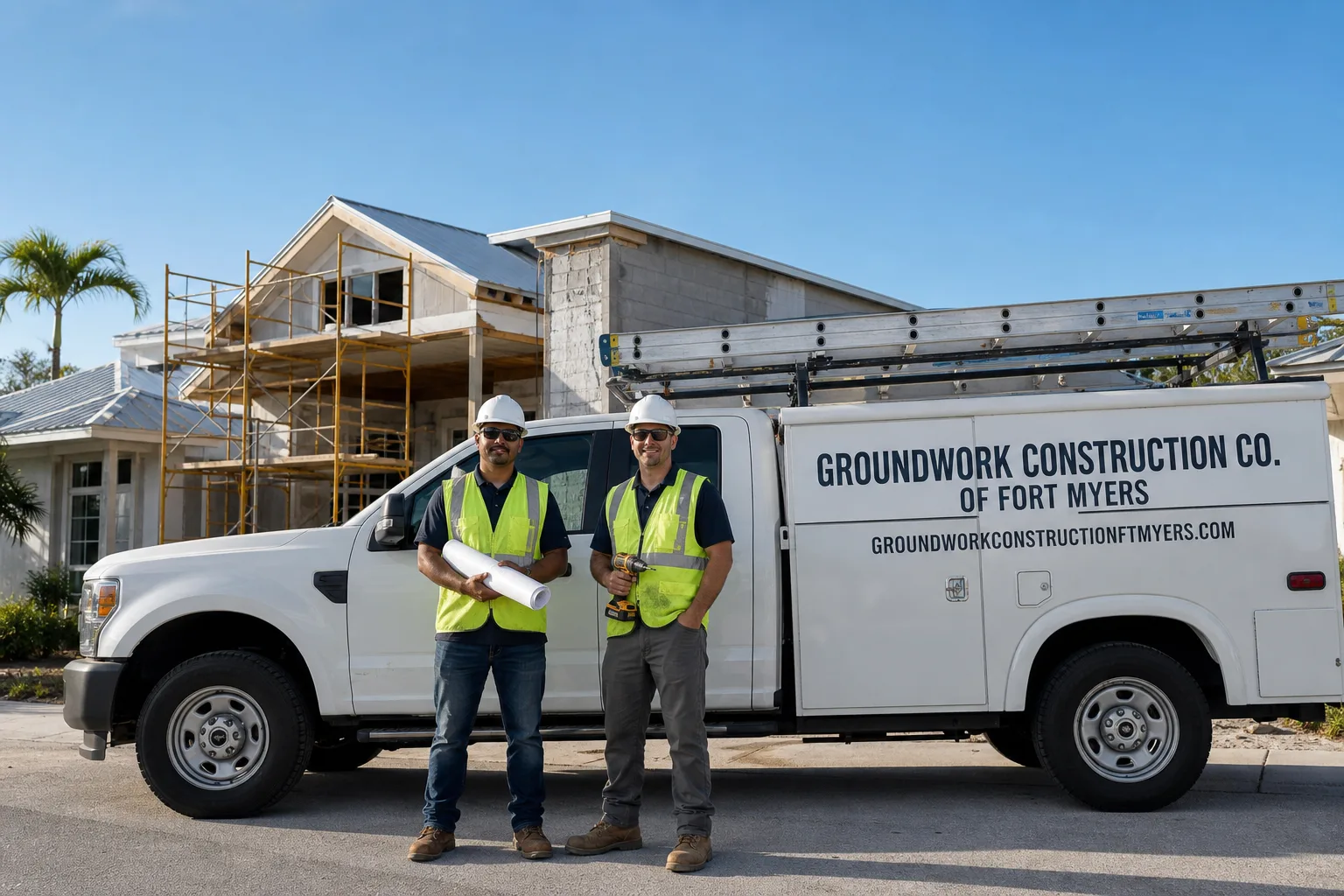
What ADU site prep and utilities actually cost in Punta Gorda Isles, FL
ADU site prep and utility work in Punta Gorda Isles, FL typically runs between $45,000 and $130,000 as a standalone scope, though most of our projects are part of a full ADU build. That range covers everything from clearing, grading, and compacting the pad to trenching and laying new water, sewer, and electrical laterals from the street or house tie-in. The spread is wide because Punta Gorda Isles lots rarely cooperate the way inland lots do. A straight shot across a dry yard is one thing. A lot pinched between two canals with a 60-year-old seawall and maybe four feet of side-yard clearance is another. We price each one line by line so you see exactly what’s driving the number. Call (844) 638-7249 and we’ll walk the site, measure, and hand you a written estimate built for your actual lot, not an average one.
How we run ADU site prep and utilities in Punta Gorda Isles
The paperwork and the digging happen in a specific order. This is the sequence we follow, and knowing it helps you plan around boat season or a visiting family schedule.
1. Survey and utility locate (Days 1-5)
We pull a fresh boundary and topographic survey if you don’t have one less than two years old, then call in private utility locates and the 811 Sunshine State One-Call ticket. In Punta Gorda Isles, we also mark the seawall tie-backs and any known underground drainage outfalls to the canal because striking one isn’t cheap. This stage is where you confirm the ADU’s exact position within the zoning setbacks and decide whether you need a minor variance. Most PGI lots have enough width to avoid a variance board hearing, but corner canal lots sometimes push the side-yard math.
2. Clearing, grubbing, and temporary erosion control (Days 3-7)
If there’s an old shed slab, dead citrus, or overgrown landscaping where the pad goes, it comes out. We strip organics down to competent soil, rough-grade the pad footprint, and install silt fence or bermed straw wattle at the downslope edge toward the canal. Charlotte County stormwater rules require it before the first shovel of structural excavation. This is also when we flag any mushy, organic muck that needs an undercut - common on the lower third of a PGI lot where years of canal splash and high water table have saturated the fill.
3. Trenching and utility rough-in (Days 6-14, concurrent with pad prep)
We open trenches for the new water service, sewer lateral, and electrical conduit. In Punta Gorda Isles, the depth to the seasonal water table can be less than three feet, so trench dewatering is standard - we set a trash pump and keep the cut dry while the pipe goes in. Sewer laterals here almost always tie into an existing house line with a wye inside the property, not a new tap at the street, unless your house is on a canal-front lot where the main runs along the road side. You’ll decide whether you want a dedicated electric meter for the ADU, or a sub-panel fed from the main house. For a rental ADU, a dedicated meter is cleaner for billing, and FPL requires its own setbacks for the meter can that we’ll flag on the site plan.
4. Rough inspections and backfill (Days 12-18)
Charlotte County Building & Construction Services sends the plumbing and electrical inspectors to sign off on the open trench before any dirt goes back. If you’re on a private street or within an HOA that maintains its own water lines - a handful of PGI subdivisions do - we coordinate with the association, not the county utility. Once the underground inspection passes, we backfill in lifts, compact to 95% modified Proctor density, and proof-roll the pad area. You get a density test report, which matters because the slab engineer won’t certify the foundation without it.
5. Pad final-grade and utility stubs (Days 16-22)
We bring the pad to finished subgrade elevation, set the form boards if the ADU is slab-on-grade, and stub the plumbing and electrical risers into the footprint. The water line stands capped at the future meter or sub-panel location. From here, the foundation crew picks up. If this site prep is part of a full Home Additions & ADU in Punta Gorda Isles, we hand off seamlessly to our framing and slab team with no re-mobilization charge. The transition from underground to above-ground is where cheap subs lose days; we schedule it as one continuous work block.
The options you’ll choose between during ADU site prep
These are the real decisions that move cost and timeline. You don’t need to know them in advance, but it helps to see the menu before we walk the lot together.
- Stem-wall vs. slab-on-grade foundation prep. Slab-on-grade is the default and less expensive - we over-excavate, compact, and pour on prepared soil. A stem-wall foundation lifts the floor above grade, which drains better on a low, wet lot and can save fill if your lot slopes toward the canal. The trade-off is roughly $9,000-$16,000 more in site prep, formwork, and block work in Punta Gorda Isles.
- Dedicated vs. sub-panel electric service. A sub-panel fed from the house saves about $1,800-$3,200 in trenching and FPL fees. A dedicated meter means a second monthly service charge but gives your tenant their own bill and avoids load-calculation headaches on the house panel.
- Sewer lateral: tie into existing line vs. long run to the street tap. Most PGI homes have the sewer lateral already crossing the lot path for the ADU. If your house sewer runs the other direction, a new street tap adds $4,000-$8,000, plus a county impact fee that varies by ADU bedroom count.
- Seawall proximity and pad setback. Charlotte County requires a minimum 15-foot setback from the top of a seawall for any structure. If the only buildable spot puts the pad within the seawall’s zone of influence, we’ll compact with a smaller, lighter roller to avoid surcharge loading - it’s slower but prevents a cracked cap from a vibration-heavy compactor.
- Stormwater management: dry well vs. sheet flow. A new impervious surface (the ADU roof and slab) changes how your lot drains. Some PGI lots need a shallow dry well or a French drain discharging to the canal to meet the county’s net-zero runoff rule. We lay out your options at the survey stage so you’re not surprised at permit pickup.
What ADU site prep and utilities cost in Punta Gorda Isles, FL
We book most Punta Gorda Isles ADU site-prep and utility packages between $52,000 and $98,000. A smaller, dry-lot ADU pad with a short utility run can land around $45,000. A canal-front lot with a long sewer run, dedicated meter, and stem-wall pad prep can push past $115,000, and if seawall remediation enters the picture - which it does on roughly one in three older PGI canal lots - you’re in the $120,000-$130,000 range for the underground scope alone.
What moves the number:
- Distance from the house tap to the ADU pad. Trenching an extra 40 feet of sewer lateral through shell-rock fill in Punta Gorda Isles adds real labor and blade wear.
- Soil condition at pad depth. If we hit saturated muck or buried organic debris from the original canal dredging - not unusual on lots platted in the late 1960s - we undercut and import clean structural fill. That’s $1,800-$4,200 per undercut visit, depending on depth.
- Seawall condition and setback constraints. If the only pad location crowds the seawall, we may need to sleeve the sewer lateral in steel casing within the seawall’s zone of influence, an add-on typically running $3,500-$6,000.
- Permit and impact-fee scope. Charlotte County charges water and sewer impact fees per fixture unit. A one-bedroom ADU keeps those fees lower; a two-bedroom ADU bumps the sewer impact fee by roughly $1,200-$2,100 at current schedules.
- Material grade for backfill and base. Standard FDOT limerock base versus washed shell or crushed concrete - the difference is about $12-$17 per ton delivered. We spec what the slab engineer calls out, and you see the material line item clearly on our estimate.
Every estimate we write for ADU site prep in Punta Gorda Isles includes the survey coordination, the trenching, the pipe, the conduit, the backfill, the compaction testing, the rough-in inspection coordination, and the final pad certification. The things that sit outside the base scope - and we flag them before you sign - are seawall panel replacement if discovered, undercut and fill import beyond a standard 12-inch over-excavation, and any HOA-mandated architectural-review fees. No change order arrives as a surprise. That’s the whole point of upfront pricing.
What Punta Gorda Isles homes specifically do to this job
Punta Gorda Isles isn’t a typical subdivision. Over 55 miles of saltwater canals snake through the community, and that means most lots have a seawall separating the backyard from brackish tidal water. A meaningful share of those seawalls were built in the late 1960s and early 1970s with unreinforced concrete panels. Anyone who’s trenched near one knows the telltale banana curve in the cap: the panels bow outward under decades of fill pressure and tidal erosion behind the wall. When an ADU pad goes in within 20 feet of a wall showing that curve, we don’t gamble. We recommend a full panel replacement before backfill loads the wall from the new side. It’s the single biggest wildcard on a PGI ADU site prep job, and we’ve seen it enough times that we bring it up on the first walkthrough, not after the trench is open.
The housing stock here compounds the variables. Most homes are concrete-block structures from the 1960s through the 1990s, with a layer of post-Hurricane Charley rebuilds sprinkled in. On the same street, you might find an original 1972 tie-beam detail on one house and a 2006 Florida Building Code slab with epoxy-coated rebar next door. That matters for ADU utilities because tying a new sewer lateral into a 50-year-old cast-iron house line is a different job than connecting to PVC installed in 2008. We scope the existing line before quoting so you know whether we’re doing a straightforward wye tie-in or replacing the last section of old iron to avoid a future dig-up under your lanai. In Punta Gorda Isles, the canal proximity also means every anchor bolt, strap, and pipe hanger we bury or expose gets spec’d in stainless or hot-dipped galvanized as standard - not an upgrade. The salt air and brackish groundwater don’t give mild steel a long career.
Serving Punta Gorda Isles, FL - Our Local Coverage Area
We’re based in the Punta Gorda Isles area and know this community well. Use the map below to see our service coverage - if you’re nearby, we can almost certainly help.
Frequently asked - ADU site prep and utilities in Punta Gorda Isles
Plan on three to four weeks from survey to final pad certification. The trenching and utility rough-in itself runs 8 to 14 working days. The variable is Charlotte County inspection turnaround: underground plumbing and electric inspections typically schedule within 48 hours in Punta Gorda Isles, but a backlog after a storm or during winter high season can push that to four or five business days. We build that slack into the schedule so your ADU foundation isn’t waiting on a sign-off.
Yes. Charlotte County requires a site-development permit for any ground disturbance associated with a new structure, plus separate plumbing and electrical permits for the underground utility work. If you’re in a Punta Gorda Isles HOA that reviews exterior changes - some do, particularly the canal-front sections - the HOA approval must come before the county permit is issued. We pull every permit and handle the HOA submittal package, including the site plan, utility routing, erosion-control plan, and seawall proximity calculations if required. Homeowners sometimes pair this with a Small & Partial Kitchen Remodel in Punta Gorda Isles inside the main house while the ADU is underway, though those are separate permit paths.
You can’t legally trench and lay your own sewer, water, or electrical conduit in Charlotte County without a licensed contractor pulling the permit, but you can save by tying the ADU into the nearest house lateral rather than running a new line all the way to the street tap - if the existing line crosses the ADU path. The cost swing between the two approaches is often $4,000 to $8,000. We’ll show you both options on the site plan during the estimate walkthrough, and we won’t push the expensive version if the existing line is in good shape and within code. For an honest line-by-line number, call (844) 638-7249.
Site prep and utilities get the pad ready and the services stubbed into the footprint. The foundation - slab or stem wall - is a separate scope that starts right where site prep ends. If your project is part of a full ADU build with our Home Additions & ADU team, the pad crew and the foundation crew work off the same schedule and there’s no gap between the two phases. If we’re only doing the underground scope, we deliver a certified, compacted pad with utility stubs at the dimensions your foundation contractor specifies.
All underground utility work we perform in Punta Gorda Isles is covered by our 730-Day Done Right Promise. If a sewer lateral settles, a water line leaks at a glue joint, or an electrical conduit separates within two years of sign-off, we come back and make it right at our cost. No proration, no fine print about soil conditions. The pipe manufacturers carry their own material warranties beyond that, but for the labor and the backfill integrity, two full years is our baseline. It’s one of the longest workmanship guarantees in residential site-prep work, and we put it in writing on every contract.
Free estimate for ADU site prep and utilities in Punta Gorda Isles
We’ll walk your lot, map the utility path, flag any seawall concerns, and hand you a written estimate that breaks out every line item. No ballpark guesses, no change-order games. Our Full Bathroom Remodeling in Punta Gorda Isles clients often tell us the same thing: Groundwork was the only contractor who gave them a real number before they signed anything. Call (844) 638-7249 - a live person answers, day or night - and we’ll schedule your free on-site estimate for ADU site prep and utilities in Punta Gorda Isles.
Written by Derek Hollenbeck, Owner at Groundwork Construction Co., serving Punta Gorda Isles with straight numbers and honest site assessments since 2014.