
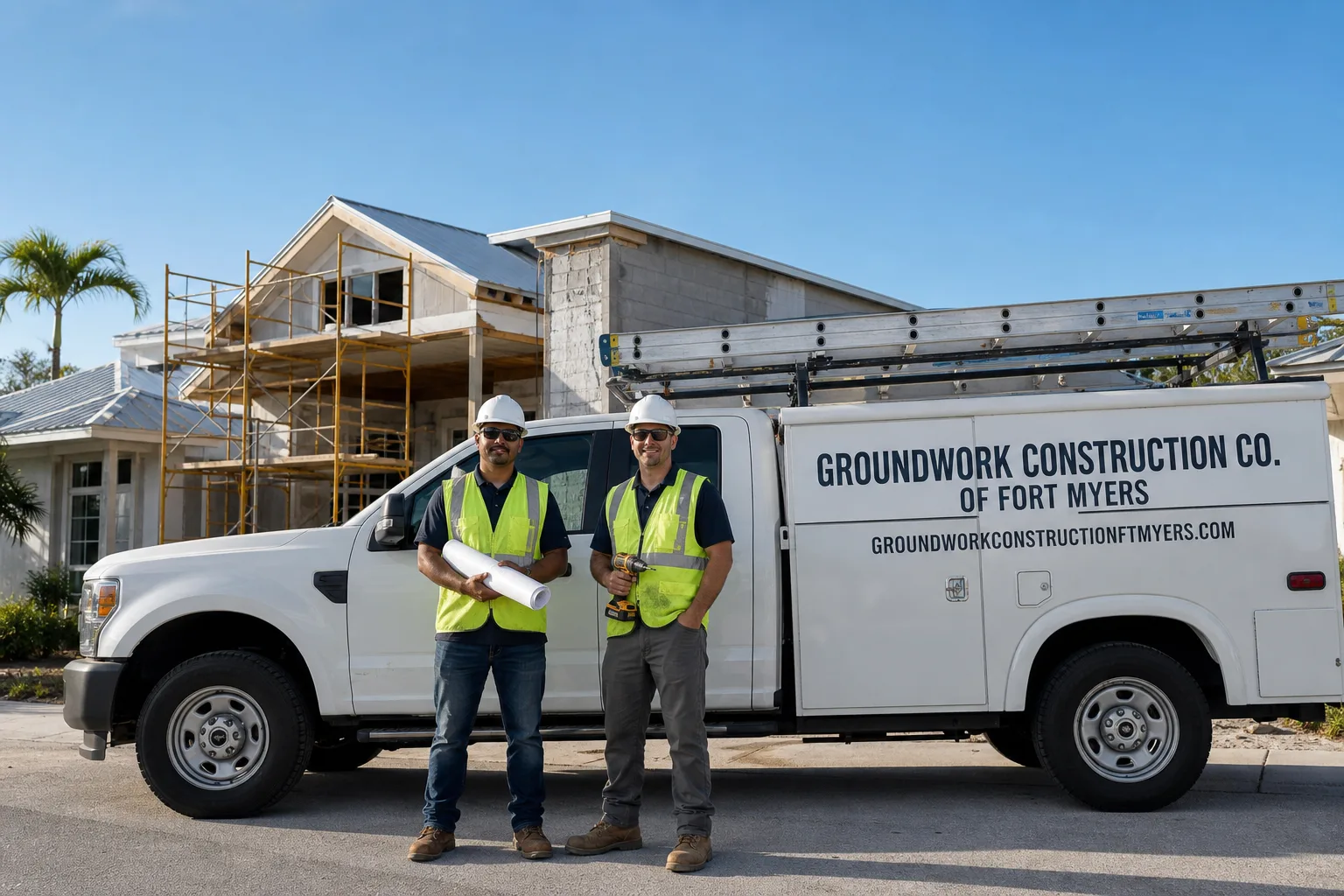
What ADU Site Prep & Utilities in LaBelle Actually Costs and What’s Involved
ADU site prep and utilities in LaBelle runs $45,000-$130,000, depending on how far the site pushes back. That covers clearing and grading, foundation work, trenching and running water, sewer, and electric from the existing service to the new ADU pad, plus bringing everything to current code. Most jobs take 3-7 weeks from first scrape to utility sign-off, though floodplain complications on Caloosahatchee-adjacent lots can add weeks for elevation engineering. Call (844) 638-7249 for a free on-site estimate with a written, line-item scope built for your specific parcel.
How ADU site prep and utilities actually happens on a LaBelle lot
We run site prep and utility tie-ins as a clean, five-stage sequence. Every stage has a homeowner decision point and a county inspection gate, so nothing gets buried before you’ve signed off and Hendry County has looked at it.
Stage 1: Site survey, soils, and floodplain check (3-7 business days)
We pull your parcel’s flood zone designation from current FEMA panels, order a boundary and topo survey, and take soil borings to confirm bearing capacity. On LaBelle’s muck-over-sandy-loam soils, we typically hit loose organics in the first 18-24 inches, which means standard slab-on-grade won’t fly without either over-excavation and engineered fill or a structural slab. This is also the stage where we flag whether your lot falls in Zone AE and whether the ADU triggers the substantial-improvement rule. You’ll decide here whether to proceed with a stem-wall or pier-and-beam foundation if elevation is required.
Stage 2: Clearing, grubbing, and rough grading (1-2 weeks)
We strip vegetation, pull any old footers or buried debris, and cut the building pad to the elevation the engineer calls for - often 18 to 36 inches above natural grade in riverine flood areas. If the site needs imported fill to meet Base Flood Elevation, the trucking and compaction adds days and dollars, especially when access is tight on older rural lots off State Road 29 or down citrus-field lanes. Your only decision here is tree removal: we’ll mark what has to go for footing clearance and what can stay, and you tell us which shade trees are worth working around.
Stage 3: Trenching and underground rough-ins (5-10 business days)
We trench from the main house or nearest utility point to the ADU footprint for water, sewer, and electric. This is where LaBelle’s wet-season saturation becomes a practical problem: a trench in sandy loam that looks stable in the morning can slump by afternoon after a typical summer downpour. We shore and pump as needed. If your existing septic system can’t handle the added bedroom load, we’ll spec a new tank or tie into city sewer where available - that’s the single biggest cost swing in this stage. You’ll choose between copper and PEX supply lines and between PVC and cast-iron waste runs.
Stage 4: Foundation pour and utility stubs (1-2 weeks)
We form and pour the foundation - typically a monolithic slab with turned-down footers, or a raised stem-wall if the flood elevation calls for it. Conduit and plumbing stub-ups are set in the formwork before the pour. Hendry County inspects the steel, the under-slab rough-ins, and the form elevation before we place concrete. Your decision point here is whether to add a vapor barrier upgrade for future conditioned-space use underneath, which matters if the ADU will sit on piers and you want dry storage or a carport below.
Stage 5: Utility connections, backfill, and final rough grade (3-5 business days)
Once the slab cures, we connect water and electric to the main panel and meter, tie into the sewer or septic lateral, backfill trenches with compacted lifts, and finish-grade the pad so water drains away from the foundation. The county does a final underground inspection, then signs off. After that, the framing crew can walk onto a clean, dry pad with active temp power and a hose bib, and the build starts without delays. You get a written closeout packet with as-built utility locations and photos of every trench before backfill.
The options you’ll choose between during ADU site prep in LaBelle
These decisions drive the cost and the way the ADU sits on your land. Each has a real performance trade-off, and we walk you through them during the estimate so the quote reflects exactly what you want, not what a subcontractor defaults to.
- Foundation type: slab-on-grade vs. raised stem-wall vs. pier-and-beam. Slab is the lowest cost and works well on high, well-drained lots outside the floodplain. Stem-wall construction adds $8-$15 per square foot of footprint and raises the finished floor above Base Flood Elevation - required on Zone AE parcels where the ADU exceeds 50% of the primary structure’s value. Pier-and-beam is the go-to for lots with poor soils or a high water table, and it makes future plumbing access far easier.
- Water service: tie into existing main vs. new dedicated meter. Tapping the existing house line saves $1,500-$3,000 in meter fees and lateral trenching but may reduce pressure if the main line is undersized for two dwellings. A separate meter costs more upfront but gives the ADU its own utility account and avoids pressure conflicts - preferred if the ADU will be a rental.
- Sewer: existing septic expansion vs. new tank vs. municipal sewer tap. On rural LaBelle lots where city sewer isn’t available, adding a bedroom to an existing septic often requires a tank replacement or drainfield expansion, which can add $6,000-$15,000 depending on soil percolation. Where municipal sewer is available along the SR 29 corridor, a tap and lateral run is typically the simpler and more predictable option.
- Electrical: subpanel off the main service vs. separate 200-amp drop. A subpanel fed from the house is the standard move and costs less. But if the main panel is already maxed out or if the ADU will have heavy loads (electric range, mini-split HVAC, EV charger), a dedicated 200-amp service eliminates future headaches at about $2,500-$5,000 more.
- Drainage and site grading. LaBelle’s flat terrain and 55 inches of annual rain concentrated in summer mean positive drainage is not optional. We typically add swales or shallow French drains along the pad perimeter. You can choose between a turf-and-gravel swale that blends into the yard or a hard-piped subsurface drain that’s nearly invisible but costs more in materials and trenching.
What ADU site prep and utilities costs in LaBelle, FL
Realistically, $45,000 gets you a straightforward site-prep package on a dry, accessible lot with no floodplain elevation requirement, existing septic capacity, and a short utility run. At $130,000, you’re on a riverine floodplain lot that needs engineered fill, an elevated stem-wall foundation, a new septic system, a dedicated electrical drop, and significant tree clearing with difficult truck access. Most LaBelle jobs settle between $55,000 and $85,000.
These are the line items that move the number:
- Lot clearing and access complexity. A bare pasture grubs out fast. A lot with mature oaks, old outbuildings to demo, or no room for a concrete truck adds time and equipment cost.
- FEMA flood zone and elevation requirement. The single biggest variable in LaBelle. If your parcel was re-mapped into Zone AE after Hurricane Ian, the entire ADU foundation may need to be elevated - adding $12,000-$30,000 versus a standard slab.
- Utility distance from the main house. Every extra foot of trench for water, sewer, and electric adds cost, especially if the trench has to cross a driveway, patio, or established landscaping.
- Existing septic capacity. If the current system can’t legally absorb the added bedroom, a new tank and drainfield is a five-figure addition that often blindsides homeowners. We flag this in the estimate, not after we’ve dug the hole.
- Soil condition and structural engineering. Poor-bearing organic soils under the top layer mean more excavation, more engineered fill, and possibly a structural slab or pier foundation. We core-sample before quoting so the number you see is the number you pay.
Our written estimate breaks out every line item: clearing, grading, foundation, trenching, utility connections, drainage, and permit fees. No allowances, no “to be determined” line items that turn into change orders later. You see the full scope before you sign, backed by our 730-Day Done Right Promise. If something isn’t done right, we make it right, period.
Why LaBelle lots make site prep and utilities different from anywhere else
LaBelle sits directly on the Caloosahatchee River, and the sustained flooding during Hurricane Ian rewrote the rulebook for construction here. When the river crested at record levels in 2022, FEMA redrew the flood maps, moving many parcels from Zone X into Zone AE - meaning any substantial improvement over 50% of a structure’s pre-damage value legally requires elevating to the new Base Flood Elevation. On an ADU site-prep job, that’s the difference between scraping grade and pouring a slab versus bringing in hundreds of yards of engineered fill and building on a raised stem-wall. Homeowners who planned a straightforward garage-conversion pad often discover they’re now required to go elevated, and that changes the entire prep sequence and budget.
The soil itself keeps things interesting. Most LaBelle lots sit on muck and sandy loam with poor bearing capacity, and the flat terrain combined with a June-through-September wet season that dumps most of the year’s 55 inches of rain means trenches collapse, pads get soupy, and compaction has to happen in narrow dry windows. We’ve worked on rural parcels off SR 29 and on older homes in the historic core where the existing underground utilities are undocumented - water lines that were hand-dug forty years ago, septic tanks no one marked - and that’s exactly the kind of thing you catch in the site-prep phase before it becomes a framing-delay problem later. This is not standard scrape-and-pour work, and a contractor who treats it like a Lehigh Acres subdivision lot is going to hand you a change order the first time the trench fills with groundwater.
For homeowners tackling a larger property upgrade, ADU site prep often runs alongside other major work. Many clients roll this into a full Home Additions & ADU in LaBelle project when they’re already adding square footage to the main house, or pair it with Full Bathroom Remodeling in LaBelle inside the primary residence while the ADU pad cures. In some cases, a smaller interior project like Small & Partial Kitchen Remodels in LaBelle runs concurrently so both structures are ready at roughly the same time, and our Home Additions & ADU crew sequences the work so you’re never waiting on one trade to free up.
Serving LaBelle, FL - Our Local Coverage Area
We’re based in the LaBelle area and know this community well. Use the map below to see our service coverage - if you’re nearby, we can almost certainly help.
Frequently asked - ADU Site Prep & Utilities in LaBelle
Plan on three to seven weeks from the day we mobilize until the pad is graded, utilities are stubbed and inspected, and the site is ready for framing. The biggest time variables are weather - LaBelle’s summer rains can shut down trenching for days at a time - and whether the county requires elevation engineering due to flood-zone designation, which adds design time and foundation complexity. We sequence inspections as tightly as Hendry County’s schedule allows and give you a week-by-week timeline at the estimate.
Yes. You need a building permit for the foundation, separate trade permits for electrical and plumbing, and possibly an environmental resource permit if your lot is near the river or in a designated floodway. Hendry County also reviews septic capacity as part of the ADU permit, so if your existing system can’t handle the addition, you’ll need a septic permit as well. We pull every permit required for your project - you never chase paperwork. Call (844) 638-7249 and we’ll walk you through what your specific parcel triggers.
Sometimes. If the ADU pad location allows the waste line to gravity-feed into the existing sewer or septic lateral with proper slope, we won’t need to relocate anything. But on flat LaBelle lots where the ADU sits lower or farther from the existing tie-in, we may need a grinder pump or a new tank location. We’ll know once we shoot the site elevations, which happens in the first three days of the job.
If your parcel is in Zone AE and the ADU triggers the substantial-improvement elevation rule, expect the foundation and grading portion of the job to add $12,000-$30,000 versus a standard slab-on-grade. That covers the engineered fill, the raised stem-wall or pier system, and the additional excavation and compaction required. We give you a precise number only after we pull the FEMA panel and a topo survey - never a guess. Estimates are free, and the quote is line-itemed so you see exactly where the elevation dollars go.
All of our ADU site prep and utility work is covered by our 730-Day Done Right Promise. If anything we buried, poured, graded, or connected fails because of our workmanship within two full years, we make it right at no cost to you. That covers foundation settlement beyond engineered tolerance, underground plumbing leaks, electrical faults, and drainage failures. Concrete, fill compaction, and pipe bedding are things you can’t easily inspect after the fact, and that’s exactly why our warranty runs longer than anyone else’s in LaBelle.
Get a free, written estimate for ADU site prep and utilities in LaBelle
We’ll walk your lot, shoot the grades, pull the flood map, and give you a line-item quote that spells out every dollar - clearing, foundation, trenching, utilities, drainage, permits. No allowances, no change-order surprises later. Call (844) 638-7249 to schedule your free on-site estimate. When you call, a live person answers - 24/7, no voicemail black hole - and we’ll get a date on the calendar while you’re on the phone. From foundation to finish line, we build it to last, backed in writing.
Written by Derek Hollenbeck, Owner at Groundwork Construction Co., bringing straight answers and transparent pricing to LaBelle homeowners since 2014.