
What Specialty Roofing in Orangetree Actually Involves and What It Costs
Specialty roofing in Orangetree is custom architectural metalwork, historic-profile tile matching, or detailed low-slope commercial-grade flat roof systems that fall outside a standard shingle replacement. You’re looking at a job that runs $15,000 to $40,000 at the higher end, and a real timeline of two to four weeks depending on engineering and permit lead times. Call (844) 638-7249 if you already have a set of plans or a specific material in mind - we’ll give you a straight answer about what it takes to build it here.
How Specialty Roofing Comes Together on an Orangetree Home
The step-by-step is different from a standard tear-off and overlay. We’ve done enough of these in Orangetree to know that the discovery phase eats more time than the actual installation, so we front-load the unknowns.
Stage one: Existing roof assessment and attic inspection. We cut a small inspection flap in the roof deck, check the truss or rafter condition, and confirm the current underlayment type and substrate attachment. On Orangetree homes built between 1988 and 1992, we often find OSB sheathing that was nailed off to an earlier wind-load standard and needs a full re-nail with 8d ring-shank nails to meet current uplift requirements. This stage runs a day. What you decide: whether to proceed with the as-built engineering or upgrade to the higher wind-zone attachment pattern.
Stage two: Engineering and permit package. Because much of Orangetree’s housing stock straddles pre- and post-Andrew building code eras, a specialty roof almost always triggers a permit review that demands current wind-load calculations and, in FEMA flood zones, an elevation certificate to confirm the structure won’t trip the 50% substantial-improvement rule. We submit sealed drawings through Collier County’s electronic portal; turnaround is typically eight to twelve business days, though it can stretch to three weeks during peak season. We handle the submittal, you review the scope and sign the permit application.
Stage three: Material ordering and sub-trade scheduling. Most specialty roofing materials - standing-seam coil stock, custom-bent copper flashing, architectural-grade lead-coated panels - ship from regional fabrication shops in Tampa or Miami, not from a local supply yard. In Orangetree’s isolated eastern location, that adds a reliable three to five business days to the schedule, so we order immediately after permit submission. We also line up the framing crew to arrive the day after tear-off. What you pick here: metal finish, gauge, and whether you want factory-applied Kynar coating or mill-finish that patinas over time.
Stage four: Tear-off, substrate repair, and dry-in. We strip to the deck in one day, sister any damaged rafters, replace rotted sheathing, and lay a high-temperature self-adhered membrane as the primary waterproofing layer. In eastern Collier County’s rainy-season window - May through October - we stage this only on a three-day clear-weather forecast, and the crew hand-cuts and caps the membrane at all penetrations the same evening work starts. A tarped dry-in is not acceptable on a specialty roof; the membrane is the dry-in. This stage typically runs two days.
Stage five: Installation and finish detailing. The metal panels, tile, or custom-profile roofing goes on with the sub-trade crew, followed by a full soldering and flashing detail pass on all valleys, pipe boots, and wall transitions. A final water test on any built-in gutters or concealed scuppers happens before we call for the rough-in inspection. Total installation runs four to seven working days, plus two inspection visits: the mid-roof nail-pattern inspection and the final. By the end of day ten, you have a roof that looks like it belongs on the original architect’s drawing.
The Options You’ll Choose Between for a Specialty Roof in Orangetree
Specialty roofing isn’t one product. You’re picking a whole system, and the best choice depends on what the house was designed for and what you’re trying to achieve.
- Standing-seam aluminum, 24-gauge. The go-to for coastal-inland residential jobs. Carries a 40-year paint finish warranty when factory-coated with a Kynar 500 system. We spec this often on Orangetree homes with low-slope sections where shingles would fail early. Runs on the higher end of the per-square cost but delivers near-zero maintenance for two decades.
- Copper, 16- or 20-ounce. Best for historic-replica or high-end architectural work on bay windows, eyebrow dormers, and accent roofs. Copper expands and contracts noticeably, so it requires a fully vented nail base and soldered flat-lock seams - it’s not a nail-and-go product. The material cost alone runs two to three times that of aluminum, but a properly installed copper roof will outlast the house.
- Tile profile matching - barrel, flat, or Spanish S-curve. Orangetree has a fair number of barrel-tile sections that were original to late-90s builds but are now discontinued. We go through Eagle Roofing Products and Boral to match profile, color, and wear, and we’ll flag if a partial-replacement approach leaves you with a two-tone appearance you didn’t anticipate.
- TPO and PVC membrane systems for flat or built-up roofs. For a flat-roof lanai addition or a mid-2000s CBS home with a low-pitch rear section, mechanically attached 60-mil TPO with heat-welded seams offers the best cost-to-durability ratio. PVC handles standing water better if the existing drainage is slow, which happens on lots where the original citrus-grove grading settled unevenly over time.
We don’t push a single brand here. We stock CertainTeed’s standing-seam line and GAF’s TPO systems because our crews can install them to the manufacturer’s spec without a learning-curve day on your roof, but if your architect spec’d a different system, we’ll run it.
What Specialty Roofing Costs in Orangetree, FL
Specialty roofing here lands between $15,000 and $40,000, with most architectural metal or custom-tile jobs on a 2,500-square-foot home settling around $22,000 to $28,000. That’s a for-a-real-roof number, not a stripped-down starter number.
Five things push a quote toward the low or high end:
- Roof complexity and facet count. A simple gable roof with two planes is fast. Six facets with dormers, crickets, and a built-in gutter system multiplies the fabrication hours and the linear feet of custom flashing, which is where the labor cost snowballs.
- Substrate condition once we open it up. On Orangetree homes built pre-1992, we budget for partial sheathing replacement because the OSB edge-swelling and nail-hold pattern won’t pass current uplift requirements. A house built in 1989 that never had the roof deck re-nailed will need $1,800 to $3,500 in substrate work before the new material goes on.
- Material gauge and finish. 24-gauge aluminum with a standard Kynar color is the working-price baseline. Dropping to 26-gauge saves about 15% on the material line but cuts the hail-resistance and walkability lifespans. Jumping to copper pushes the per-square material cost into three-to-four-times territory.
- Permit and engineering scope. A specialty roof in a FEMA flood zone may require an elevation certificate and a sealed engineering letter confirming that the new roof’s dead load doesn’t change the structure’s flood-resistance rating. The extra engineering package adds $600 to $1,200 to the soft-costs line.
- Access and site logistics. Lots in Orangetree with limited street frontage or tight side-yard setbacks need a smaller material-staging footprint and, occasionally, a crane day for panel delivery - add $800 to $1,500 for the lift and the production slowdown.
Every estimate we write is line-item and includes the engineering, permit fees, material, labor, tear-off and disposal, dry-in membrane, all flashings, and both inspections. The only variable we can’t control is what’s inside the deck when we open it. If sheathing rot or truss damage runs beyond our contingency, we stop, show you what we found, and give you a fixed change-order quote before we touch it. We don’t “discover” $12,000 worth of extra work on day three and hand you a bill. Upfront pricing, no surprises.
We also offer 0% financing for 18 months and $1,000 off projects over $10,000, which pulls a $25,000 specialty roof into a monthly payment that a lot of homeowners find workable. The 730-Day Done Right Promise applies to every specialty roofing job we do - if flashing, fasteners, or seams don’t hold up, we make it right on our dime.
What Orangetree Homes Specifically Do to a Specialty Roofing Job
Orangetree sits on a flat limestone plain in eastern Collier County, built out over former citrus-grove land between the late 1980s and early 2000s. That timeline - particularly the homes finished just before Hurricane Andrew in 1992 - is the single biggest variable on a specialty roofing job here. A house permitted in 1990 was built to a wind-load standard that Collier County no longer recognizes as adequate for a reroof. The moment we pull a permit to replace that roof with a metal or tile system, the plans examiner will require a current wind-load calc tied to the structure’s specific exposure category. You can’t reuse the original attachment pattern. We’ve done enough of these in Orangetree to know that the re-nail and clip upgrade needs to be in the estimate from day one, not sprung after tear-off.
The other local reality is site drainage from the old citrus irrigation infrastructure. When we trench for new scupper downspouts or set grade-level crickets, we sometimes hit the original grove drainage tiles or soft fill that settled into a former borrow pit. That soil won’t hold a concrete thrust block for a scupper drain without extra compaction, so there’s a non-zero chance the drainage portion of the work takes an extra day. It’s not a showstopper - it’s just an Orangetree-specific layer that a contractor who only works the Naples track homes might not know to look for.
And because Orangetree operates on a private community utility system that was not built to county spec, any roof drainage reconfiguration that changes how runoff reaches the swale or retention area can draw a secondary review from the community’s engineering office - not the county, the community. You need a contractor who’s submitted that paperwork before and knows the two-signature sequence.
If the specialty roof is part of a full exterior overhaul, homeowners often pair it with upgraded windows and doors. We regularly coordinate specialty roofing with impact-window and sliding-door work, and you can read about that on our Sliding & Patio Doors in Orangetree page. For a full exterior re-skin that ties roof, glazing, and railings into a single architectural look, we also handle Glass Railing Systems in Orangetree as part of the package. All of it falls under the broader Roofing in Orangetree scope when the job starts as a reroof and expands outward - our Roofing crew coordinates the whole thing.
Serving Orangetree, FL - Our Local Coverage Area
We’re based in the Orangetree area and know this community well. Use the map below to see our service coverage - if you’re nearby, we can almost certainly help.
Frequently Asked - Specialty Roofing in Orangetree
Yes. Every specialty roofing job in Collier County triggers a permit, and in Orangetree specifically, homes built before or around 1992 will almost always require an updated wind-load calculation and engineered attachment schedule. We file the full package, including the elevation certificate if the property sits in a FEMA flood zone, and we don’t start until the permit card is posted. No exceptions.
Two to four weeks in Orangetree, including engineering, permit review, material fabrication lead time, tear-off, substrate repair, installation, and two inspection visits. The permitting office’s turnaround - typically eight to twelve business days - is the pacing item we can’t shortcut. A straightforward standing-seam roof on a simple ranch from 2003 runs closer to two weeks; a copper dormer-and-cricket job on a 1990 two-story pushes toward four.
We can. We pull a sample from an undamaged section of your existing roof and work with Eagle and Boral’s profile libraries to get as close to an exact match as manufacturing tolerances allow. You should know that a two-tone appearance between old tile and new is almost guaranteed - the existing tile has two decades of UV weathering and the new tile won’t match that patina out of the box. We’ll show you photos of what the blend looks like before you commit.
You get two layers. The manufacturer covers the material - CertainTeed and GAF offer 20-to-40-year material warranties on their standing-seam and membrane lines. Our 730-Day Done Right Promise covers the workmanship: fasteners, flashings, seams, and any installation defect that shows up within two years. If something fails, we’re back on-site to fix it.
Almost never. A specialty roof is loud during tear-off and metal panel days, and you’ll lose power for about four hours on the rough-in inspection day when the county tests the bonding. But the house stays sealed and livable the whole time, and we run a magnet-sweep daily to clean up fasteners and metal debris from the perimeter.
Get a Free Specialty Roofing Estimate in Orangetree
If you’re planning a specialty roof in Orangetree, call (844) 638-7249 and we’ll set up a free on-site walkthrough. We’ll talk through material options, timeline, and the permit pathway specific to your home’s build year, and we’ll have a written, line-item estimate to you within two business days of the visit. All our technicians are background-checked and arrive in uniform, and a live person answers the phone 24/7 - no voicemail, no waiting until Monday.
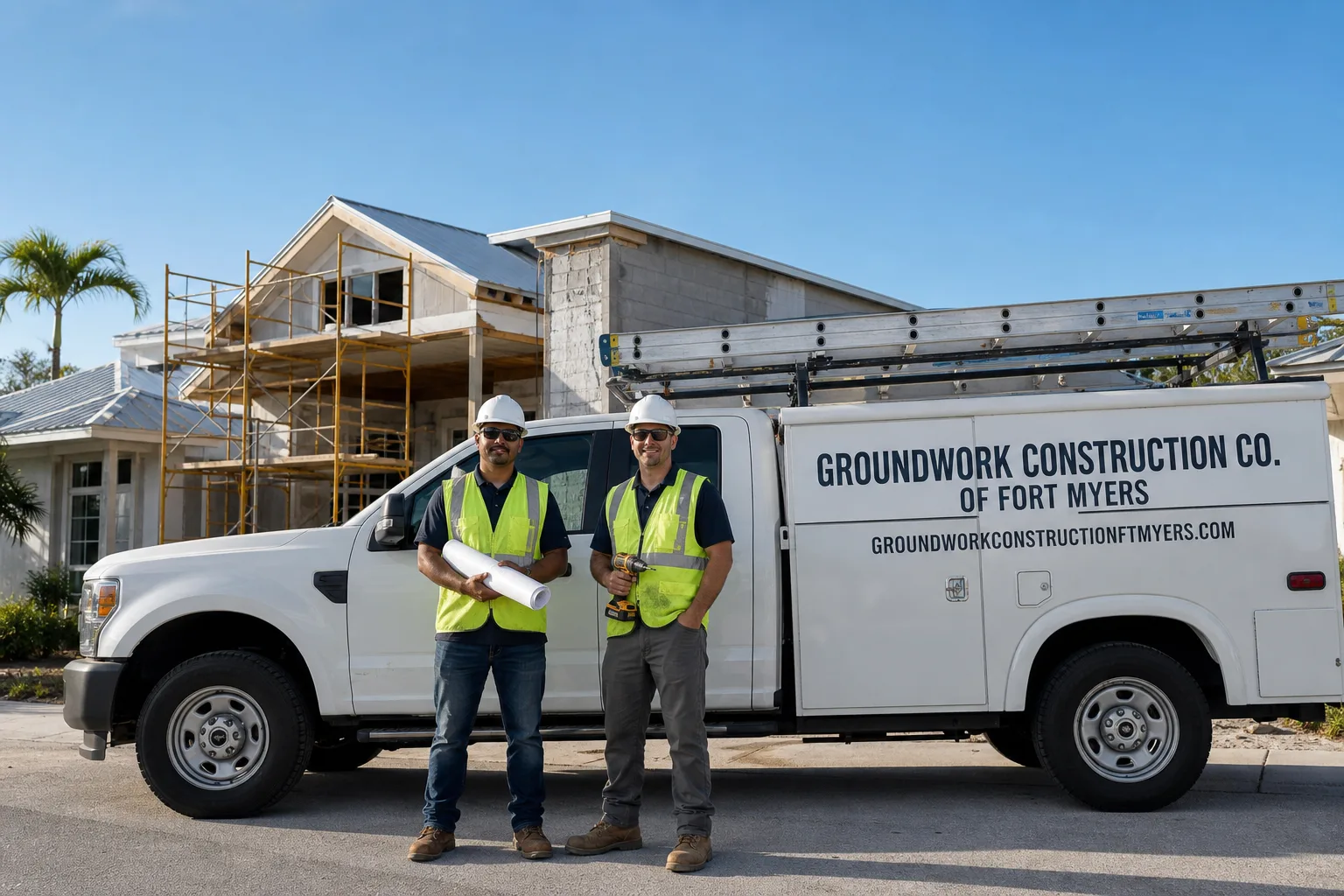
Written by Derek Hollenbeck, Owner at Groundwork Construction Co., serving Florida’s Gulf Coast communities.