
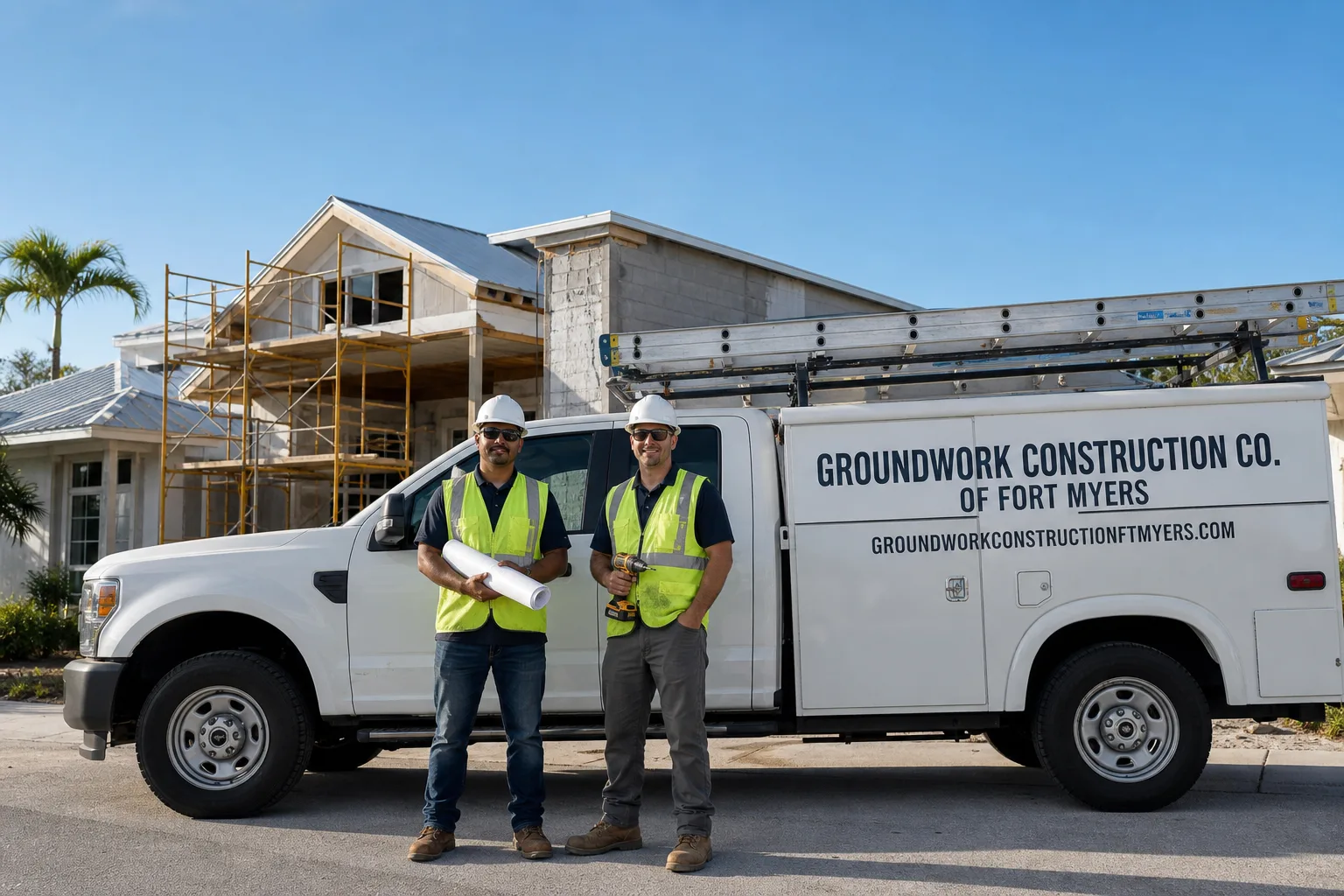
ADU Site Prep and Utilities in Orangetree - What It Actually Takes and What You’ll Spend
ADU site prep and utilities in Orangetree starts at ground level and runs straight through to a fully connected, build-ready lot. On a typical eastern Collier County lot, the work sequence is site clearing, grading and compaction, underground utility trenching (water, sewer, electric), foundation preparation, and the rough-in connections that get signed off before construction begins. A straightforward prep job on a flat, accessible Orangetree lot runs $45,000 to $90,000. When the lot has drainage problems, requires a lift station, or sits in a FEMA flood zone, the job climbs toward $130,000. Realistically, you’re looking at four to eight weeks from first scrape to final utility approval, depending on what the soil gives us once we open the ground. Call (844) 638-7249 to schedule your free site walk - we’ll give you a fixed, line-item estimate before you commit to anything.
How We Run ADU Site Prep in Orangetree - Stage by Stage
There’s no mystery to good site prep, but skipping a step is expensive to fix later. Here’s the actual sequence we follow on every Orangetree ADU prep, including what you decide and when, and how long each stage takes before we hand the lot over ready for vertical construction.
Stage 1: Site survey and utility locate (Days 1-3). Before any equipment moves, we pull the existing survey and mark property lines, easements, and setbacks. We call in private utility locates (the 811 public locate covers the mains, but not anything a previous owner buried). On Orangetree lots that were citrus groves, we also probe for abandoned subsurface irrigation lines and old borrow pits - these show up on maybe one in eight lots we open here, and missing them means soft spots under the slab later. You’ll see a paint-marked site with clear limits of disturbance within 72 hours of our first day on the ground.
Stage 2: Clearing, grubbing and rough grade (Days 3-8). We strip sod and organic material down to clean mineral soil, pull any roots or buried debris, and rough-grade the building pad to the elevation specified on your approved site plan. In Orangetree, the water table sits 2-4 feet below grade during the wet months (May through October), so we run this stage with pumps staged and ready. If we hit a soft pocket from an old grove drainage line, it gets over-excavated and backfilled with compacted select fill - that adds a day or two, but you don’t want a foundation on anything less. You’ll make zero decisions at this stage; it’s all execution.
Stage 3: Utility trenching and wet-tap connections (Days 8-14). This is where your job gets real. We dig trenches for water service, sewer lateral, and electrical conduit, then make the physical connections to the taps - either at the street for mains or, for many Orangetree homes, to the private community utility infrastructure that serves the subdivision. That private utility detail matters: the system was not built or maintained to Collier County Utilities standards, so load calculations and tap locations have to be verified directly with the community operator before we put a shovel in the ground. We handle that coordination. This stage also includes setting the water meter box, cleanouts, and pull boxes. You’ll decide where you want the electrical subpanel location and whether you want a spare conduit for future low-voltage or generator feed.
Stage 4: Foundation prep, formwork and under-slab rough-ins (Days 14-21). Once trenches are backfilled and compacted in lifts, we set forms for the slab or footer - the exact design depends on your ADU’s foundation type, but for the concrete-block slab-on-grade construction that matches virtually every existing home in Orangetree, this means a monolithic pour with thickened edges and steel reinforcement per current Collier County wind-load standards. Before concrete, we run the under-slab plumbing rough-in, the electrical grounding, and any required termite pretreatment. The building inspector and the community utility operator each do a pre-pour inspection at this point, and nobody pours until both sign off. You’ll decide on any in-slab radiant heating, which about 20% of our Orangetree ADU clients choose, given how fast tile floors give up heat in the winter.
Stage 5: Final rough-in, backfill, and site finish grade (Days 21-28+). After the slab cures, we complete the above-grade utility risers - water stub-outs, sewer venting, the electrical service entrance - and do the final backfill around the foundation. We finish-grade the site so water drains away from the slab, which on these flat Orangetree lots often means importing a few loads of clean fill to build positive slope. A final site inspection by the building department and any required HOA architectural review closes the book on site prep. At this point, the lot is ready for framing to begin. If this ADU prep is part of a full Home Additions & ADU in Orangetree project, our framing crew picks up exactly where the site crew left off, with zero handoff gaps.
The Choices You’ll Make on a Orangetree ADU Prep
Most homeowners assume site prep is all dirt and pipes - not something you get a say on. You actually have meaningful choices, and they shift both cost and long-term performance. Here’s what you’ll pick, with honest trade-offs on each.
- Foundation type: slab-on-grade versus raised stem wall. Slab-on-grade matches 95% of existing Orangetree homes and costs less - you’re pouring directly on compacted soil with thickened edges. The trade-off is that any future plumbing work under the slab means cutting concrete. A raised stem wall with a crawlspace adds $8,000-$15,000 but gives you under-floor access for repairs and keeps the finished floor well above the wet-season water table. On lots in the lower-elevation pockets of Orangetree, a stem wall is often the smarter long-term play even though the upfront number is higher.
- Sewer connection: gravity lateral versus lift station. If your lot has enough fall to the tap, a gravity lateral costs roughly $3,000-$5,000 in trenching and pipe. If the ADU sits lower than the sewer main - common on back-lot accessory units - you’ll need a grinder pump and lift station. That adds $6,000-$9,000 and introduces a mechanical component that has a 10-15 year service life. We use Liberty or Zoeller pump packages, and we always install a high-water alarm. This is the single biggest cost variable on a Orangetree ADU prep.
- Electrical service: subpanel versus separate meter. Tapping off your existing main panel saves $2,000-$4,000 versus running a new service-drop with its own meter. The subpanel route works fine for a studio or one-bedroom ADU. If the ADU will ever be a rental with its own billing, or if it’s a two-bedroom unit with heavy loads (electric range, dryer, mini-split HVAC), a dedicated service is cleaner and avoids load-calc headaches at the main panel.
- Fill material and compaction method. Standard select fill with mechanical compaction gets most jobs done. But on Orangetree lots where we’re bridging old grove drainage features or low-lying pockets, we recommend a Quikrete or Sakrete flowable fill mix for trench backfill and select areas under the slab - it self-compacts, won’t settle, and removes the guesswork in saturated soils. It runs $1,500-$3,000 extra depending on volume, and it’s money well spent on the three or four lots a year where we genuinely need it.
- Site drainage: swales versus French drains versus area drains. Flat lots need help moving water. Graded swales are cheapest and work where you have space. French drains handle subsurface water and suit tight side yards. Area drains with solid pipe to the street are the most effective but the most expensive - usually $2,500-$5,000 for a typical ADU lot. We’ll show you what each option looks like on your site plan and price them side by side.
What ADU Site Prep and Utilities Costs in Orangetree, FL
ADU site prep and utilities in Orangetree lands between $45,000 and $130,000 on a fixed-price contract. A simple prep on a dry, accessible lot with gravity sewer and a subpanel electrical feed sits around $55,000-$70,000 - that’s the most common job we write. Here’s what moves the number.
Lot access and clearing scope. A wide-open lot with a clear equipment path costs less than a tight backyard accessed through a 48-inch side gate, which requires smaller equipment and more hand work. Sewer elevation. A gravity lateral is five to nine thousand dollars cheaper than a lift station package, period. Soil conditions. Hitting old grove irrigation lines or saturated muck means over-excavation and fill import - typically a $2,000-$5,000 add depending on the cubic yards. Utility capacity. If the community utility tap requires upsizing or the transformer needs an upgrade, those costs pass through at the utility’s rate - we show you the invoice. Permit and impact fee scope. Collier County impact fees for new residential square footage and the Orangetree community’s own utility connection fees vary by ADU size and bedroom count, and they’ll appear as a line item on your estimate.
Every estimate we write for ADU site prep includes a line-by-line breakdown: clearing, grading, fill material, utility trenching, sewer connection type, water service, electrical rough-in, foundation prep, final grade, and permit fees. What it does not include is the ADU structure itself - that’s a separate estimate under our Home Additions & ADU division, and we’ll run both numbers side by side so you see the all-in cost before you decide. We don’t do change orders unless you change the scope. We don’t surprise you with soil-condition add-ons mid-job - we probe the site before we quote so the number you sign is the number you pay.
What Orangetree Specifically Does to an ADU Site Prep Job
Orangetree is a puzzle that every contractor has to solve before they open the ground, and if they haven’t worked here, they’ll learn the expensive way. This planned community went up between the late 1980s and early 2000s on former citrus groves, which means two things that matter for every ADU prep. First, the build-out straddled Hurricane Andrew in 1992 - so homes on one block may meet pre-Andrew wind-load codes while homes on the next block were built under the tougher post-1992 standards. When we pull your permit, the building department will evaluate the existing structure’s code vintage, and that evaluation can trigger full wind-load and flood-elevation compliance checks on the ADU prep itself. If your main house sits in a FEMA-designated flood zone, the 50% substantial-improvement rule enters the conversation: if the ADU cost plus any recent permitted work exceeds half of the structure’s appraised value, the entire property may need to be brought to current flood-elevation standards. We run that math before you spend a dollar on design.
Second, the legacy citrus infrastructure hasn’t disappeared just because houses went on top of it. Old subsurface drainage tiles and borrow pits from the grove era still sit under some Orangetree lots, invisible from the surface until an excavator bucket finds them. We probe for these during the site survey with a rod and sometimes with ground-penetrating radar on lots where we expect trouble. Finding one isn’t a catastrophe - it’s extra fill and compaction - but it is a line item you want to know about before the budget is set, not after. The private community utility system adds another layer: the infrastructure wasn’t built or maintained to current Collier County Utilities specifications, so we coordinate tap locations, load capacity, and inspection requirements directly with the community operator, and the timing on those approvals doesn’t always match the county’s pace. We build that buffer into the schedule from day one. On a positive note, Orangetree’s relative isolation means you’re not fighting Naples traffic for every load of fill and concrete - our material deliveries come in from the east side, and we schedule them during off-peak hours to keep the job moving. Homeowners doing an ADU here often pair this work with a Small & Partial Kitchen Remodel in Orangetree or a Full Bathroom Remodeling in Orangetree on the main house, and we sequence the site work so both projects run concurrently with one point of contact.
Serving Orangetree, FL - Our Local Coverage Area
We’re based in the Orangetree area and know this community well. Use the map below to see our service coverage - if you’re nearby, we can almost certainly help.
Frequently Asked - ADU Site Prep and Utilities in Orangetree
Four to eight weeks, start to finish. The range depends on whether we hit soil surprises (old grove drainage lines, soft pockets), how quickly the community utility operator schedules the tap inspection, and whether the permit triggers a flood-zone compliance review that extends the approval timeline. A clean, straightforward prep on a dry lot with gravity sewer finishes closer to four weeks. Add a lift station, significant fill import, or wet-season dewatering, and plan on six to eight. We’ll give you a date-certain completion in writing after the site survey. Call (844) 638-7249 to get on our schedule - we’re booking site prep consultations now.
Yes, and it’s not one permit - you’ll need a site development permit, a utility connection permit from the Orangetree community operator, and a building permit for the foundation. If your lot is in a FEMA flood zone, you’ll also need a floodplain development permit with elevation certification. We pull every permit required, and we don’t start work until they’re all approved and posted. The permitting timeline in eastern Collier County runs three to six weeks depending on the review workload, and we build that into the project calendar.
Utility runs need a trench - there’s no way to get water, sewer, and electrical conduit underground without one - but we minimize the disturbance by running all three in a shared trench where code allows, and we restore the yard to finish grade with clean topsoil and sod on the back end. If access is tight (a narrow side yard, mature landscaping you want to keep), we use a trenchless directional bore for the water and electrical runs where feasible. Sewer laterals need a gravity slope, so trenchless isn’t usually an option there, but we’ll route the trench path as narrowly as the site plan permits.
The price includes site clearing and grubbing, rough and finish grading, all underground utility trenching (water, sewer, electrical), wet-tap connections and/or lift station installation, foundation formwork and under-slab rough-ins, concrete slab pour, final grade and drainage, and all permit fees and inspections through final approval. What it does not include: the ADU structure itself, any impact fees assessed by Collier County or the Orangetree community utility, or landscaping beyond basic sod restoration. We price all of this as a fixed number, not an estimate range, so you know exactly what you’ll pay before we start.
Every ADU site prep job we complete is backed by our 730-Day Done Right Promise: if it’s not done right, we make it right, no fine print and no runaround. That covers site grading and drainage performance, utility connections, foundation integrity, and all related workmanship for a full two years. If a sewer lateral settles or a swale doesn’t drain properly 18 months after we finish, you call us and we fix it - that’s the promise, and it’s the longest workmanship guarantee we know of in residential site construction.
Get a Fixed-Price Estimate for ADU Site Prep in Orangetree
You’ll get a line-by-line estimate, a written schedule, and a single point of contact who answers when you call - because we answer the phone live, 24/7. No voicemail black hole, no subcontractor shuffle. Derek Hollenbeck and our Home Additions & ADU in Orangetree team have been doing site work in eastern Collier County long enough to know exactly what these lots throw at you, and we’ll give you the real number before you write a check. Call (844) 638-7249 to schedule your free on-site estimate - we’ll walk the lot, probe the soil, check the utility taps, and hand you a fixed price you can take to the bank.
Written by Derek Hollenbeck, Owner at Groundwork Construction Co., serving Orangetree and all of eastern Collier County.