
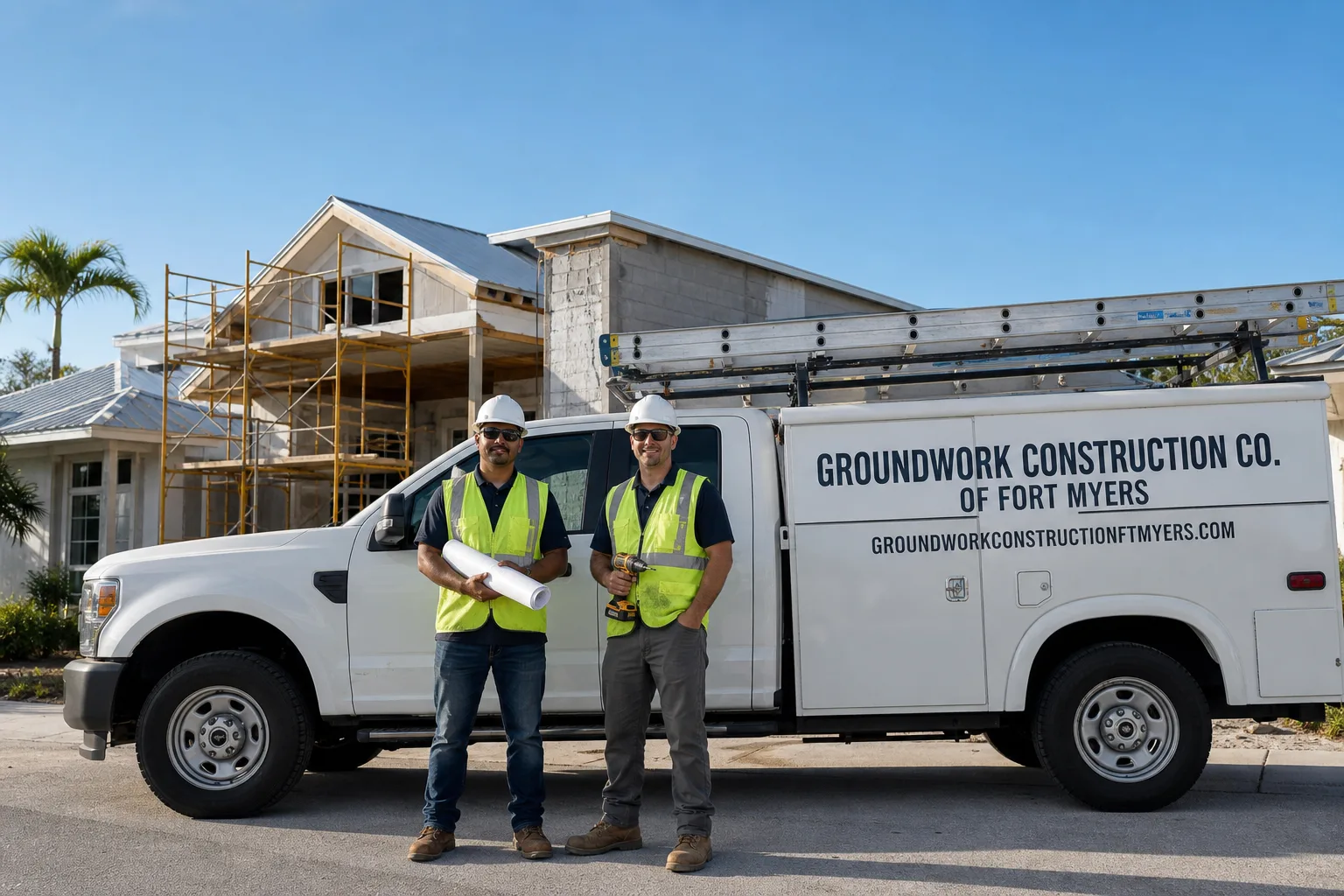
What glass railing installation in Vineyards actually costs and how long it takes
Glass railing systems in Vineyards typically run $180 to $420 per linear foot, installed, with most single-project totals landing between $2,800 and $9,500 depending on run length, mounting style, and glass spec. A straightforward 25-linear-foot balcony or pool deck railing usually takes our crew three to five working days from tear-out to final walkthrough. We carry full Collier County permitting and the Vineyards Community Association ARB approval into every quote because neither is optional here. Call (844) 638-7249 if you want real numbers tied to your exact layout instead of a ballpark.
How we install glass railing systems from start to finish
The job moves faster than most homeowners expect, but the approval sequence in Vineyards adds time up front that out-of-area crews often miss. Here is the actual order.
Stage 1: Site measure and ARB submission (Days 1-2)
We take field dimensions down to the inch and photograph the mounting surface, whether it’s a concrete pool deck, a second-story balcony slab, or a patio perimeter. If your home falls under the Vineyards Community Association’s architectural review, we pull the HOA’s current approved-finish palette and glass-tint guidance right then and submit a sample board with the ARB application. Collier County won’t issue the permit until the ARB sign-off letter is in hand, so this step sets the whole schedule. You pick the glass type, frame finish, and hardware profile at this visit.
Stage 2: Engineering and permit package (Days 3-10)
Because Southwest Florida is a high-velocity hurricane zone, every exterior glass railing must carry a product approval number and an engineer-stamped anchor schedule tied to your existing structure. We pull the specific wind-load data for your Collier County wind zone, then prepare the permit set: site plan, mounting details, product approvals, and ARB clearance. The county reviews this while we order the glass and posts.
Stage 3: Demolition and anchor prep (Day 11-12, on site)
Old aluminum pickets or rusted wrought-iron railings come out. We cut back any spalled concrete at the mounting points and drill for the new embedded or surface-mounted post bases. If core samples show compromised concrete, we dowel and epoxy new rebar cages before the pour, because railing failures in Vineyards almost always start with rotted anchors, not with the glass itself. The posts go in, leveled and shimmed, then we let the anchoring compound cure overnight.
Stage 4: Glass and hardware install (Days 13-14)
Tempered glass panels arrive with the machine-polished edges and any low-e or tint coating already applied at the fabricator. Our crew sets each panel into the base channel or between standoff clamps, using suction rigs to handle the weight without twisting. We adjust every standoff and cap rail until the sight lines run dead straight. Handrail caps, top channels, and any gate hardware go on last, followed by a full silicone seal at all base tracks.
Stage 5: Final inspection and walkthrough (Day 15)
Collier County sends a building inspector to verify the anchor embedment, glass product approvals, and that the finished railing matches the engineered drawings. We walk the railing with you after the green tag, point out the care-and-maintenance notes for the glass coating, and confirm the warranty registration. One call to (844) 638-7249 starts the whole sequence with a free site measure.
The choices you’ll make for your glass railing
Most of the cost and performance of a glass railing system gets decided in three material choices. Here is what we walk homeowners through on the measure visit.
- Frameless versus semi-frameless. Full frameless uses thick tempered glass panels, typically 1/2 inch or 5/8 inch, gripped by aluminum standoff clamps at the bottom or side. It gives you an uninterrupted view across the lake or golf course and costs more because the glass itself is structural. Semi-frameless uses a bottom rail or post system with glass infill panels, usually 3/8 inch, which brings the price down and gives you more hardware finish options.
- Glass type and coating. Clear tempered glass is the baseline. Low-e coated glass cuts heat transmission, which matters when the railing faces west in Vineyards and you want the adjacent patio usable in the afternoon. Tinted glass in bronze or gray reduces glare further and can match the existing window tint that many homes here already have. Acid-etched or frosted panels give privacy along a property line without blocking light.
- Hardware finish. Powder-coated aluminum posts and cap rails in a matte black or bronze dominate in Vineyards because those tones match the ARB-approved palette, but satin and bright anodized finishes are available. We recommend a 316-grade stainless if the railing sits within a half-mile of salt water, and standard 304 if you are farther inland. The right choice here prevents pitting you’ll see on cheap brackets within two rainy seasons.
- Mounting configuration. Surface-mounted posts anchor to the top of an existing concrete slab. Fascia-mounted posts bolt to the vertical face of the slab edge, which is common on pool decks where you want the railing flush with the coping. Core-drilled embedded posts set into the concrete itself give the cleanest frameless look but need a thick, sound slab. We test the slab with a Schmidt hammer before specifying embedded posts because some 1980s pool decks in Vineyards have lost too much surface density.
What glass railing systems cost in Vineyards, FL
In Vineyards, glass railing systems typically cost $2,800 to $9,500 for a standard residential run of 15 to 35 linear feet. The per-linear-foot range of $180 to $420 includes materials, labor, engineering, permitting, and ARB coordination.
Here is what pushes a quote toward the high or low end of that range.
- Run length. More feet means more glass, more posts, and more hardware, but the per-foot cost drops slightly on longer runs because the crew mobilization and permit fees get spread across more units.
- Frameless versus semi-frameless. A frameless 30-foot run using 5/8-inch low-e glass and standoff clamps will land near the top of the range. The same run in semi-frameless with powder-coated posts and 3/8-inch clear tempered glass sits closer to the middle.
- Mounting surface condition. A 1990s pool deck with surface spalling and corroded rebar at the anchor points needs concrete repair before the posts go in. That prep work adds $400 to $1,200 to the job.
- Gate hardware. Most railing runs in Vineyards include at least one self-closing, self-latching gate per pool-code requirements. A heavy glass gate with hydraulic closer and stainless latch adds $800 to $1,500 per gate on top of the running-foot price.
- Permit and ARB coordination. Our quotes include the Collier County permit fee and all ARB documentation. If the ARB requires a revision because a sample doesn’t match the approved palette, we cover the resubmission; the glass and hardware don’t change price.
Every estimate we write is an all-in, line-item price. You see the glass spec, post finish, gate hardware, concrete prep if needed, engineering, permits, and ARB work broken out separately. No change order appears on install day unless you add scope. For an exact number on your railing, call (844) 638-7249. The on-site measure is free.
What Vineyards homes specifically do to glass railing work
Vineyards is a master-planned golf community built primarily between the late 1980s and late 1990s, which means most of the homes we install railings on are 25 to 35 years old. Most were built with aluminum picket railings or painted wrought-iron that looked fine in 1992 but are now pitted, loose at the anchors, and out of compliance with current Florida Building Code fall-protection and wind-load requirements. The concrete pool decks and balcony slabs on these homes often have surface spalling from three decades of wet-dry cycling, and we routinely find that the original railing post anchors were set only two or three inches into the slab with no epoxy. In the current code cycle, those anchors need to be embedded deeper and mechanically locked, which changes the prep work.
The bigger variable in Vineyards is the approval path. The Vineyards Community Association Architectural Review Board must sign off on any exterior railing replacement before Collier County issues the building permit. The ARB maintains a specific palette of approved exterior finishes and has rejected railing samples that were “close” to the standard but not an exact match to the approved powder-coat code. We keep the current ARB finish schedule on file and submit a physical sample with every application so the approval moves on the first review. Contractors who skip this step typically get a stop-work order and a forced removal, a costly lesson we’ve watched too many homeowners learn the hard way.
Because every inch of Vineyards sits inside Collier County’s high-velocity hurricane zone, the engineered anchor schedule must carry a product approval number for your specific wind zone. The glass itself needs to be tempered and meet ASTM E1300 wind-load standards for exterior railings. We pull the wind-zone data and stamp the drawings before the county sees them, so the permit moves without a structural correction notice. For homeowners who are pairing the railing replacement with other exterior upgrades, our Windows & Doors in Vineyards crew can scope the full opening-protection package at the same walkthrough. Some residents also have us look at the driveway while we’re on site, and we’ll coordinate railing work with a Paver Driveways in Vineyards install if the deck and driveway share a slab edge.
Serving Vineyards, FL - Our Local Coverage Area
We’re based in the Vineyards area and know this community well. Use the map below to see our service coverage - if you’re nearby, we can almost certainly help.
Frequently asked questions about glass railing systems in Vineyards
Yes. Collier County requires a building permit for any exterior railing replacement, and because Vineyards is an HOA-governed community, you also need Architectural Review Board approval from the Vineyards Community Association before the county will accept the permit application. Our quote includes both approvals and all engineering. We handle the full paper trail.
Plan on roughly two weeks from the day we submit the ARB application to the day the county inspector signs off. The on-site work itself takes three to five working days: two days for demolition, anchor prep, and post setting, one to two days for glass and hardware install, and a final day for inspection and walkthrough. The ARB and county review add another seven to ten business days in front of the on-site work.
Yes, when it is engineered and anchored correctly. We use tempered glass that meets ASTM E1300 for wind load, and every installation carries an engineer-stamped anchor schedule designed for your home’s specific Collier County wind zone. The failure point in a storm is virtually always the anchor embedment, not the glass panel itself, which is why we test the slab and epoxy the anchors to the embedment depth the engineer specifies rather than reusing the old shallow post holes.
A glass railing system in Vineyards runs $180 to $420 per linear foot installed. Standard aluminum picket railing is less expensive up front, usually $90 to $180 per foot, and stainless cable infill systems fall between the two at $150 to $280 per foot. Glass costs more because the material is heavier, requires more handling labor, and the panels themselves are fabricated to order with polished edges and any low-e coating. The trade-off is an unobstructed view, which is the reason most homeowners in a golf-course community make the jump to glass in the first place.
Often yes, but it depends on the bond between the tile and the structural slab underneath. We cut a small core sample to check adhesion and slab thickness before specifying the mounting method. If the tile is well-bonded over a sound concrete slab at least four inches thick, we can core-drill through the tile and set the posts into the slab. If the tile is loose or the slab is thin, we may need to remove a strip of tile and pour a thickened edge beam to anchor the new posts. We won’t know until we open a test core, which we do as part of the free on-site measure.
Get a fixed-price quote for glass railing in Vineyards
If you’re ready to replace a tired aluminum railing or want glass on a new balcony overlooking the fairway, start with a free on-site measure. We’ll come to your home in Vineyards, take every dimension, walk you through the glass and hardware options that match the ARB-approved palette, and hand you a written, line-item price before we leave. No ballparks, no change orders, no games. Call (844) 638-7249 to schedule it. Derek runs point on all Windows & Doors estimates personally, and our crew carries the same background-checked, uniformed standard on every job in the community. Some homeowners bundle the railing project with Fence Repair in Vineyards where a property-line fence needs attention at the same time, and we’ll line-item both on the same estimate so you see the full picture.
Written by Derek Hollenbeck, Owner at Groundwork Construction Co., serving Vineyards and Southwest Florida.