
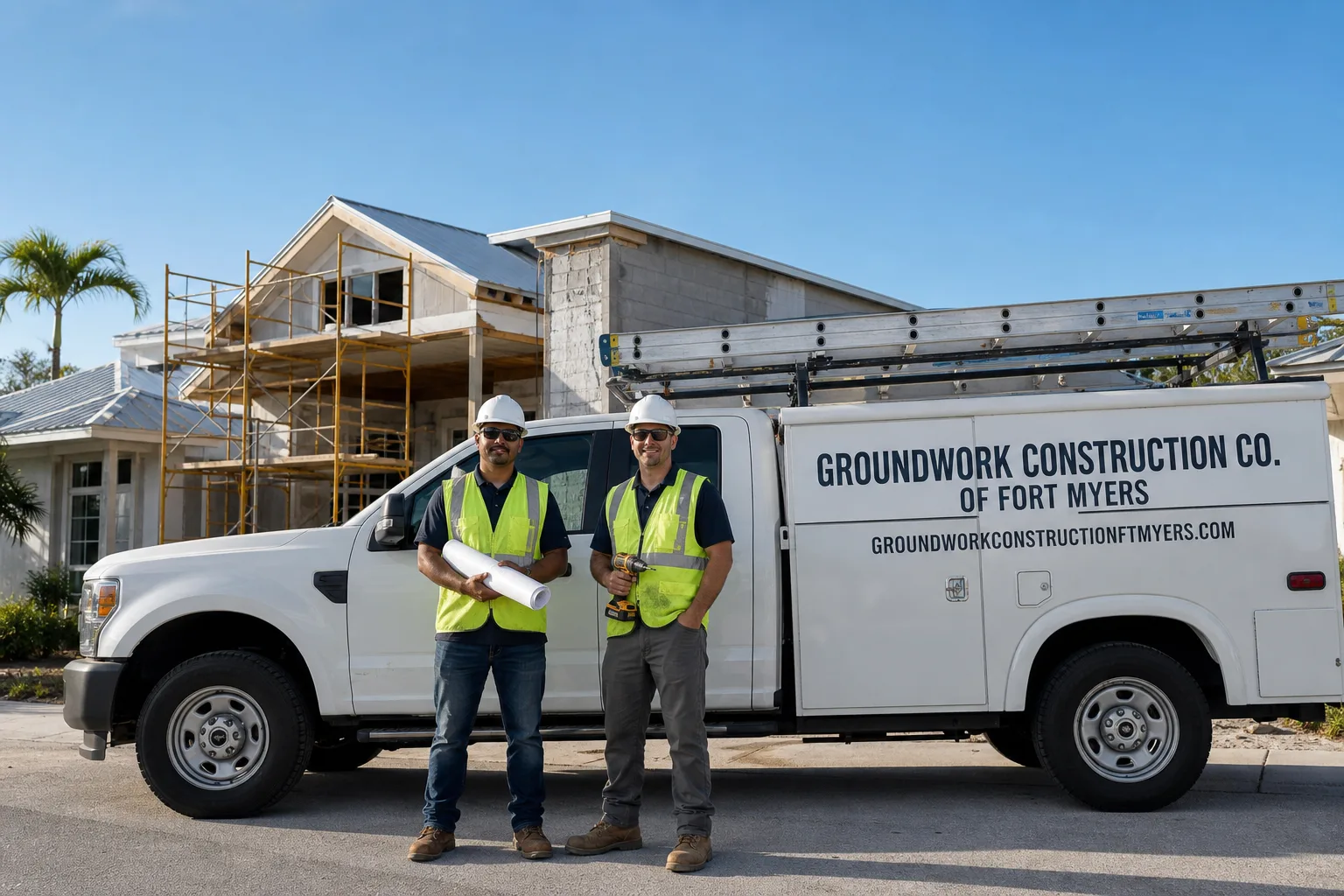
What a Chain Link Fence Job in Port LaBelle Actually Looks Like
A chain link fence in Port LaBelle usually runs between $3,500 and $9,000 and takes our crew about two to four days from post-hole to final walk-through. That range accounts for a typical 150- to 250-linear-foot perimeter on a quarter-acre lot, using galvanized steel framework with your choice of gauge and mesh size. Call (844) 638-7249 and we’ll give you a written, line-item quote before any dirt moves - no vague ranges, no change-order games.
What makes this job different here is the ground itself. Much of Port LaBelle sits on long-dormant General Development Corporation lots where the soil has never been disturbed, and the water table is often just a couple feet down. Setting posts you can count on for 20 years means getting the concrete footers right the first time, which we’ll cover below.
How We Install a Chain Link Fence, Step by Step
The process isn’t complicated, but skipping a step shows up fast - crooked posts, sagging mesh, gates that bind in August. Here’s what our crew does on a typical Port LaBelle job.
1. Site walk and underground locate (Day 1, morning)
We meet you on the property and walk the entire fence line with a can of marking paint. You tell us exactly where the corners land, where the gates go, and whether you want double gates for trailer access on the side yard. We call in an 811 utility locate before any digging - Hendry County can take up to 48 hours to mark, so this step often determines the real start date. Buried utility stubs on Port LaBelle’s undeveloped paper lots are a known wildcard, and we treat every locate as critical.
2. Post-hole digging and concrete setting (Day 2 or 3, depending on locate)
Terminal posts go in first - corners, ends, and gate posts - set in 8-inch-diameter concrete footers at least 24 inches deep. On lots with a high water table we over-dig slightly and use a drier mix so the concrete sets properly rather than washing out. Line posts follow on 10-foot centers, set plumb with a laser level. The concrete cures for 24 hours before we hang any weight on the posts. This is the stage where a bad job shows up a year later as frost heave or groundwater shift - we don’t rush it.
3. Framework and hardware (Day 4)
Top rails, tension bars, and brace bands go on once the footers have set. Gate frames get welded or bolted together - we prefer a welded gate frame on anything over a six-foot leaf because bolted corners loosen over time in Port LaBelle’s wet-dry-wet soil cycles. Hinges are industrial-grade and get adjusted so the gate swings freely without dragging.
4. Mesh stretching and tying (Day 4, afternoon)
The chain link fabric gets unrolled along the frame and tensioned with a come-along until there’s no visible sag between posts. Tension wire runs through the bottom of the mesh to keep dogs from pushing under it. We use aluminum tie wires every 12 inches on the top rail and every 18 inches on the line posts. You’ll walk the line with us before we pack up so you can tug on the mesh yourself.
5. Gate adjustment and cleanup (Day 4, end of day)
Gate latches get dialed in so they catch every time without slamming. Drop rods go in on double gates. We rake and magnet-sweep the fence line to pull any leftover concrete debris or metal shavings, then walk you through basic maintenance - mainly rinsing the mesh with a hose every few months if you’re near a dirt road or construction lot.
The Options You’ll Choose Between
Chain link isn’t one-size-fits-all. Here are the real decisions that affect what you pay and what you get.
- Gauge. 11.5-gauge (residential standard) is what we install on most homes. 9-gauge is a heavier wire - about 20% more material cost - and makes sense on commercial lots or if you’ve got large dogs that lean hard on the fence. The lighter 12.5-gauge exists but we don’t recommend it in Port LaBelle’s humidity; it corrodes faster and dents easily.
- Mesh size. 2-inch diamond mesh is the default. 2.25-inch saves a little money but a determined medium-sized dog can get a paw through it. 1-inch mesh runs the price up but keeps out rabbits and armadillos, which are a genuine problem in Hendry County’s sandy soil.
- Coating. Galvanized steel (silver) is the workhorse and what we quote standard. Vinyl-coated (black or green) adds about 15-25% to the material line and holds up better cosmetically, especially on lots near the Caloosahatchee floodplain where airborne moisture is constant. The coating eventually fades but won’t blister for a decade if you keep sprinkler overspray off it.
- Gate count and width. A single 4-foot walk gate is standard. A 10-foot double gate for a trailer or riding mower adds about $400-$800 depending on gauge and hardware. Every additional gate adds a terminal post, hinges, latch, and labor.
- Top rail vs. tension wire only. A top rail (the horizontal pipe running between posts) stiffens the whole fence and prevents that wavy-top look after a few wet seasons. Tension wire alone is cheaper but the fence will need retensioning sooner, especially on longer runs.
What a Chain Link Fence Costs in Port LaBelle, FL
A straightforward chain link fence in Port LaBelle on a cleared residential lot runs $3,500 to $9,000. The final number moves on four things.
Linear footage. This is the biggest lever. A 100-foot run around a small side yard lands at the low end. A 300-foot full-perimeter fence with multiple gates pushes toward $9,000. Posts and concrete are costed per hole, so more corners mean more terminal posts and more money.
Site conditions. Many Port LaBelle lots are raw or only partially cleared. If we’re pulling out old T-posts and field wire, that’s demo labor. If the fence line crosses a silted-in swale - common on the original GDC lots - we may need to grade or bridge the low spot so the bottom tension wire sits at grade. Neither is a showstopper but both add hours.
Gauge and coating. Upgrading from 11.5-gauge galvanized to 9-gauge vinyl-coated adds roughly 30-40% to the material portion of the bid. Worth it on a permanent home, overkill on a rental flip.
Gate hardware. A single walk gate is built into the per-foot price. Every additional gate - especially a heavy double drive gate with a drop rod and cane bolt - is a separate line item.
Every estimate we write is line-item: you see the per-foot cost for materials, the per-post labor, the gate count, and any site-prep time. No lump-sum mystery numbers. If you’re also planning concrete or asphalt work, some homeowners bundle this with Concrete Driveways & Concrete Work in Port LaBelle or Asphalt Driveways & Resurfacing in Port LaBelle to knock out the whole exterior at once.
What Port LaBelle Homes Specifically Do to This Job
Port LaBelle isn’t a typical subdivision. It’s one of the largest platted-but-never-built tracts in Florida history, which means our crew is often setting fence posts on ground that hasn’t seen a shovel since General Development Corporation mapped it in the 1970s. The single biggest local variable is the drainage swale - Hendry County will flag a swale restoration review on a permit pull, and if the swale along your street has silted in or disappeared under decades of overgrowth, it has to be regraded before we can set posts in the right-of-way setback. That review is a Port LaBelle-specific hidden pre-construction step that practically never comes up in Fort Myers or Cape Coral.
The built-out pockets of Port LaBelle - mostly CBS homes from the 1980s and manufactured homes from the same era - sit on lots where the adjacent parcel might still be raw scrub. The fence line on one side could be a manicured yard and on the other, untouched palmetto and pine. We’ve set chain link borders where three sides are standard residential soil and the fourth side runs through what is effectively undeveloped Hendry County backcountry. That means the post-hole digging is unpredictable block by block, and we budget extra time for roots, buried debris, and saturated ground from the high water table that sits within two to three feet of grade across much of the area.
When we work in Port LaBelle, we also account for FEMA flood-zone requirements: any fence in a Special Flood Hazard Area must allow water to pass through, which chain link does by default - no solid panels, no masonry stem walls at the base - so it’s often the compliant choice where a privacy fence would require additional engineering. This job ties into the broader scope of Fence Installation in Port LaBelle, and our Fence Installation team knows the Hendry County permit office well enough to pull the right paperwork on the first trip.
Serving Port LaBelle, FL - Our Local Coverage Area
We’re based in the Port LaBelle area and know this community well. Use the map below to see our service coverage - if you’re nearby, we can almost certainly help.
Frequently Asked - Chain Link Fence in Port LaBelle
Two to four days on site once the utility locate clears. The 48-hour locate wait is usually the longest stretch between signing and starting. Concrete footers need a full day to cure before we hang framework, so a Thursday start typically wraps the following Tuesday.
Yes, most residential fences in Port LaBelle require a permit through Hendry County Building & Zoning. A survey or site plan showing the fence line relative to property boundaries is standard. We handle the permit pull as part of the job; you don’t need to file anything yourself.
Galvanized chain link will develop a dull gray patina over time but shouldn’t structurally rust for 15-20 years if it’s properly specced - 11.5-gauge or heavier, with zinc-coated steel. Vinyl-coated chain link adds another layer against the constant moisture, especially on lots near the Caloosahatchee floodplain. The biggest rust accelerators we see are sprinkler heads aimed directly at the bottom rail and wet mulch piled against the posts.
Yes, and that’s a common scenario in Port LaBelle. We’ll need the fence line cleared of brush and debris, either by you or by a clearing crew we can coordinate with. If old wire fencing or T-posts are in the way, that’s demo time we’ll line-item in the estimate. The ground doesn’t need to be perfectly graded, but a heavily silted swale along the property line may need restoration before posts go in.
Every chain link fence we install in Port LaBelle is covered by our 730-Day Done Right Promise - if something isn’t right, we make it right, no runaround. The materials carry the manufacturer’s warranty (galvanized steel is typically warrantied against manufacturing defects, not surface oxidation, which is normal). Call (844) 638-7249 and we’ll walk you through exactly what’s covered before you sign anything.
Get a Straight Quote on Chain Link Fence in Port LaBelle
You’ll get a line-item written estimate, a realistic timeline, and a crew that answers questions in plain English. Call (844) 638-7249 to schedule a free on-site walk-through - the estimate takes about 45 minutes, you’ll know exactly what everything costs, and we’ll have a start date before we leave the driveway.
Written by Derek Hollenbeck, Owner at Groundwork Construction Co., serving Southwest Florida since 2014.