
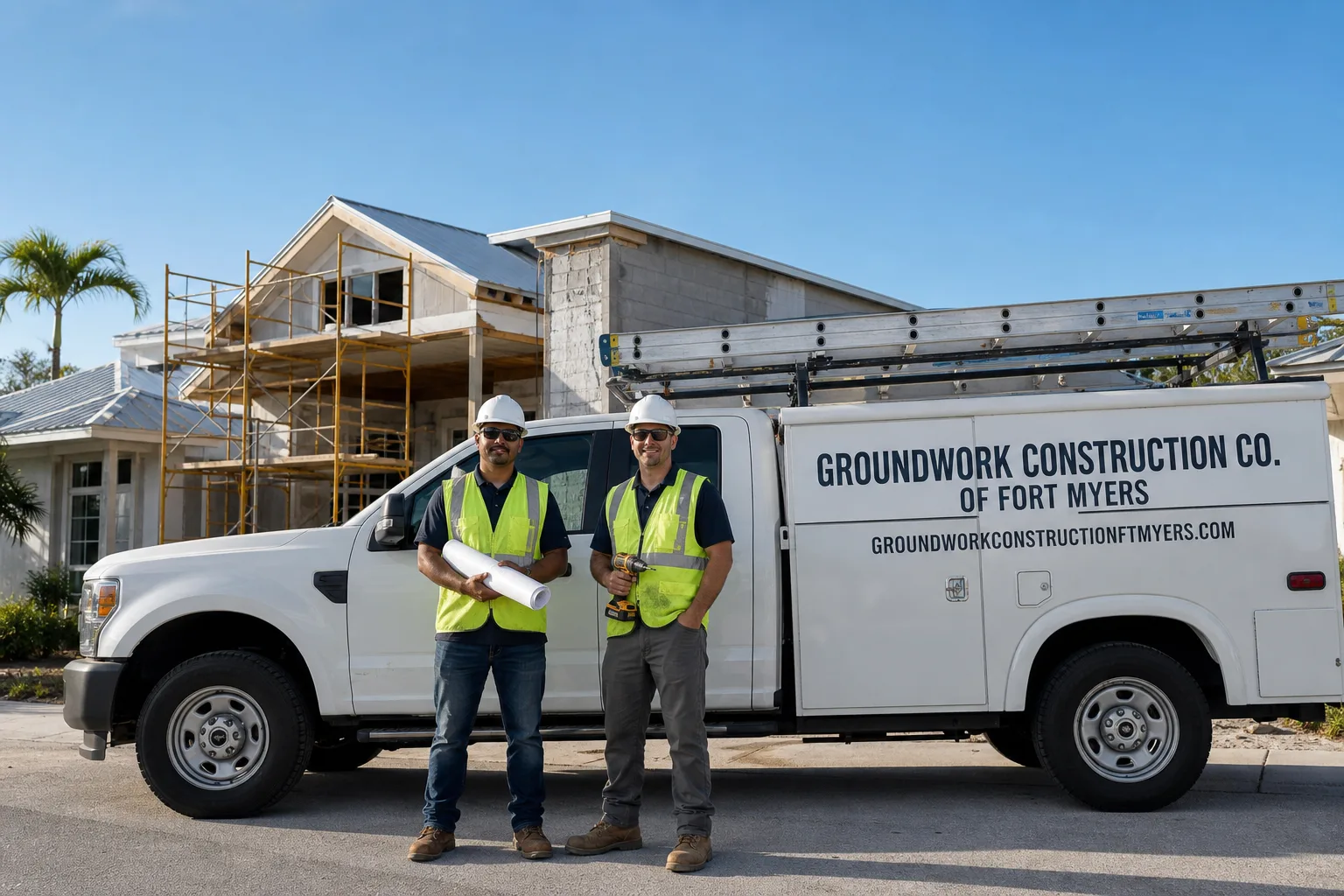
What ADU Site Prep & Utilities in Southeast Arcadia Actually Takes (and What You’ll Pay)
ADU site prep and utilities in Southeast Arcadia is the phase that turns a backyard into a buildable lot. It means clearing and grading the site, trenching for new or upgraded water, sewer, and electric service laterals, pouring a proper foundation or slab on stable soil, and roughing in the connections the living space will need. On a standard flat lot in Southeast Arcadia with reasonable access, expect the site-prep and utility phase to take 3 to 6 weeks from the first day of excavation to the foundation sign-off. The cost runs between $45,000 and $130,000 depending on how far the utilities have to travel, what the soils look like once we open them up, and whether the site needs retaining walls or significant fill. Call (844) 638-7249 to get a written, line-item estimate for your specific property.
How We Take a Southeast Arcadia Backyard from Raw Dirt to a Ready Foundation
Most homeowners in Southeast Arcadia haven’t done major ground-up construction before, and the site-prep phase can feel like the messy part with all the answers still hiding underground. Here’s the real sequence, stage by stage.
Stage 1 - Survey, mark-out, and utility locate (Days 1-3)
We bring in a licensed surveyor to stake the ADU footprint and setbacks against the property lines and any easements recorded on the plat. In Southeast Arcadia, many lots platted in the 1950s-1970s have utility easements along the rear or side lot lines that can catch a homeowner by surprise. We call Sunshine 811 for the underground utility locate, mark the path of the new trenches, and walk you through where the excavation will go. You make the final call on the ADU’s exact position after seeing how the footprint sits on the grade.
Stage 2 - Clearing, root-mass removal, and rough grading (Days 4-10)
If there are oaks, pines, or overgrown palmetto scrub where the ADU will sit, this is when they come out-canopy, trunk, and root mass. Arcadia’s heavy clay soils hold root balls tenaciously, and a partial root mass left in place will decompose into a void that heaves the slab years later. We excavate until we’re into undisturbed, compactable soil, then bring in select fill to build the pad up to finished grade. If your lot drains toward where the ADU is going (common on the flat lots around Magnolia Avenue and Orange Avenue), we’ll design a shallow swale or berm at this stage to direct wet-season runoff away from the foundation.
Stage 3 - Trenching and running new utility laterals (Days 11-20)
This is where the budget range widens fastest. In Southeast Arcadia, many mid-century homes were built with 3/4-inch or 1-inch water services and 100-amp electrical panels that can’t legally serve both the main house and a full ADU. We trench from the city tap or well head to the ADU pad for water, from the septic tank or sewer lateral for waste, and from the existing meter or a new meter location for electric. When the distance from the street to the ADU exceeds 100 feet-or when we hit the dense, poorly draining clay that makes up much of the Peace River basin’s subgrade-the trenching, bedding, and compaction take longer and the line-item cost climbs. Every utility trench is inspected by the DeSoto County building department before we backfill, and we take photos of every run before the dirt goes back in.
Stage 4 - Foundation formwork, under-slab rough-in, and pour (Days 21-30)
We build the formwork, lay the vapor barrier, tie the rebar grid, and stub up all the under-slab plumbing drains and electrical conduits to the exact dimensions of the ADU floor plan. On the clay-dominant soils common around Southeast Arcadia, we spec a deeper perimeter footing with two continuous runs of #4 rebar to resist the differential movement those soils produce during wet-dry cycles. An inspector checks the forms, steel, and stub-outs before the concrete truck arrives-no shortcuts here. The pour itself is a single continuous placement with a 3,000-psi minimum mix. After the slab cures under plastic for several days, we strip the forms, backfill the perimeter, and the pad is ready for the framing crew.
Stage 5 - Temporary power pole and final utility hookup rough-in (Days 31-40)
With the slab in place, we set a temporary power pole if the permanent electric service isn’t ready yet, which lets the framing and interior trades work without generators. We bring the water and sewer stub-outs to the surface with caps and bring the electric conduit up into a weatherproof pull box at the exterior wall line. You’ll be making the final decisions on the electrical service size-typically 100 amps for a compact ADU, 200 amps for a two-bedroom unit with its own HVAC and laundry-and any subpanel location inside the footprint. After a final rough-in inspection, the site-prep phase is closed out and we hand the pad off to the framing crew, often as part of a full Home Additions & ADU in Southeast Arcadia build.
The Options You’ll Choose Between During ADU Site Prep
You’re making decisions during the utility and foundation phase that will follow the building forever. Here are the ones that matter most, with the trade-offs explained honestly.
- Slab-on-grade vs. stem-wall foundation - A standard monolithic slab works well on the flat, compacted pads we build across Southeast Arcadia and costs less. A stem-wall foundation with a crawlspace lifts the floor 18-24 inches above grade and provides superior flood and moisture separation, which matters on low-lying lots near the Peace River floodplain. The stem-wall adds $8,000-$15,000 depending on the ADU footprint but gives you access to under-floor plumbing and ducting for future repairs.
- Electrical service: tap the existing panel vs. new separate service - Tapping the main house panel saves $2,000-$4,000 and works when the existing panel has enough capacity. Many homes in Southeast Arcadia still run 100-amp services, and adding a one-bedroom ADU with its own AC, water heater, and kitchen will trip the load calculation. A new 200-amp service for the main house with a sub-feed to the ADU-or a completely separate meter for the ADU-costs more upfront but avoids the breaker-trip headaches and rework later.
- Sewer: gravity tie-in vs. grinder pump vs. new septic - If the main house sewer lateral is deep enough and close enough, a gravity tie-in is the cheapest, most reliable option. On lots where the ADU sits lower than the main line, a grinder pump with a force main adds $3,500-$7,000. If the property is on septic, a new dedicated tank and drain field for the ADU can run $8,000-$18,000 depending on the percolation rate of the local clay-and in Southeast Arcadia, perc rates are frequently marginal, which means a larger drain field than you’d expect.
- Water service size and material - The minimum 3/4-inch poly service works for a compact one-bath ADU. A 1-inch service costs a few hundred dollars more in material and trenching width and lets you run a washer, dishwasher, and shower simultaneously without a pressure drop. We default to 1-inch copper stub-outs at the slab for longevity, and if the line runs under a future driveway or paver path-something our home additions & adu crew plans around early-we’ll sleeve it in PVC for protection.
- Branded hardscape at the foundation perimeter - The pad doesn’t have to end in bare dirt. A poured concrete walkway keeps mud off the ADU entry during summer downpours for less money, while a paver border using products from Tremron or Techo-Bloc turns the perimeter into a lasting landscape edge that ties into existing patios. The paver option adds $1,500-$4,000 depending on linear feet and the paver series you choose.
What ADU Site Prep & Utilities Costs in Southeast Arcadia, FL
On a typical 400-600-square-foot ADU pad in Southeast Arcadia, site prep and utility work lands between $45,000 on the low end and $130,000 on a complex site. Most projects we bid fall between $55,000 and $85,000. Here is what moves the number.
The distance from the existing utilities to the ADU pad is the single biggest variable. Trenching 30 feet through open lawn costs a fraction of trenching 120 feet through a developed yard with mature landscaping, irrigation lines, and a concrete patio that has to be saw-cut and restored. Soil conditions matter too-the dense, expansive clay common across the Peace River basin compacts poorly and sometimes requires over-excavation and imported select fill to get a stable bearing surface. If we hit buried construction debris from a post-Charley cleanup (and we have, on plenty of Southeast Arcadia jobs), the removal and recompaction add hours and disposal costs to the excavation budget.
The condition and capacity of the existing house systems drive the rest. An electric panel already running near capacity requires a service upgrade. A sewer line at the wrong depth requires a pump. A well system serving the main house may need a new constant-pressure setup to handle both dwellings. Every quote we write includes line items for the known conditions and a clear explanation of what could change once the ground is open. We don’t write change orders without calling you first, and we don’t bury a low number to win the bid only to inflate it later-our upfront pricing tells you the number we expect to honor.
For homeowners who are also looking at interior work as the ADU project unfolds, we often see site-prep paired with a Small & Partial Kitchen Remodels in Southeast Arcadia or a Full Bathroom Remodeling in Southeast Arcadia-tackling the main-house upgrades while the ADU pad cures keeps the whole project schedule efficient.
What Southeast Arcadia Homes Specifically Do to This Job
Southeast Arcadia’s housing stock and its post-Charley history put this job in a different category than site prep across the river in Fort Myers or down in North Fort Myers. A large portion of the homes we work around here are concrete-block structures from the 1950s, 1960s, and 1970s that rode out the 2004 hurricane structurally but were patched quickly during the 2004-2006 rebuild rush. That means on any ADU site-prep job, we are pulling the existing survey, verifying the as-built utility locations, and checking the main house’s truss-to-wall connections before we assume the existing service can handle a second dwelling. Charley-era repairs routinely skipped hurricane straps or used undersized nails at the top-plate connection, and those 20-year-old shortcuts surface when the new electrical service mast or the ADU feeder conduit has to attach to the existing structure.
DeSoto County permitting reviews the ADU foundation and utility rough-in as part of the full residential plan set, and we coordinate with the building department on the footing inspection, the under-slab plumbing and conduit inspection, and the final backfill observation. The heavy clay subgrade that dominates the Southeast Arcadia area compacts poorly during the wet season-June through September-so we schedule slab pours around the weather window and sometimes accelerate the lime treatment of the pad soil to get the compaction numbers the engineer requires. That is a local reality that doesn’t show up in a generic cost estimator, and it’s one reason why a contractor who works this ground regularly will give you a more honest number than someone driving in from a coastal market where the soils are pure sand.
Serving Southeast Arcadia, FL - Our Local Coverage Area
We’re based in the Southeast Arcadia area and know this community well. Use the map below to see our service coverage - if you’re nearby, we can almost certainly help.
Frequently Asked Questions About ADU Site Prep & Utilities in Southeast Arcadia
On a straightforward lot with existing utilities within 50 feet and no major grading challenges, the excavation, trenching, foundation formwork, pour, and rough-in inspections take 3 to 4 weeks. When the lot requires significant fill, a retaining wall, a new septic system, or a long utility run from the street, the timeline stretches to 5 or 6 weeks. Rain delays during the June-September wet season can push a pour out by several days-we build that buffer into the schedule upfront.
Yes. The site-prep, foundation, and utility work all fall under the full ADU building permit from the DeSoto County Building Department. The foundation, under-slab rough-in, and trench backfill each require a separate inspection before the next stage can proceed. We pull every required permit and schedule every inspection as part of the job.
Sometimes, but not usually on the older housing stock we see across Southeast Arcadia. If the main house has a 200-amp service with spare breaker slots and the sewer lateral is deep enough for a gravity tie-in near where the ADU will sit, you can connect without a major upgrade. Most 1950s-1970s homes we open up are running 100-amp panels and shallower laterals, which means a service upgrade and possibly a grinder pump are part of the realistic budget from day one.
Our written estimate covers clearing, grading, fill, trenching, bedding, utility pipe and conduit, concrete, rebar, formwork, backfill, compaction, all permit fees, and all scheduled inspections. The unknowns are what’s underground-buried stumps, old construction debris hidden under turf, sewer laterals that turn out to be Orangeburg pipe on its last legs, or soil that won’t compact to bearing pressure without additional treatment. We photograph everything we expose and walk you through exactly what we found and what it changes before any extra work goes on the clock.
Every foundation slab and utility rough-in we complete is covered by the 730-Day Done Right Promise-if it’s not done right, we make it right. That covers the concrete work, the under-slab plumbing and conduit, the trench bedding and compaction, and the rough-in connections. It is one of the longest workmanship guarantees in residential construction, and it’s in writing on every contract. Call (844) 638-7249 to discuss your project and get a free, itemized estimate for ADU site prep and utilities in Southeast Arcadia.
Start With a Free, No-Pressure Estimate for Your Southeast Arcadia ADU Site Prep
Every ADU starts underground, and getting that part right is the difference between a project that runs smoothly and one that fights the site for the next 20 years. We’ll visit your property in Southeast Arcadia, walk the site with you, check the existing utilities and panel, and give you a written, line-by-line estimate that shows exactly where your money is going. The estimate is free, the advice is honest, and there is no pressure to sign anything on the spot. Call (844) 638-7249 to schedule your site walk-a live person answers, day or night.
Written by Derek Hollenbeck, Owner at Groundwork Construction Co., serving Southeast Arcadia since 2014.