
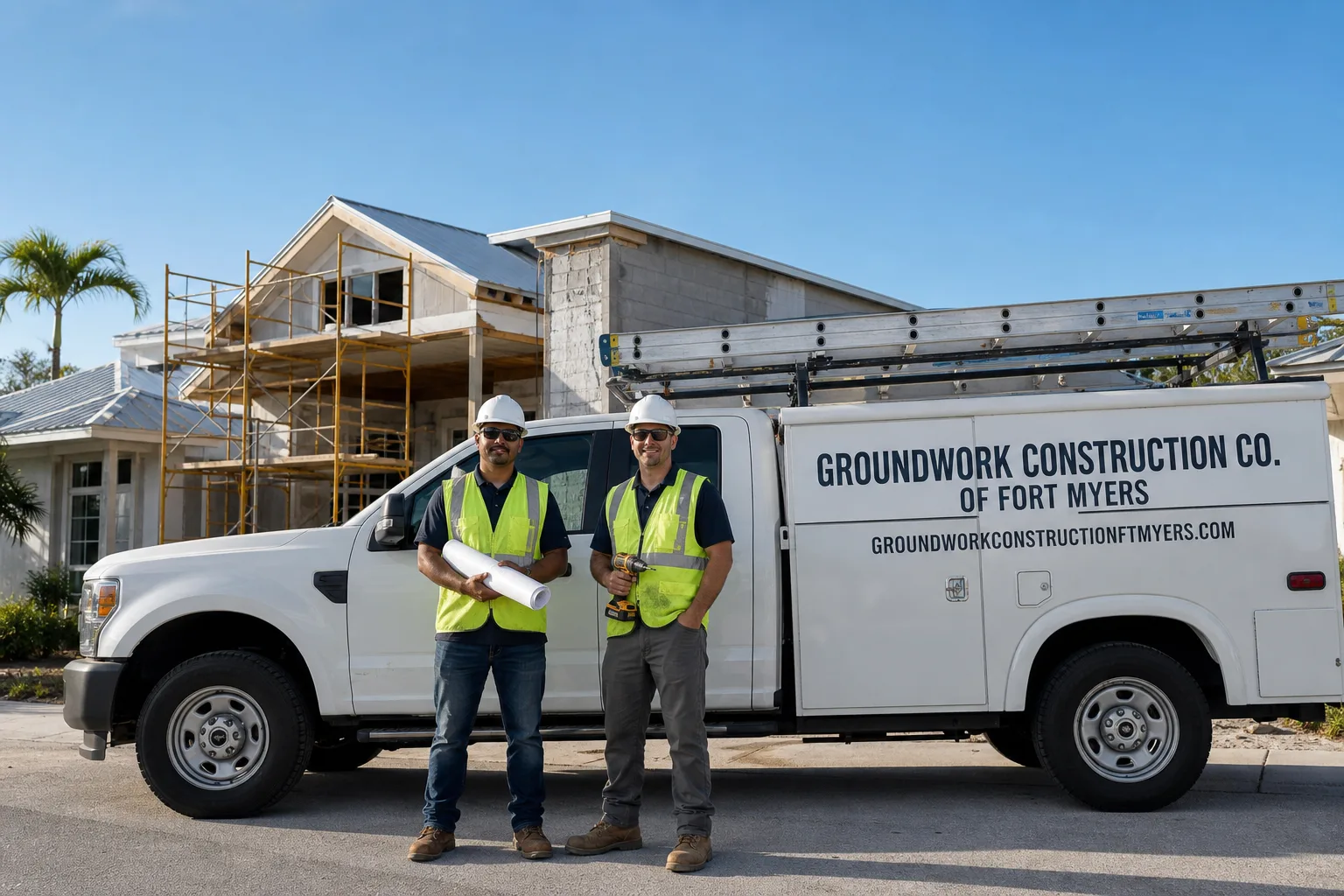
ADU Site Prep & Utilities in Golden Gate: What It Takes and What It Costs
ADU site prep and utilities in Golden Gate runs $45,000-$130,000 and typically takes 6-10 weeks from first stake to ready-to-build pad. That number covers clearing, grading, foundation prep, and running all underground utilities, water, sewer or septic, and power to the site. The wide range hinges on whether your parcel is a raw Estates lot with no existing hookups or an infill City lot where some infrastructure already reaches the property line. Call (844) 638-7249 for a free on-site estimate that maps your specific parcel.
How We Do ADU Site Prep in Golden Gate - Stage by Stage
Every ADU sits on what’s underground, and in this part of Collier County that statement is not a metaphor. Here’s how the work actually unfolds, start to finish.
Stage 1: Site Survey, Soil Boring, and Permitting Prep (Weeks 1-2)
We start with a topo survey that maps every inch of your parcel’s elevation, because Golden Gate Estates lots can slope subtly toward a canal you haven’t thought about in five years. A soil boring tells us exactly where the water table sits that month and whether we’re hitting oolitic limestone caprock at three feet or ten. While the engineer compiles those findings, our permit expediter walks the plans through Collier County Building Plan Review, flagging any high-wind structural notes, flood-zone elevation requirements, and environmental health setbacks for well and septic placement. You’ll make your first real decision here: where the ADU sits on the lot relative to the main house, the driveway approach, and the required setbacks.
Stage 2: Clearing, Grubbing, and Rough Grade (Week 3)
If you’re on a raw Estates parcel, this is the week the jungle disappears. We clear understory, remove any protected-grade trees per county arborist sign-off, grub out roots that will decompose and settle later, and cut a rough pad to the engineer’s finish-floor elevation. In Golden Gate City, this stage is faster: we’re working on a compact lot where the old shed or pool cage might need demolition first, but the ground itself is usually already mostly flat. Either way, we bring in fill - compactable sand or crushed limerock, depending on what the soil report calls for - and compact it in lifts. Every lift gets a density test before the next one goes down.
Stage 3: Underground Utility Trenches and Rough-Ins (Weeks 4-5)
This is the stage that separates a clean future build from years of regret. We trench for the main sewer line or septic field pipe, run the water line from the well site or municipal tap, and lay the electrical conduit from the transformer or meter location to the ADU’s future panel spot. In the Estates, nearly every job means laying out a private septic drainfield per Collier County Environmental Health specs: perc rate, seasonal water table depth, and minimum setback from any canal or retention area all dictate field size and placement. On a City lot with sewer available, we stub the lateral to the existing main and coordinate the tap permit with Golden Gate’s municipal utility. Underground rough-in inspection happens before any pipe gets covered.
Stage 4: Foundation Prep, Formwork, and Pad Pour (Weeks 6-7)
The slab begins here. We form the perimeter per the stamped foundation plan, tie the rebar grid on chairs at specified spacing, and set anchor bolts per Collier County’s high-wind uplift tables - every bolt placed to within a quarter-inch tolerance because the framing inspector will check. If the water table is high, and in the Estates during summer it usually is, we set up temporary dewatering pumps and schedule the pour for a morning window when the concrete truck can access the site without bogging down. A monolithic slab pour goes in one shot; a stem-wall foundation gets the footings first, then block walls, then the interior fill and slab cap.
Stage 5: Utility Finals, Backfill, and Pad Certification (Weeks 8-10)
Once the foundation cures, we complete all utility terminations: the well pump is set and pressure-tested, the septic tank is placed and connected, the electrical service is pulled to a temporary pole or direct-buried to the panel location. Collier County sends inspectors for the final underground, foundation, and any environmental health approvals. After backfill and final grading - sloped away from the pad so water sheets toward the swale or canal, not under the slab - we compact the site and call it ready. You get a certified, inspected, build-ready pad. Frame-up can start the next week.
The Choices You’ll Make for Your ADU Site Prep
No two Golden Gate parcels ask for the same prep plan. Here are the main forks in the road, with the trade-offs spelled out.
- Well vs. municipal water. Estates lots almost always need a private well, which means drilling depth, pump size, and water treatment (hardness and iron are common in Collier groundwater). City lots near existing water mains can tap in, lowering upfront cost but adding a monthly utility bill. Well costs are front-loaded; municipal tap fees hit once and the water’s metered after.
- Septic system vs. sewer lateral. A septic system in the Estates is a full engineered field: tank, distribution box, drainfield sized to the ADU’s bedroom count, and county-mandated reserve area. Sewer laterals on City lots are simpler and cheaper, but uncommon outside the urban core. Septic adds $8,000-$18,000 to the job and dictates where the ADU can sit relative to the drainfield and any existing canopy.
- Slab-on-grade vs. stem-wall foundation. Slab is standard and cost-effective on well-drained lots. Stem-wall raises the finished floor and costs more, but on low-lying Estates parcels it buys flood insurance premium reductions and keeps the structure above the seasonal water table. If your lot is in a FEMA AE flood zone, stem-wall may not be optional.
- Site access and driveway length. On an acre-plus Estates lot, the distance from the road to the ADU pad drives material and labor costs: concrete trucks, well-drilling rigs, and excavation equipment all need stable access. A 300-foot shell-rock driveway adds $8,000-$15,000 just to get the job built, and that’s before you consider turning-radius requirements for emergency vehicles.
- Fill import and compaction requirements. Some Estates parcels sit on muck or organic soils that won’t bear a slab. If the geotech report calls for undercut and recompaction with structural fill, that’s a $5,000-$12,000 line item that neighbors on sandy lots never see. We don’t know until the boring is done.
For homeowners already planning interior spaces, our Full Bathroom Remodeling in Golden Gate team often starts consulting on plumbing rough-in locations during Stage 3 so the underground layout serves the final floor plan, not the other way around.
What ADU Site Prep & Utilities Costs in Golden Gate, FL
A written estimate for ADU site prep and utilities in Golden Gate runs $45,000 at the low end - a compact City lot with existing sewer and water at the street, good soil, and straightforward access - to $130,000 or more for a raw Estates parcel that needs a well, a full septic system, undercut and structural fill, and a long driveway build-out just to reach the pad. The job size isn’t one variable; it’s a stack of five or six that compound.
What pushes the number up: a high water table that forces a stem-wall foundation, poor soils that demand undercut and recompaction, septic instead of sewer, a lot that needs 200-plus feet of new driveway, and site access tight enough that equipment has to work in stages rather than all at once. What keeps the number down: an infill City lot with utilities at the curb, good sandy soil that drains, and an ADU footprint under 600 square feet that doesn’t require an oversized septic field.
Every estimate we write is a line-by-line document, not a single number scratched on a notepad. It includes all excavation, grading, fill, compaction, foundation labor and materials, utility trenching and rough-ins, well or tap fees, septic or sewer lateral, and the permit coordination. It does not include the structure itself, interior finishes, or landscaping - those are separate scopes. We use upfront pricing with no change orders unless you change the scope. For a broader view of how this fits into a full project, see Home Additions & ADU in Golden Gate.
What Golden Gate Specifically Does to This Job
Golden Gate Estates is the largest platted subdivision in the country, carved from Everglades wetland starting in the late 1950s and still only partially built out today, which means half the parcels we prep for an ADU have never seen a shovel. That sounds simple - blank slate - but it isn’t. The water table sits 12 to 18 inches from the surface even in the dry season, and when summer rains arrive it rises to near-grade, turning an open excavation into a pond within hours. We schedule Estates pours around that cycle. Under the topsoil, many lots have oolitic limestone caprock that laughs at a standard excavator bucket; we bring in a rock saw or hammer attachment when the boring shows it, and that line item is real.
Collier County’s post-Andrew building code governs every pour: anchor bolt spacing, uplift strapping, and the minimum reinforcement schedule in the slab are all on the plans, and inspectors check them. In the City, we’re working on compact 1970s CBS-home lots where setbacks are tight and the existing main-house utilities sometimes run right through where the new ADU pad needs to go - re-routing a 50-year-old sewer lateral under a slab you haven’t poured yet is the kind of thing you want caught on the front end. Contractors who don’t understand the canal system’s backflow patterns during heavy rain often find their graded pad underwater by 3 p.m. We’ve been working these parcels long enough to know when to schedule and when to wait. For homeowners who are also updating the main house, our Small & Partial Kitchen Remodels in Golden Gate crew can coordinate so both jobs move without stepping on each other.
Every ADU site prep we do in Golden Gate is built under the same fixed-price, line-item structure that our Home Additions & ADU division has used across Southwest Florida for years. When the pad passes final inspection and the pad is certified, our 730-Day Done Right Promise means any settlement or utility issue traced back to our prep work gets corrected - no argument, no delay.
Serving Golden Gate, FL - Our Local Coverage Area
We’re based in the Golden Gate area and know this community well. Use the map below to see our service coverage - if you’re nearby, we can almost certainly help.
Frequently Asked - ADU Site Prep & Utilities in Golden Gate
Plan on 6 to 10 weeks. The first two weeks are survey, soil testing, and permit submission. Weeks 3 through 5 cover clearing, rough grading, and underground utility trenching. Weeks 6 and 7 are foundation formwork and the pad pour. The final two to three weeks handle utility hookups, inspections, backfill, and final grading. Collier County’s inspection scheduling and any weather-related pour delays can extend the back half.
Yes. ADU site prep requires a building permit, an environmental health permit if you’re on septic and well, and potentially a right-of-way permit if you’re cutting the curb for a new driveway approach. Our team submits the full permit package as part of the job. We do not start work until permits are issued and the job card is posted.
Yes, and that’s the majority of what we do in the Estates. You’ll need a private well and a septic system designed to the ADU’s bedroom count and the lot’s perc rate. Collier County Environmental Health sets the minimum drainfield size and setback distances from canals, property lines, and existing wells. We handle the well drilling, pump install, septic tank and field, and all required environmental health inspections.
A $45,000 job is usually an infill City lot with municipal water and sewer at the curb, good draining soil, a compact ADU footprint, and easy driveway access. A $130,000 job is a raw Estates parcel: drilling a new well, engineering and installing a full septic system, importing structural fill to replace muck soils, a stem-wall foundation for flood elevation, and building 200-plus feet of driveway just to get equipment on site. The difference is entirely in what the parcel demands. Call (844) 638-7249 and we’ll walk your specific lot and give you a written, line-item number.
All ADU site prep and utility work we perform is covered by Groundwork Construction Co.’s 730-Day Done Right Promise. If the slab settles, a utility connection fails, or a grading issue surfaces that traces back to our work within two years of completion, we correct it at our cost. The well pump, septic components, and electrical service equipment also carry their manufacturers’ warranties, which we register on your behalf.
Get a Free On-Site Estimate for ADU Site Prep in Golden Gate
If you’re planning an ADU on a Golden Gate parcel, the best next step is a walk of the lot with a builder who knows the water table, the soils, and the Collier County permit path. We’ll give you a written line-item estimate, no charge and no obligation, and explain exactly what your specific parcel needs and doesn’t need. Call (844) 638-7249 - a live person answers, any hour, any day - and we’ll schedule a time that works.
Written by Derek Hollenbeck, Owner at Groundwork Construction Co., serving Golden Gate and Collier County.