
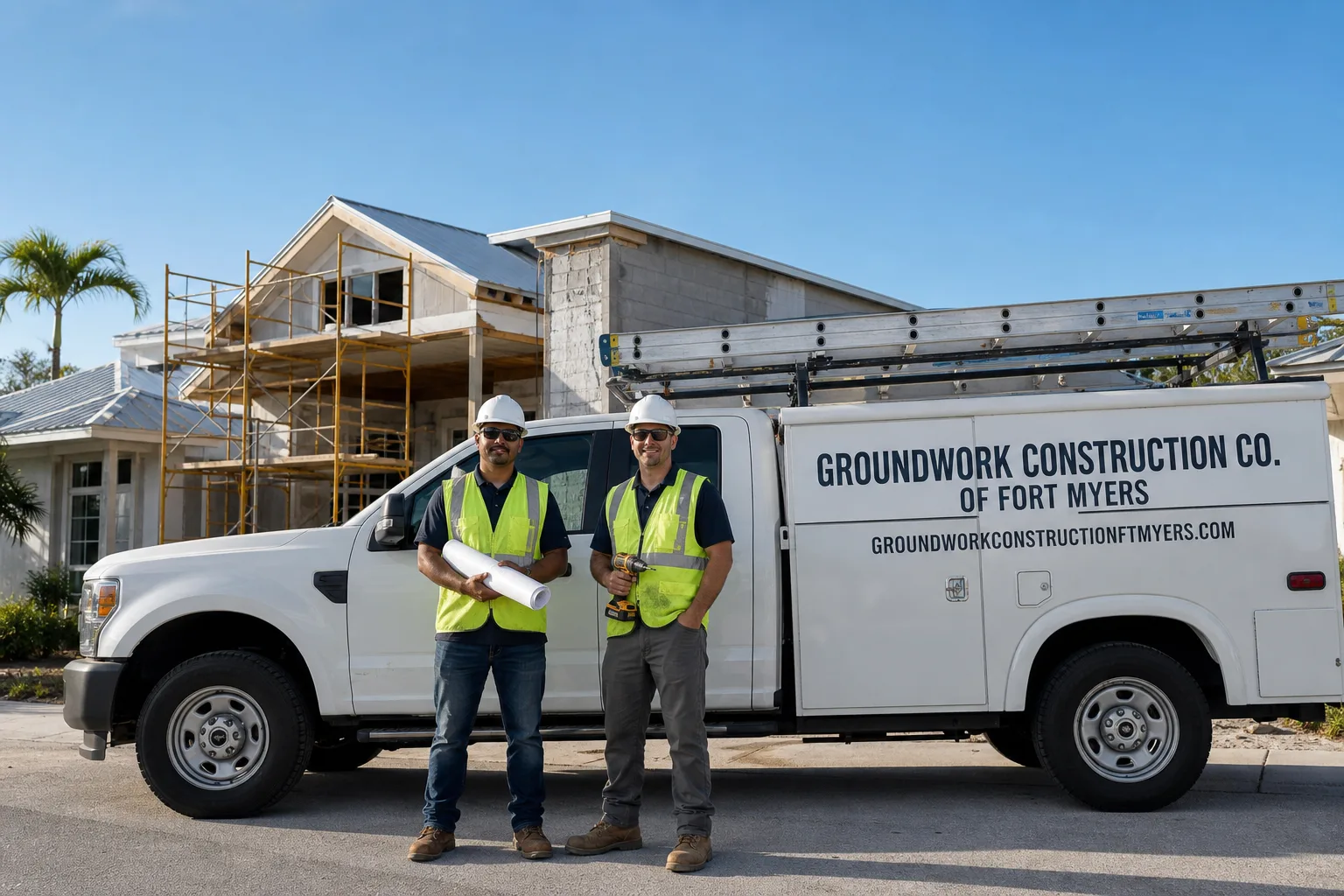
What’s Actually Involved in ADU Site Prep & Utilities in Harlem Heights?
ADU site prep and utilities in Harlem Heights typically runs $45,000 to $130,000 and takes 6 to 14 weeks from first shovel to the point framing begins. The bulk of that cost is underground: trenching water, sewer, and electric across a yard, then backfilling and compacting to Lee County’s post-Ian standards. Call (844) 638-7249 to schedule a free on-site estimate and we’ll give you a line-by-line breakdown specific to your property, not a ballpark guess.
How We Run Site Prep and Utility Trenching, Stage by Stage
Every piece of this job is sequenced around inspections. Get one out of order in Harlem Heights and you lose weeks to the county’s permit backlog. Here’s the real order we follow, refined across dozens of local projects since Ian.
Stage 1: Survey, markouts, and demolition. Days 1-3. We pull a fresh boundary survey if yours is older than a few years, then call in Sunshine 811 for underground utility locate. Any old shed slab, failed patio, or dead tree roots in the footprint come out now. The homeowner decides final ADU placement on the lot here, and that decision locks in the trench path for everything else.
Stage 2: Primary trenching and rough grading. Days 4-10. We cut trenches for water supply, sewer lateral, and electrical conduit at the depths Lee County requires: 18 inches for electrical, 12 inches minimum for water (but we go 18 to stay clear of the hurricane-repair root chaos throughout Harlem Heights). If your existing septic system is in the way, we coordinate a Lee County Health Department perc test and new drainfield location before we go deeper. This is also when we rough-grade the pad, compact it in lifts, and bring in aggregate base.
Stage 3: Wet and dry utility rough-ins. Days 8-16. PVC sewer lateral with the required cleanouts at the property line. Copper or PEX water line, sleeved under any future driveway. Schedule 40 electrical conduit with pull string to the panel location, plus a separate low-voltage conduit for data. Each rough-in gets its own county inspection: plumbing rough, electrical rough. The owner picks meter location and panel amperage here. We pull permits for a temporary power pole if the project is a full Home Additions & ADU in Harlem Heights build that needs on-site power before the permanent service is in.
Stage 4: Backfill, compaction, and foundation prep. Days 14-22. We backfill in 8-inch lifts, compacting each with a plate compactor. This step is non-negotiable in Harlem Heights because Ian’s flood saturation destabilized a lot of the native sandy fill; skipping a lift means slab settlement within two years. We install form boards, vapor barrier, rebar grid, and then the slab pour itself, which typically cures for five to seven days before any framing lumber hits it.
Stage 5: Utility tie-in, final rough inspection, and power-on. Days 30-42, depending on FPL and county inspection queue. We coordinate the meter set with Florida Power & Light, tie the sewer lateral to the county main or septic, and get the above-slab plumbing stubbed out. A Lee County combination inspector signs off on the underground work, and the permit moves to “framing released.” Expect this stage to add a week in Harlem Heights compared to incorporated Fort Myers because unincorporated pockets run on the Colonial Boulevard office’s phased inspection calendar.
The Options You’ll Choose Between
These decisions come up on every ADU site prep and utilities job we do in Harlem Heights. Each one moves the final number. We walk every homeowner through them during the estimate so nothing surfaces as a surprise change order later.
- Sewer connection vs. new septic. If you’re within reach of a Lee County Utilities sewer main, a gravity lateral is the lower-cost, lower-maintenance path. If you’re on an older septic system that’s too close to the ADU footprint, you’re looking at a new drainfield and possibly a larger tank, which adds $6,000 to $14,000 depending on soil percolation rates. Harlem Heights has both in roughly equal mix, so we test early.
- Electrical service: sub-panel from the main house vs. dedicated meter. A sub-panel fed from the existing house panel saves trenching cost if the house panel has enough ampacity. But many 1950s-era homes in this community have 100-amp panels that can’t spare the load. A dedicated 200-amp FPL service and meter pedestal adds about $3,500 to $6,500 once you factor the extra conduit run, meter can, and disconnect.
- Water line material. PEX is faster to install and handles our acidic Florida well water better than copper. Copper costs more but is the preference for some homeowners on municipal supply. The difference is roughly $800 to $1,500 on a typical 80-foot run. We use Uponor PEX as standard and price copper as an upgrade.
- Pad elevation and fill. FEMA’s post-Ian flood maps pushed some Harlem Heights parcels into higher-risk zones. Raising the finished slab 12 to 18 inches above the base flood elevation means importing clean fill and compacting it in engineered lifts. That’s a $4,000 to $9,000 item depending on how much dirt the lot needs. We bring this up in the estimate because it’s not optional if your mortgage lender or insurer requires an elevation certificate.
- Driveway and path tie-in. You’ll need a hard-surface connection from the ADU to the street or the existing driveway. A basic concrete walk is straightforward. A paver driveway segment using Belgard or Tremron pavers costs more upfront but handles our wet-season ground movement without cracking the way a monolithic pour might. Our home additions & adu crew can quote both during the same site visit so you can compare.
What ADU Site Prep and Utilities Costs in Harlem Heights, FL
On Harlem Heights properties we typically quote $45,000 on the low end for a straightforward site where the city sewer and house panel are both close and already sized correctly, up to $130,000 when the job needs a new septic system, a dedicated electrical service, a raised pad with engineered fill, and a long trench across a large lot. Four variables push a project toward the top of that range.
Distance from existing utilities. A 200-foot trench costs about four times what a 50-foot trench costs, and in an acreage-heavy pocket of Lee County where the ADU sits far from the street, that adds up fast. It’s mostly labor, machine time, and compaction.
Soil conditions and debris. Ian’s storm surge pushed silt and debris into a lot of Harlem Heights topsoil. If we hit buried construction debris during trenching, removal and clean fill import get added to the tab. We quote based on what we can see, and we walk you through any surprises the day we find them.
Septic vs. sewer. As noted above, a new septic system with drainfield can be a five-figure line item. We always do a percolation test before quoting so you know which path applies.
Permit and impact fees. Lee County charges water-sewer impact fees and building permit fees based on square footage and fixture count. A 600-square-foot one-bedroom ADU carries lower fees than a 1,000-square-foot two-bedroom unit. We itemize those on the written estimate so you see exactly what goes to the county and what goes to us. Every quote comes with upfront pricing, no surprises, and we offer 0% financing for 18 months plus $1,000 off projects over $10,000.
What Harlem Heights Homes Specifically Do to This Job
The homes we trench and prep around here were mostly built between the 1950s and the early 1980s, and virtually all of them have been touched in some way by Hurricane Ian’s 2022 landfall. That matters for ADU site prep and utilities in Harlem Heights in ways it simply doesn’t in newer subdivisions five miles east.
We regularly encounter undersized roof-to-wall tie-downs, corroded embedded steel in older block stem walls, and single-pane windows on the main house that won’t pass a concurrent wind-mitigation inspection. Lee County inspectors flag those items when they walk the ADU’s underground rough-in, because the overall property permit file ties the new construction to the existing structure’s code compliance. A missed inspection window with the Colonial Boulevard office can push a certificate of occupancy date back two or three weeks, so we run a dedicated permit expediter relationship to keep your file moving. On the moisture side, slab saturation from Ian’s flooding means we sometimes pull an extra day or two of drying time after we strip the pad forms before we pour, especially on lots off Briarcliff Road and the lower-lying streets north of Gladiolus. Homeowners who are already tackling the main house often pair this with a Full Bathroom Remodeling in Harlem Heights or a Small & Partial Kitchen Remodels in Harlem Heights to bring the whole property current in one phase.
Serving Harlem Heights, FL - Our Local Coverage Area
We’re based in the Harlem Heights area and know this community well. Use the map below to see our service coverage - if you’re nearby, we can almost certainly help.
Frequently Asked - ADU Site Prep & Utilities in Harlem Heights
Six to 14 weeks from the first day of demolition to the day framing lumber is released. The spread depends on whether Lee County’s inspection queue is running on time, whether FPL has a backlog on meter sets, and whether we uncover septic or soil surprises during trenching. Most Harlem Heights jobs we run finish this phase in 8 to 10 weeks.
Yes. Lee County requires a full building permit and separate trade permits for plumbing, electrical, and any septic work. The ADU site prep and utilities phase triggers underground plumbing, electrical rough, and often a health department septic review, all of which require inspections. We pull every required permit on your behalf and track them through the county’s online portal.
It depends entirely on your existing panel’s ampacity and physical location. A 200-amp panel with spare breaker slots that sits within reasonable trenching distance can often feed a sub-panel for the ADU. A 100-amp panel on a 1950s or 1960s Harlem Heights home typically cannot. We evaluate your panel during the free estimate and give you a straight yes or no before we quote.
The low end includes a standard site with close sewer and electrical hookups, a simple slab-on-grade pad, and no septic or elevation complications. The high end includes a new septic system, a dedicated 200-amp electrical service with a long trench, engineered fill for a raised pad, and a paver driveway tie-in. Every estimate we write is line-itemed so you see exactly where your number falls and why.
All of our work is covered by the 730-Day Done Right Promise: if something isn’t done right, we make it right. That applies to trenching, compaction, slab prep, conduit, water line, and all rough connections. Materials like PVC, PEX, and electrical conduit carry their own manufacturer warranties, which we document in your project file. Calls are answered by a live person, 24/7, so you never wait until Monday to reach us if a question comes up.
Get a Free, Line-Itemed Estimate for Your Harlem Heights ADU Site Prep
A site prep and utilities job in Harlem Heights shouldn’t start with a handshake and a round number. It should start with a written estimate that shows trenching, materials, permits, and utility fees broken out so you can plan with confidence. Call (844) 638-7249 to schedule a free on-site walkthrough with our home additions & adu team. We’ll measure, assess your existing utilities, explain your options, and hand you a fixed-price quote before we leave, no pressure and no obligation.
Written by Derek Hollenbeck, Owner at Groundwork Construction Co., serving Harlem Heights since 2014.