
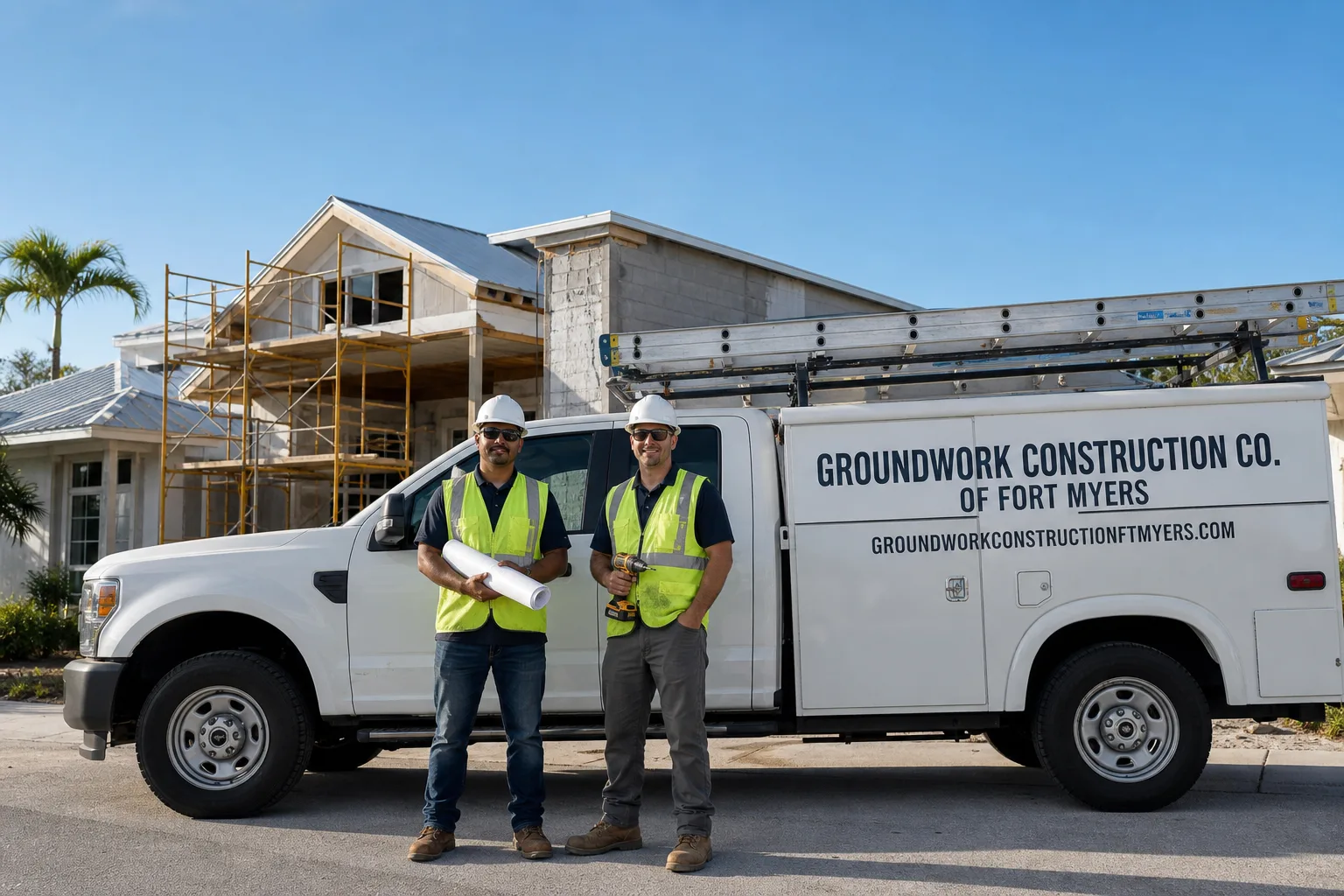
What a Chain Link Fence in Saint James City Really Costs and How Long It Takes
A chain link fence installation in Saint James City typically runs between $3,500 and $9,000 for a standard residential lot, and most jobs wrap up in three to five working days once materials are on Pine Island. That window can stretch if we’re dealing with post-storm grading issues or the extra hardware specs our salt-air environment demands. Call (844) 638-7249 for a written, line-item quote on your specific property. The number we give you upfront is the number you pay, no surprises after we start digging.
How We Put in a Chain Link Fence on Pine Island, Step by Step
Every chain link fence in Saint James City follows a predictable sequence because the soil, the wind code, and the logistics of getting materials across that single bridge don’t leave room for guesswork. Here is what you can expect from the day we start until the day we walk the line with you.
1. Site Walk and Underground Locates (Day 0, before we break ground)
We walk the full fence line with you and mark exactly where the posts will go. You decide the gate locations, the swing direction, and where the chain link meets any existing hardscape or neighbor’s fence. Before we dig a single hole we call in Florida 811 locates for underground utilities. On older Saint James City lots, especially the elevated fishing cottages built before modern subdivision records, it’s common to find abandoned well lines or old septic runs nobody flagged on the original plat. Locates typically take two business days to clear.
2. Post Hole Drilling and Concrete Setting (Day 1-2)
We drill terminal and line post holes to the depth Lee County’s wind-load code requires for a high-velocity hurricane zone, then set every post in a high-strength mix from our supplier. We use Quikrete or Sakrete 5000 PSI for terminal and gate posts, where the concrete needs to cure with zero shift. Terminal posts carry the tension load of the entire fence, so this is the step where shortcuts show up first. We let the footers cure a full 24 hours before tensioning any wire, no exceptions.
3. Framework Assembly and Gate Hardware (Day 2-3)
Top rails, line posts, and brace bands go in. Any gates get hung and swing-tested before we run mesh, because gates are where a chain link fence reveals its build quality. For a single walk gate in a protected side yard we spec standard galvanized hinges. For double-drive gates exposed to the Gulf wind that funnels up the Caloosahatchee corridor into Saint James City, we move up to hot-dipped galvanized frames with drop-rod assemblies and wheeled gate supports so the hardware isn’t fighting wind torque every afternoon.
4. Mesh Stretching and Tensioning (Day 3-4)
The chain link fabric is unrolled, stretched to the correct tension with a power puller, and secured to the terminal posts with tension bars. Undershot tension leaves a wavy fence line that droops within a season, which is a common complaint we hear from homeowners who had fences done by storm-chaser crews immediately after Hurricane Ian. We tension to spec and check the line from corner to corner before we tie off the wire to every line post.
5. Final Walkthrough and Gate Adjustments (Day 4-5)
We walk the full perimeter with you, confirm every gate opens and latches cleanly, and check mesh tie frequency. If a gate needs a tweak after a few days of settling into the sand and crushed-shell fill that underlies most Saint James City lots, we come back and adjust it. That follow-up lives under the same 730-Day Done Right Promise that covers the entire installation.
The Options You’ll Choose Between for a Chain Link Fence
Not all chain link is the same, and on Pine Island the choices matter more than they would ten miles inland. Here is what you’ll pick from when we work up your estimate.
- Wire gauge and coating. Residential standard is 11.5-gauge galvanized, which holds up for years in most climates. In the salt air that works its way into every corner of Saint James City, we strongly recommend stepping up to 9-gauge hot-dipped galvanized, which resists the pitting and rust creep that lighter wire develops around post fittings and bottom mesh edges near the ground.
- Mesh height. Most homeowners run 4- or 5-foot heights for side and rear property lines. For pool-enclosure chain link, Lee County requires a minimum of 4 feet with self-closing, self-latching gates. If you are fencing a front setback that faces onto a street or canal bulkhead in Saint James City, we also walk you through line-of-sight requirements from the Pine Island Road approach so you do not block visibility from a driveway.
- Post configuration. Terminal posts take all the tension, so we spec Schedule 40 galvanized steel on every job. Line posts can be lighter-gauge, but the cost difference is marginal. For homes on gravel or sand-based soils near the Gulf-facing southern tip, we often add an extra 6 inches of embedment depth and a wider concrete footing diameter to compensate for sandy substrate that drains fast and shifts under load over time.
- Gate material and frame style. Single walk gates in galvanized steel are standard. Drive gates in a 180-degree exposure to the Gulf side benefit from an aluminum frame upgrade with stainless hardware, which is a real cost variable but pays for itself in zero rust maintenance over the life of the fence.
- Privacy slats and screening. Optional, but many Saint James City homeowners add them to fence lines that face a canal or neighbor’s dock. Wind passes through standard chain link without resistance, which is a genuine advantage in hurricane season. Once you add solid slats, the fence catches wind and acts like a sail, which means we need to re-check terminal post depth and footer size to meet Lee County’s wind-uplift requirements.
What a Chain Link Fence Costs in Saint James City, FL
For a typical residential lot, a chain link fence in Saint James City falls between $3,500 on the low end and $9,000 on the high end. That range accounts for the full scope of what one property needs versus another, which is why the number we give you will be specific to your yard, not a guess over the phone.
These are the variables that push a job toward the lower or higher end of that range:
- Linear footage. The single biggest driver. A 100-foot side-yard enclosure runs lower than a 300-foot full-perimeter fence that wraps around a corner lot.
- Gate count and size. One walk gate keeps the number lean. Adding a double-drive gate with wheeled supports, drop rods, and hot-dipped hardware adds material and labor hours at the gate stage.
- Existing fence demo and disposal. If we are tearing out a rusted, hurricane-damaged chain link fence with embedded concrete footers, that adds a half-day of labor and dump fees. Post-Ian, we see a lot of this in Saint James City.
- Wire gauge and finish upgrade. The jump from standard 11.5-gauge galvanized to 9-gauge hot-dipped adds material cost but extends the usable life of the fence measurably in salt air.
- Soil conditions and post embedment. Sandy, fill-based soil near the canals or Gulf side of the island requires deeper holes and wider footers. It is a minor incremental cost per post but adds up across 30 or 40 post locations.
Every quote we write is a line-item estimate. You see the linear footage, the post count, the gate hardware, the concrete spec, and the labor hours broken out separately. What you do not see is a change order popping up after we start digging because we knew about the soil conditions and the wind-uplift code before we ever submitted the estimate. We also offer 0% financing for 18 months and $1,000 off projects over $10,000, which can turn a full-property fence upgrade from a cash-flow question into a single manageable monthly payment.
What Saint James City Homes Specifically Do to a Chain Link Fence Job
Putting a chain link fence on Pine Island is not the same as putting one in a gated Cape Coral subdivision ten minutes inland. The difference starts with the drive. Saint James City sits at the southern end of the largest Gulf Coast barrier island in Florida, connected to the mainland by a single two-lane causeway bridge on Pine Island Road. Every post, roll of mesh, bag of concrete, and piece of gate hardware comes across that bridge on a truck we schedule around the practical traffic windows that the island’s post-Ian rebuild pace has made tighter. It is a logistical constraint that tacks a real lead-time cost onto every job here and one that a mainland Lee County builder never has to plan for.
The second difference is the salt. Homes at the island’s southern tip live in a full-time salt-air environment that corrodes standard galvanized hardware years faster than it would in Fort Myers. We have opened up fence jobs on older Saint James City properties where the hurricane ties and post fasteners looked like they had been underwater, even though they were 15 feet up and fully exposed to air. That is what drives our default recommendation toward hot-dipped galvanized posts, 9-gauge mesh, and stainless gate hardware on any line that faces the Gulf or an open canal. It costs more up front, but the alternative is a fence that rust-creeps from the bottom wire upward within five years.
Finally, the code reality changed for every property here after Hurricane Ian. Lee County’s current high-velocity hurricane zone wind-load requirements apply to any new fence installation, and the concrete footers and post embedment depths reflect that. When your property sits in a FEMA AE or VE flood zone, which covers a significant portion of Saint James City, the permitting office checks the fence plan for wind resistance the same way they would for a structural addition. We pull every permit ourselves, and our background-checked crew knows the county’s current submittal checklist well enough that inspections pass on the first visit. For some properties, often the older elevated fishing cottages that survived the storm, we find the existing fence posts weren’t set to this standard to begin with, and we rebuild them to the current code rather than matching a depth that was insufficient even before Ian.
Serving Saint James City, FL - Our Local Coverage Area
We’re based in the Saint James City area and know this community well. Use the map below to see our service coverage - if you’re nearby, we can almost certainly help.
Frequently Asked Questions About Chain Link Fence in Saint James City
Yes. Lee County requires a fence permit for any new chain link fence installation, and the plan must meet current wind-load standards for the high-velocity hurricane zone that covers all of Saint James City. We handle the full permit package, from the site plan and post schedule to the wind-load calculations, and we schedule the inspections so they happen on time and pass clean.
Three to five working days from post-hole day to the final walkthrough. The biggest variable outside our control is the 811 utility locate window before we dig. The other variable is weather during the rainy summer months, when afternoon thunderstorms stop concrete pours for a few hours. We build that buffer into the schedule from the start so a rain delay does not cascade into a missed completion date.
It will, and faster than you would expect. We have repaired enough rust-tracked chain link on Saint James City canal-front properties to know that standard 11.5-gauge galvanized mesh starts showing rust spotting around post fittings and the bottom wire within four to seven years. Hot-dipped galvanized 9-gauge wire and stainless gate hardware more than double that lifespan in this environment. It is the single most cost-effective upgrade you can make on a chain link fence here. Call (844) 638-7249 and we can show you the price difference in writing before you decide.
This is a common starting point in Saint James City. We handle the full tear-out of the damaged fence, including breaking up and removing the old concrete footers, which are often cracked or shifted well out of plumb. Once the line is cleared and graded we treat it as a fresh installation, which puts you under the current wind-load code rather than whatever standard the original fence was built to. A full tear-out and replacement on a standard lot typically falls within the same $3,500 to $9,000 range, adjusted for demolition hours and dump fees.
Not with us. Your quote is line-item and fixed. The only scenario where a number changes is if you ask us to add something, like a second gate or a longer fence run you decide on after the quote was written. That becomes a written change order you approve before we do the extra work. We do not hand you a surprise bill at the end because we ran into sandy soil or needed an extra bag of concrete. Every free estimate accounts for Saint James City’s specific soil and wind conditions before we ever submit the price.
If you are weighing a chain link fence alongside other property improvements, some Saint James City homeowners pair a new fence with a fresh concrete driveway or concrete work in Saint James City or tackle asphalt driveway resurfacing in Saint James City in the same project window. It keeps the site disruption to one stretch and often simplifies the permit sequencing. For the wider scope this job fits into, see our full Fence Installation in Saint James City page. Our fence installation crew works across the entire Saint James City service area, from the causeway approach down to the Gulf-facing properties at the island’s southern end.
Get a Free On-Site Estimate for Your Chain Link Fence in Saint James City
We walk the fence line, measure every foot, and hand you a written quote that breaks out the materials, the post schedule, the gate hardware, and the labor so you know exactly what you would be paying and why. Reach us at (844) 638-7249, 24/7, and a live person answers, not a voicemail. The estimate is free, the pricing is upfront, and every chain link fence we install in Saint James City is covered by our 730-Day Done Right Promise. If it is not done right, we make it right.
Written by Derek Hollenbeck, Owner at Groundwork Construction Co., serving Saint James City and the surrounding barrier island communities with built-for-the-coast fencing since 2014.