
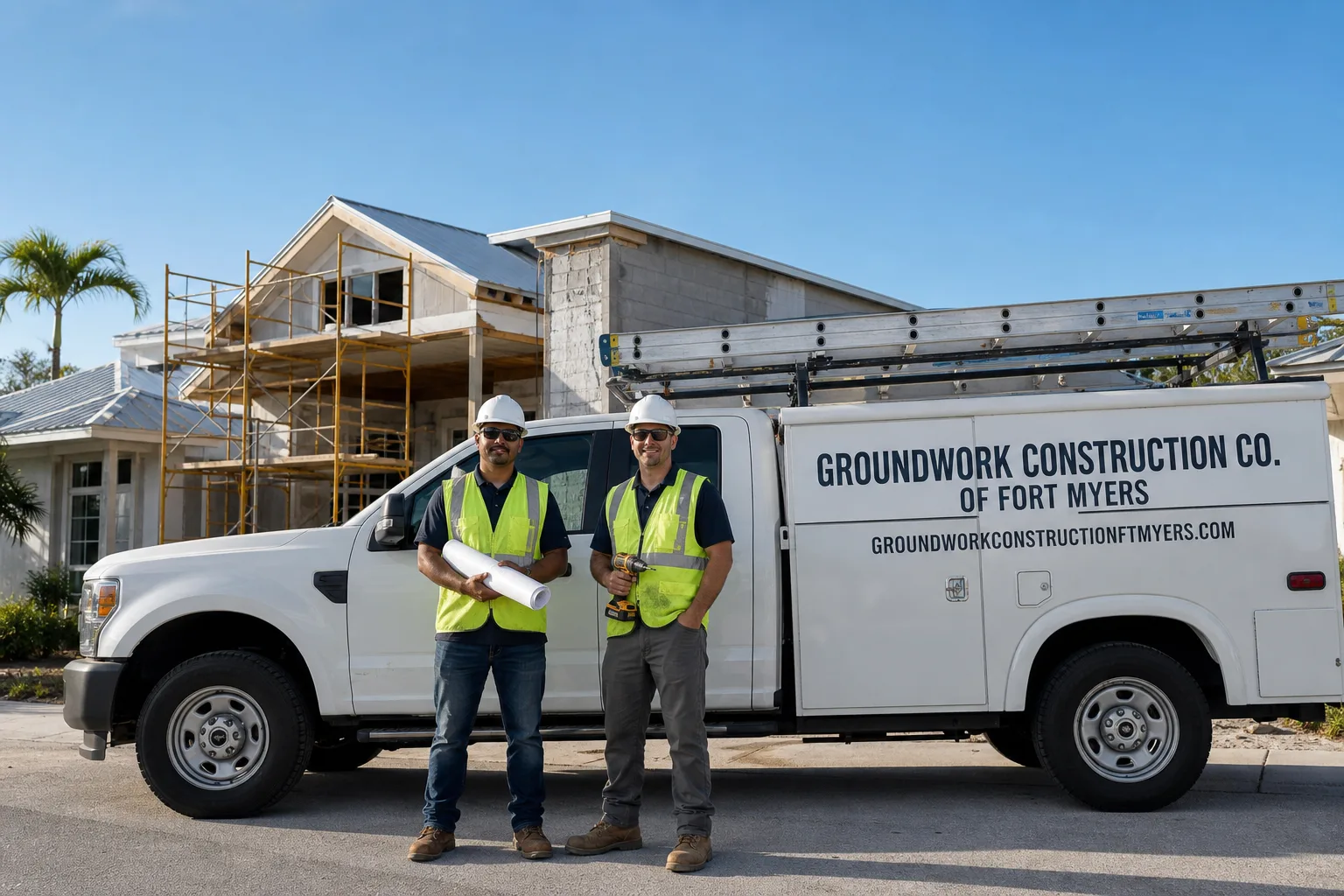
How Much Does Fence Repair Cost in Villas, FL (And What’s Actually Involved)?
Fence repair in Villas typically runs $3,500 to $9,000 depending on how much of the structure the storm or corrosion took out, whether posts are still plumb, and what the new code upgrade path demands. Most repairs we handle here involve replacing 20 to 80 linear feet of paneling, resetting posts in concrete, and swapping rusted fasteners for stainless hardware. A full reassessment takes our crew half a day; the repair itself usually wraps in two to three working days. Call (844) 638-7249 to schedule a free estimate and we’ll give you a line-item price before any work begins.
The Repair Sequence We Follow on Every Villas Fence Job
Homeowners in Villas who call us after a storm or just after noticing a lean know the same thing: the clock is ticking on what’s still standing. Here’s how we work through it, start to finish.
Stage 1: On-Site Assessment and Post Plumb Check (Day 1, 90 minutes). We walk the full fence line with a 4-foot level and a probe bar. In Villas, where the water table sits within 18 inches of grade for much of the year, concrete footings that looked solid a decade ago are often undermined by soil saturation. We mark every post that’s shifted more than 2 degrees off plumb and every section where the bottom rail is soft from ground contact. You decide at this stage whether we’re repairing the damaged run or if the full run is far enough gone that it makes sense to tie into a new Fence Installation in Villas scope. That call changes the permit path and the price, and we’ll give you both numbers so you can decide with your eyes open.
Stage 2: Permit Confirmation and HOA Spec Check (Day 1, handled by our office). Unincorporated Lee County doesn’t always require a permit for repairing less than 50% of an existing fence, but two variables flip that fast in Villas. If the fence sits on a waterfront parcel along the Caloosahatchee estuary side or if the original structure predates Florida’s 2002 building code adoption, the Building Department may require an elevation certificate review and a wind-load fastener upgrade as a condition of closing the permit. We pull the record, confirm with the county, and cross-reference any HOA architectural guidelines the homeowner provides. This step keeps the repair from stalling at final inspection.
Stage 3: Demo, Concrete Work, and Post Reset (Day 2, 4-6 hours). Crew arrives with a concrete saw and a post-hole digger. We pull the failed sections, break out any footing that’s cracked or saturated, and pour new footings using a high-early-strength mix from Quikrete or Sakrete that cures fast even in Villas’s humidity. New posts go in galvanized or powder-coated steel, set with a continuous bead of polyurethane sealant at the concrete-to-post junction so capillary moisture can’t wick up from the slab. By end of day, everything is plumb, braced, and curing.
Stage 4: Panel, Rail, and Fastener Install (Day 3, 4-5 hours). We hang new panel sections using stainless ring-shank fasteners and stainless hinge screws. Every piece of hardware that touches a pressure-treated rail or sits within a foot of soil gets a 316-grade stainless equivalent. In the Villas salt-air belt, even minor fastener corrosion becomes a structural problem inside three years, so this isn’t an upsell - it’s what keeps the repair from failing. Gates get re-hung with adjustable hinges and a tension rod if the frame is still sound; if the frame has twisted, we’ll quote a replacement at the estimate stage so there are no surprises.
Stage 5: Final Walk and Grade Clearance (Day 3, 30 minutes). We walk the repaired run with you, check every gate swing, and verify the bottom rail has at least 1.5 inches of clearance above soil or mulch. In Villas, that clearance is the difference between a fence that drains and dries and one that rots from the bottom up in twelve months. If we opened a permit, our lead technician photographs the fastener pattern and post embedment before backfill, and we send it to the county with the closure request the same afternoon.
The Choices That Shape a Villas Fence Repair
Not every fence repair is the same job with a different address. These are the real options that move the number.
- Partial panel replacement versus full-run swap. If the damage is localized to a single 8-foot bay knocked out by a fallen limb from Ian’s remnant winds, we can match the panel profile, swap the section, and keep the cost near the bottom of the range. If the entire 60-foot street-facing run has been wicking moisture for a decade and half the bottom rails are punky, a full run replacement often costs less per linear foot than piecing it together.
- Pressure-treated pine versus cedar versus composite infill. Pine is the budget-anchored choice in Villas, typically a #1-grade ground-contact rated picket, but it moves in the humidity and needs sealing every two years. Cedar stays truer and resists rot better in the estuary climate, at roughly a 30% premium on materials. Composite or PVC infill boards from brands like Oldcastle eliminate rot and warp entirely, though they push the job toward the top of the range and lock you into a specific aesthetic.
- Galvanized steel posts versus powder-coated aluminum. For a repair, we default to galvanized steel - it’s strong, affordable, and with a poly barrier at the concrete line it’ll outlast the paneling in most Villas yards. Powder-coated aluminum costs more but makes sense if the fence runs along a canal or within a quarter-mile of the estuary, where salt mist accelerates zinc loss on exposed steel.
- Gate hardware grade. A basic galvanized hinge and gravity latch set does the job for a side-yard gate that gets opened twice a week. For a driveway gate or any gate facing prevailing wind off the Caloosahatchee, we strongly recommend 316 stainless hinges, a drop-rod, and a self-closing spring rated for 100,000 cycles. It’s a $200-$400 difference that buys years of trouble-free operation.
What Fence Repair Costs in Villas, FL
The $3,500-to-$9,000 range covers the vast majority of post-Ian repairs and corrosion-driven panel replacements we quote in Villas. Where a job lands inside that range depends on five variables.
Linear feet of damage. A single 8-foot section with one rotted post is a $3,500 job. Thirty feet of leaning, salt-corroded run where half the footings need to be re-poured lands closer to $6,000. Sixty feet of failed fence line with gate re-hang and full stainless fastener conversion pushes toward $9,000.
Post condition below grade. In Villas’s saturated soil, posts often look fine above the mulch line but are completely rusted or rotted 4 inches below it. Digging one post and discovering the problem is minor. Digging seven and finding they’re all compromised adds a full day of concrete work and a material run.
Permit path. A repair that stays under the county’s 50%-of-structure threshold on a post-2002 home is typically a no-permit job. A pre-2002 CBS ranch on a waterfront lot where the building department flags the wind-load review triggers a permit, an inspection, and additional engineering documentation. That adds $400 to $900 to the bottom line, mostly in county fees and engineer time.
Material grade. Standard pine with galvanized hardware sits at the low end. Cedar with powder-coated posts sits in the middle. Composite infill with all-stainless fasteners and a full aluminum gate frame pushes the top of the range.
Access and debris removal. A backyard fence with a 36-inch gate and no alley access means our crew hand-carries every panel and bag of concrete through the house or around a narrow side yard. That adds labor hours. A street-facing fence with a driveway-adjacent gate is faster and simpler, and the estimate reflects that.
Every estimate we write is a fixed-price, line-item document. You see the material count, the labor, the permit line, and the warranty terms before you sign anything. No change orders. No “we found something” price jumps. If you’re comparing numbers, call (844) 638-7249 and we’ll walk the site and give you a quote built for your actual fence line, not a ballpark.
What Villas Homes Specifically Do to This Job
Villas sits in the Lee County corridor that absorbed Hurricane Ian’s Category 4 eyewall in September 2022, and the fence repair calls we run here are shaped by exactly that history. A home built in 1974 along a canal-front lot in Villas isn’t just dealing with a leaning picket section - it’s dealing with original concrete footings that sat underwater for 72 hours during Ian’s storm surge, then baked in salt-saturated soil for two years. We regularly pull posts where the concrete itself has spalled and lost compressive strength from chloride intrusion. That’s a Villas-specific failure mode, and fixing it means we’re not just resetting a post; we’re breaking out the old footing entirely and pouring new to a depth that hits undisturbed soil below the saturation line.
The slab-on-grade CBS ranch homes that dominate Villas’s housing stock, mostly built between 1960 and 1985, add another layer. These homes predate Florida’s post-Andrew high-velocity hurricane zone codes, so when a fence repair ties into a gate that’s anchored to the house wall, the county may require the gate anchoring to meet current wind-load standards before they’ll sign off. It’s a small thing - a few expansion anchors rated for 150 mph uplift - but it’s a Villas-specific inspection point that someone working in a newer inland subdivision never encounters. Our crew knows to check it at the estimate stage so the permit doesn’t stall on a technicality.
We also see a pattern with homeowners in Villas who are already navigating a larger rebuild. Someone replacing roof-to-wall hurricane straps or bringing an electrical panel up to code after Ian will often have us repair the fence at the same time the Fence Installation crew is mobilizing, because the yard is already staged and the permit window is open. For homeowners adding living space, we’ve also coordinated fence repair alongside Garage Conversion ADU in Villas projects where the side-yard fence has to come down for equipment access anyway. A handful of clients even bundle the work with ADU Design & Permitting in Villas when the detached unit requires a new property-line fence as part of the site plan approval - it’s more efficient to do it all under one permit cycle.
If you’re in Villas and you’re staring at a fence that’s leaned 6 inches since the last big rain, the soil is telling you something. We’ll dig down to the footing, find the real problem, and fix it so it stays fixed. No guesswork, no repeat visits.
Serving Villas, FL - Our Local Coverage Area
We’re based in the Villas area and know this community well. Use the map below to see our service coverage - if you’re nearby, we can almost certainly help.
Frequently Asked - Fence Repair in Villas
Most repairs finish in two to three working days. Day one is assessment and any required concrete demolition. Day two is post setting and curing. Day three is panel hang, gate re-hang, and final walk. If a permit requires an inspection, the county typically schedules within 48 hours of closure request. Call (844) 638-7249 and we’ll give you a timeline tied to your specific job.
It depends on two things: how much of the existing fence is being replaced, and the age of the home. Lee County generally exempts repairs under 50% of the total structure from permitting, but a pre-2002 home on a waterfront lot in Villas can trigger a wind-load review that requires a permit regardless of the percentage. We check this before we write the estimate so you know before the work starts.
In most cases, yes. We match the panel profile, picket width, and top cut (dog-ear, flat-top, or scalloped). The new section will read as slightly cleaner and brighter for the first six months, which is normal. By the time a full rainy season passes in Villas, the color difference evens out. If the existing wood is severely sun-bleached or rotted across more than half the run, we’ll recommend replacing the whole face so you’re not chasing the match year after year.
Every repair we complete is covered by our 730-Day Done Right Promise: if it’s not done right, we make it right, no fine print. That covers post plumb, gate swing, fastener integrity, and material defects for two full years. In Villas’s coastal environment, that’s a meaningful promise - we’re warrantying against salt-driven corrosion and soil-saturation movement, and we stand behind it because we build for those conditions from day one.
No. We write fixed-price estimates. If we discover a condition we couldn’t have seen at the surface - say, a concrete footing that’s completely disintegrated 18 inches below grade - we stop work, show you what we found, and write a separate line for the additional scope. You approve it before we proceed. The original price on the signed estimate does not change. We’ve found that Villas homeowners who’ve been burned by vague bids appreciate that distinction more than any sales pitch we could deliver.
Get a Fixed-Price Estimate for Fence Repair in Villas
If your fence is leaning, rotting at the base, or still carrying damage from Ian’s storm surge, we’ll give you a straightforward price to fix it. Call (844) 638-7249 and you’ll reach a live person who can schedule a site visit at a time that works for you. Derek and the team at Groundwork Construction Co. will walk the fence line with you, explain what needs to happen, and hand you a written estimate with every dollar accounted for. No pressure, no vague numbers, just a plan you can act on.
Written by Derek Hollenbeck, Owner at Groundwork Construction Co., serving Villas and the surrounding Lee County communities.