
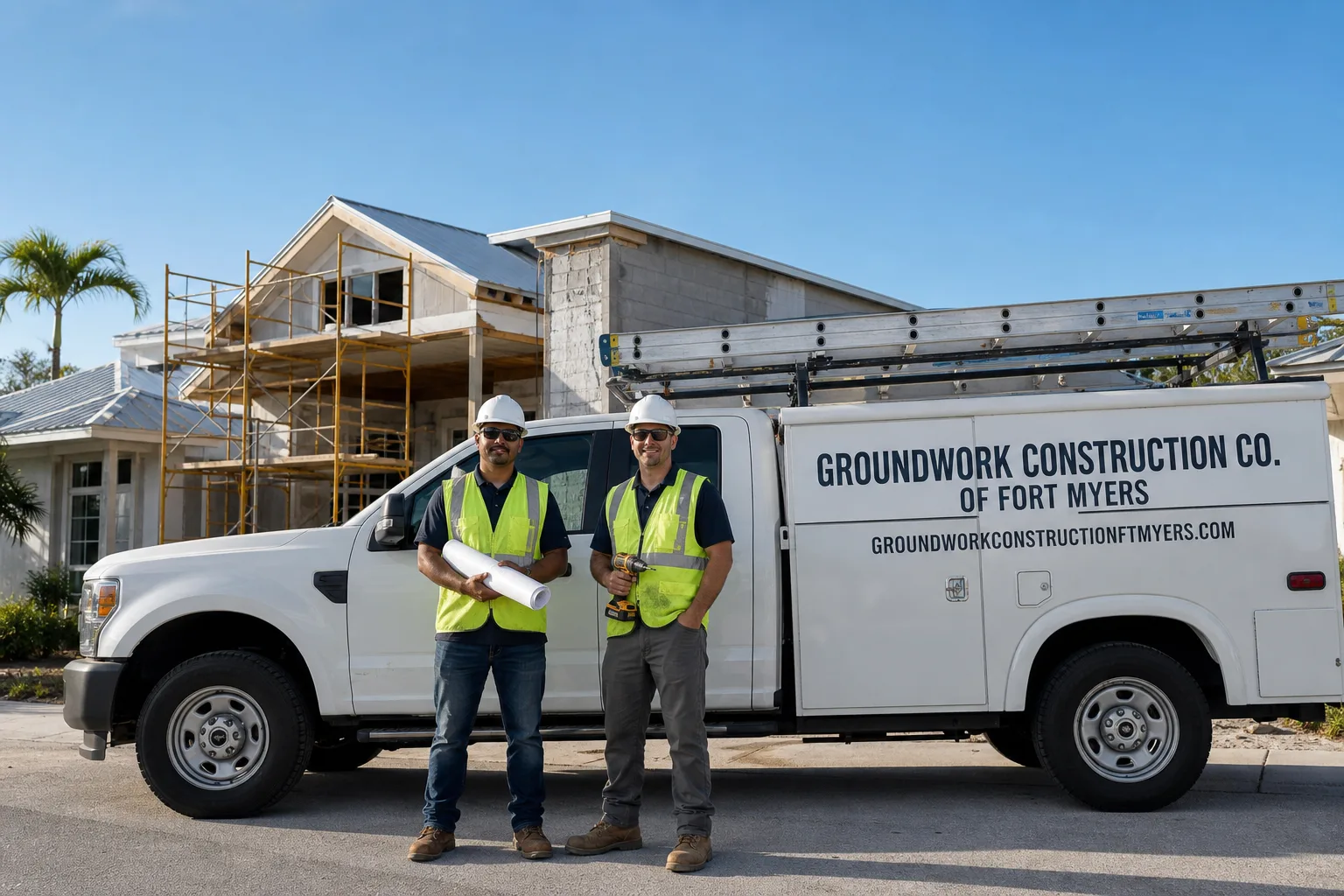
What a Chain Link Fence in Gateway realistically costs and how long it takes
A chain link fence in Gateway, FL typically runs between $3,500 and $9,000 for a standard residential yard, with most jobs we complete landing around $5,500. Installation on an average lot takes our crew two to three working days once we have the HOA sign-off in hand. Call (844) 638-7249 for a written, line-item quote specific to your property - it’s free and comes with no obligation.
The actual sequence for your chain link fence job
We start every Gateway chain link project the same way: with the HOA. Because Gateway operates as a Lee County Community Development District, your community’s architectural review committee needs to approve the fence before Lee County will even look at a permit application. We pull the ARC application together for you - fence height, material gauge, post diameter, coating color, gate locations - and submit it with a site plan that matches the community’s published standards. This step typically adds seven to fourteen days before any dirt moves, and skipping it gets homeowners a stop-work order and a fine. Nobody on our crew lets that happen.
Once the ARC signs off, we pull the county permit. Lee County wants a survey or site plan showing exactly where the fence will sit relative to property lines, easements, and any utility right-of-ways. We handle the paperwork end-to-end, but you’ll need a current survey on file. If yours is from the original 2000s-era purchase and the corner pins are buried, we’ll flag that early so there are no surprises.
Day one on-site is layout and post-setting. We mark every corner, gate, and terminal post, then call for an 811 utility locate at least two full business days before we dig - this is mandatory in Florida and we won’t cut corners on it. Once the locate is cleared, we dig footers eighteen to twenty-four inches deep and set every post in concrete. In Gateway’s sandy-loam soil, which drains fast but shifts over time, the extra few inches of depth on corner posts make the difference between a fence that’s straight a decade later and one that leans after two heavy rainy seasons.
Day two (and sometimes three, depending on linear footage) is the build-out: we bolt on all horizontal rails and tension wire, then stretch the mesh fabric. We use a come-along tensioning tool - not a pickup-truck-and-pray approach - to get the mesh tight enough that it doesn’t sag or rattle when a kid throws a soccer ball against it. Terminal posts get bracing; gate frames get welded or bolted depending on the spec we agreed on; hinges and latches are set so the gate swings true. We’re not done until every post cap is seated and every tension bar is secured.
The final walkthrough happens with you. We check gate swing, tension, concrete cure - we don’t use a post-hole mix that sets in five minutes and degrades in three years - and confirm that the fence sits exactly where the survey and permit drawings say it belongs. The job isn’t complete until you sign off. That’s been Derek Hollenbeck’s rule since day one, and it’s never changed.
The options you’ll choose between for a chain link fence
Most homeowners don’t realize chain link comes in grades and coating types that dramatically change how the fence looks and lasts. Here’s what you’ll actually decide:
- Wire gauge. 11.5-gauge is the residential standard - it’s what you see on 90% of Gateway homes - and balances cost with enough stiffness to handle kids, dogs, and the occasional wind-blown palm frond. 9-gauge is heavier, stiffer, and holds tension better over longer runs; it costs more but makes sense on larger lots or any section running more than 100 feet without a corner post. 6-gauge is commercial-grade and costs roughly double; we rarely recommend it for a backyard unless you’re securing something valuable or heavy-duty.
- Coating and finish. Galvanized (silver) is the budget choice - raw steel with a zinc coating that weathers to a dull gray within a year or two in Florida’s humidity. Vinyl-coated (black, green, brown) adds a PVC sleeve over the galvanized core wire. In Gateway, black vinyl-coated is by far the most popular because it visually recedes against landscaping and meets the aesthetic standard most ARC boards expect. The vinyl adds roughly 20-30% to material cost and won’t rust or need painting for fifteen-plus years, though it can get chalky in direct sun after a decade.
- Post size and type. 2-inch OD (outside diameter) line posts with 2.5-inch terminal posts are standard. On gates wider than five feet, we step up to 3-inch terminal posts with a thicker wall so the gate doesn’t sag over time. If the ARC allows it and you want a cleaner look, we can set posts in a continuous concrete curb - it’s more work and more money but eliminates the weed-trimmer headache along the bottom rail.
- Gates. Single walk gates, double drive gates, or both. Think about where a mower or wheelbarrow needs to pass through, not just people. We prefer a welded-steel gate frame with a diagonal brace from the top hinge corner to the bottom latch corner - it’s the only design that doesn’t droop after five years of Florida humidity cycling the steel.
- Height. 4-foot is typical for decorative or pool-code separation. 5- and 6-foot give real boundary definition and work for dog containment. If your Gateway community’s ARC guidelines cap fence height at 4 or 5 feet, that’s the ceiling and we won’t push it - but if 6 is allowed, the extra foot costs proportionally less than you’d think, since the post-footers and labor are nearly identical.
What a chain link fence costs in Gateway, FL
A standard residential chain link fence in Gateway runs $3,500 to $9,000. The bottom end gets you roughly 150 linear feet of 11.5-gauge galvanized with one walk gate on a clear, flat lot with good access. The top end pushes toward 300 linear feet of 9-gauge black vinyl-coated with double drive gates and some hardscape to work around.
The four things that actually move the price: linear footage is the obvious one - every additional foot needs post, concrete, rail, and mesh. Gate count and type is second; a double drive gate with welded steel frames and heavy-duty hardware can add $800 to $1,500 on its own. Site access is third - if we’re wheeling material through a narrow side yard or working around a lanai cage with limited clearance, labor hours go up. And the fourth is the coating choice: vinyl-coated in black, which most Gateway ARC boards expect to see, adds roughly 25% to the mesh and rail material line item versus bare galvanized.
Every written estimate from us breaks all of this out - linear feet of fence, number of posts, gate type and count, coating specification, concrete quantity, permit line, and labor. We don’t do lump-sum “fence, $X” numbers that hide the details. What’s never included in the base price, and we tell you this before you sign: removing an old fence (if one exists), haul-off of demolition debris, and any unforeseen underground conflict - like hitting an undocumented irrigation line - though we’ll flag the likelihood of that during the walkthrough. This is how Derek Hollenbeck has structured bids since 2014, and it’s why our customers don’t get hit with change orders mid-job.
What Gateway homes specifically do to this job
Gateway’s dual-layer approval process changes the timeline on every chain link fence we install here. As a master-planned Community Development District built primarily from 1990 to 2010, every fence has to clear the community’s architectural review committee before Lee County will issue a permit. Most HOAs in unincorporated Fort Myers or Cape Coral aren’t structured as CDDs with this level of enforcement, but in Gateway it’s not optional - the ARC reviews fence height, coating color, gate placement, and setback from the street. We keep copies of the governing docs for the major Gateway communities on file so we’re never drawing a spec the board will reject. That’s not something a contractor who works mostly in Pine Manor or North Fort Myers has reason to know, and it costs homeowners a week or two when they find out the hard way.
The other Gateway-specific factor is the soil. The sandy-loam mix drains beautifully - you don’t get the standing-water problems that clay-heavy lots create - but it also moves. We set terminal posts deeper here than code minimum and let the concrete cure a full day before tensioning mesh. Homes built in the late ’90s along Gateway Boulevard and the neighborhoods west of I-75 tend to sit on ground that’s been graded and compacted once, twenty or thirty years ago, and has settled unevenly since. Getting a fence line straight across a yard that’s drifted three inches from the original grade is a skill you only learn by doing it here repeatedly.
We also see a pattern in the existing fences we replace: original galvanized chain link installed during the initial home build, now rusted through at the post bases after twenty-five-plus wet seasons. The posts rot where the concrete meets the soil, especially on the shady north sides of houses that stay damp longer after a summer storm. When we pull those out and set new posts, we use a high-strength mix and slope the concrete crown so water runs away from the steel - a small detail that adds years to the fence’s lifespan in Gateway’s climate.
Many homeowners pairing a chain link fence with hardscape work also ask us about upgrading the driveway at the same time - we handle Concrete Driveways & Concrete Work in Gateway and Asphalt Driveways & Resurfacing in Gateway as part of a larger property refresh, and bundling the projects can simplify the site-access logistics since the heavy equipment is already scheduled.
Serving Gateway, FL - Our Local Coverage Area
We’re based in the Gateway area and know this community well. Use the map below to see our service coverage - if you’re nearby, we can almost certainly help.
Frequently asked - Chain Link Fence in Gateway
Yes. Every chain link fence in Gateway requires Lee County building permit approval, and because Gateway is a Community Development District, your HOA’s architectural review committee must approve the fence first. We handle both submissions for you as part of the job.
Two to three working days on site, plus roughly two to four weeks of lead time for HOA architectural review and county permit processing. The on-site work goes fast; the paperwork is the pacing item in Gateway, not the construction.
Not unless we hit an underground condition nobody could have seen - like an unmarked irrigation line or a buried slab from a previous structure - and we’ll stop work and have the conversation before we spend a dollar you didn’t authorize. Our upfront pricing means the number you sign is the number you pay.
Black vinyl-coated over galvanized steel. It holds up to humidity and salt air far better than bare galvanized, won’t rust for fifteen-plus years, and meets the aesthetic standard most Gateway ARC boards expect. It costs more upfront but eliminates the repainting or rust-repair cycle you get with raw galvanized in this climate.
We call 811 for a utility locate before any post hole goes in the ground, but 811 marks public utilities, not private irrigation lines you had installed after the build. During the walkthrough we’ll mark out the sprinkler heads and known lateral lines with you. If we cut a line we didn’t know about, we fix it - same day, no charge. Call (844) 638-7249 if you want to talk about your specific yard before we even schedule the estimate.
Free estimate for your chain link fence in Gateway
If you’re ready to get a real number for a chain link fence on your Gateway property, call (844) 638-7249 and we’ll schedule a walkthrough at a time that works for you. We’ll measure the yard, check the ARC guidelines for your community, walk you through the material choices that make sense for how you use the space, and hand you a written quote with every line item broken out. No pressure, no vague assurances - just a precise number from a crew that has been doing this since 2014. This is Fence Installation in Gateway done the way Derek Hollenbeck believes it should be done: backed by our 730-Day Done Right Promise and built by uniformed, background-checked technicians who show up when they say they will.
Written by Derek Hollenbeck, Owner at Groundwork Construction Co., serving Gateway and the surrounding Lee County communities with Fence Installation and full-scope home construction.