
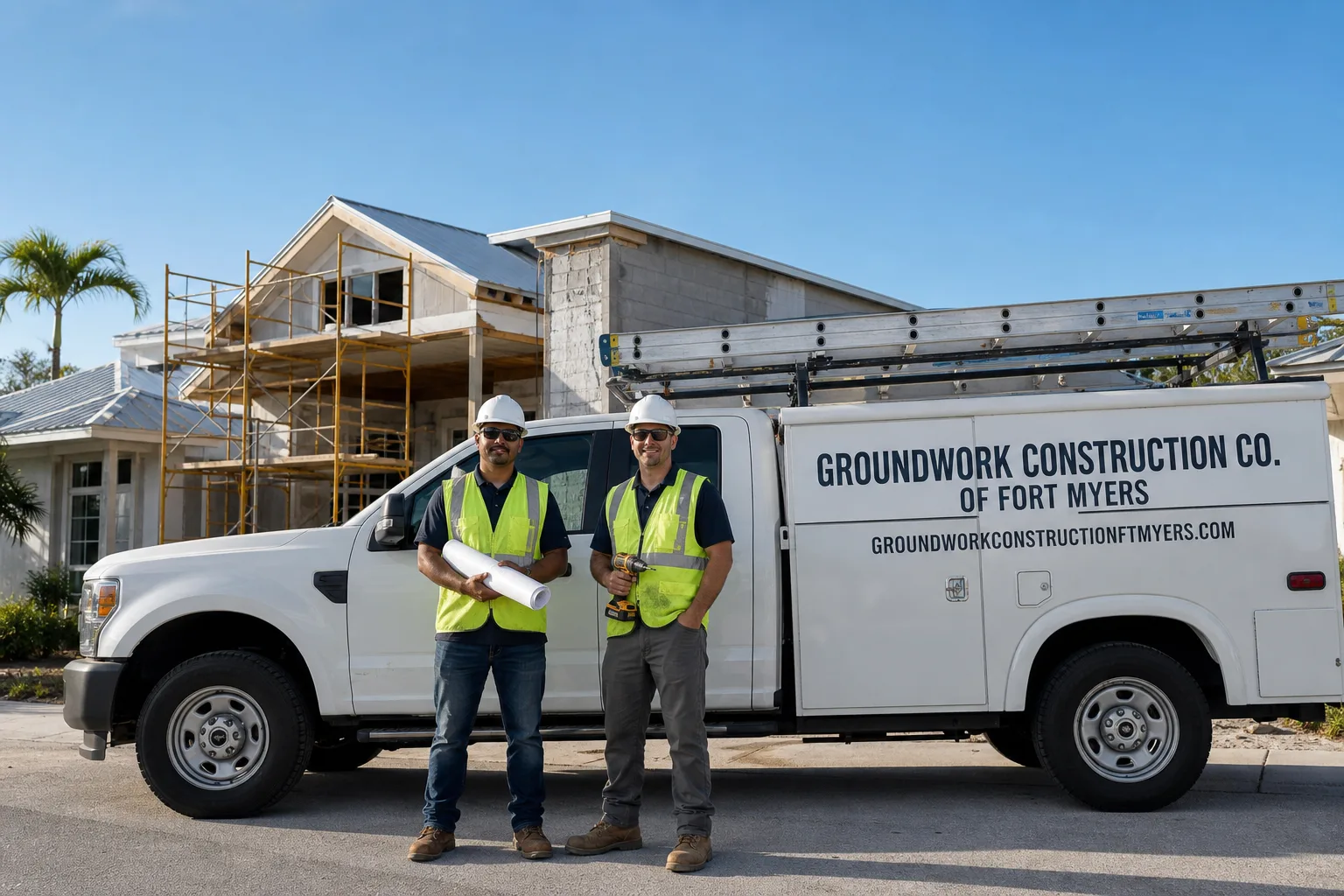
What ADU Site Prep & Utilities Really Involves in Marco
ADU site prep and utilities in Marco means clearing and grading the build site, trenching and laying new underground sewer, water, and electric lines from the house or street to the ADU pad, and setting the foundation formwork, stem walls, or pilings so the structure meets Collier County’s wind and flood codes. A full site prep and utility rough-in for an ADU on Marco Island typically takes 3 to 5 weeks and costs between $45,000 and $130,000. The wide range depends almost entirely on whether your lot sits in a VE flood zone requiring deep-driven pilings, how far the utility tie-ins have to run, and what we find underground. Call (844) 638-7249 and we’ll walk your specific lot with you - estimates are free and written in plain English.
How We Take an ADU From Bare Ground to Ready-to-Build in Marco
The sequence matters, especially on a barrier island where the water table sits right under the slab and the building department checks everything. Here’s how we move through a site prep and utility rough-in, stage by stage.
1. Site survey and locates - days 1-3
We bring in a surveyor to stake the ADU footprint, setback lines, and the existing utility tie-in points. That same morning we call in private utility locates and Sunshine 811 for the public side. On Marco, where so many of the original Deltona lots have had irrigation wells, old septic lines, or undocumented pool drains added over 40 years, this step catches surprises before the excavator bucket does. You’ll decide the final ADU position on the lot based on the staked layout, with our site lead standing there to answer questions about access, drainage, and privacy from the neighboring canal or street.
2. Clearing, demo, and rough grading - days 4-7
If there are existing slabs, sheds, or driveway sections inside the ADU footprint, they come out now. We haul off organic topsoil, level the pad area, and cut any roots that could heave a slab over time. In this part of Marco, we almost always hit shell-and-sand fill that has settled unevenly over the decades, so we spend extra time compacting in lifts - skip that step and a slab cracks within two years. You approve the final rough grade before we order the stone base or start formwork.
3. Underground utilities trenching and rough-in - days 8-14
This is the stage that turns a patch of dirt into a real build site. We trench the paths for new PVC sewer laterals, copper or PEX water service, and schedule-40 PVC conduit for electric feeder, plus a spare data conduit for low-voltage. Collier County requires a minimum 18-inch cover on water and 12 inches on sewer laterals under slab areas, and we pull all permits and schedule the underground inspection before backfilling a single foot of trench. If your Marco lot sits in a flood zone that requires piling foundations, we coordinate with the piling contractor to set piers before the utility stub-outs get locked in, because the elevation of those piers determines final tie-in heights for your plumbing and electrical risers.
4. Foundation - formwork, steel, stem walls or pilings - days 15-24
With utilities stubbed up inside the footprint, we lay vapor barrier, tie rebar on chairs per the engineer’s schedule, and set form boards for a slab or pour concrete stem walls on a footing. On Marco’s VE-zone parcels, this stage is the pile-setting operation, working from the structural engineer’s signed plans and driving treated timber or concrete piles to the specified depth and tip elevation. Collier County inspects steel and forms before we pour. On a slab job, you’ll see a monolithic pour go in one day and cure under wet blankets for five to seven; on a piling job, this stage takes longer but the result is a foundation that won’t settle into the water table or get torn off by storm surge. You’ll choose your slab finish (broom, smooth trowel, or prepped for Backsplash, Tile & Flooring - Marco) before the pour.
5. Cap and clean-up - days 25-35
We pressure-test all water and sewer lines, backfill trenches in lifts with compacted fill, install cleanouts and valve boxes flush to grade, and protect exposed electrical risers inside weatherproof junction boxes. The site walks one last time with our field supervisor and you, confirming all stub-out locations match the ADU floor plan. After that, the site is ready for framing - and because every underground rough-in passed inspection before backfill, the framing crew won’t have to cut open anything later to fix a buried mistake.
The Decisions You’ll Make During Site Prep
Several choices come up during site prep and utility rough-in that directly affect cost, timeline, and how the finished ADU lives. Here are the main ones, with the honest trade-offs.
- Foundation type: slab on grade vs. elevated on pilings. A slab is faster and costs less, but on a Marco canal lot in a VE flood zone, FEMA and Collier County essentially mandate an elevated, pile-supported foundation. Even on an X-zone interior lot, a stem-wall foundation with a few courses of block above slab grade gives you a margin of safety from street flooding that a flush slab doesn’t. We’ll walk you through what the flood certificate allows before you commit to one path.
- Water service: tie into the existing house main or run a new lateral from the street. Tying into the house main saves trench distance and restoration cost, but older Marco homes sometimes have undersized ¾-inch copper that can’t feed two dwellings without a pressure drop. Running a separate 1-inch lateral from the Collier County water main gives the ADU its own meter pressure and avoids volume complaints, but adds trench footage and a tap fee.
- Sewer routing: gravity vs. grinder pump. Most Marco lots slope less than two feet from back to street. If the ADU sits farther back than the main house, getting enough fall for a gravity sewer lateral can mean burying the pipe deep or switching to a grinder pump. A grinder pump and basin assembly adds roughly $3,000 to $6,000 to the job but solves a grade problem without jacking up the ADU’s finished floor elevation.
- Electrical service: sub-panel off the main house vs. a new dedicated meter. A sub-panel is the simpler, less expensive path and works fine for most attached or small detached ADUs. If you’re building a large two-bedroom ADU with its own HVAC and electric appliances, a separate 200-amp service with its own Florida Power & Light meter gives you independent billing and avoids overloading an older main-house panel. The trade-off is cost: a separate service means new riser, meter can, and usually a longer trench run.
What ADU Site Prep & Utilities Costs in Marco, FL
Site prep and utility rough-in for an ADU in Marco runs $45,000 at the low end for a simple slab-on-grade project on an interior X-zone lot with short utility runs, and reaches $130,000 or more for a VE-zone piling foundation with deep-driven piles, a long sewer lateral, and a dedicated FPL service. Most projects in the middle of the island finish near $65,000 to $85,000.
What drives the number:
- Flood zone and foundation type. An X-zone slab costs far less than VE-zone pilings. Pile-supported foundations alone can add $25,000 to $50,000 depending on count, embedment depth, and the structural engineer’s spec.
- Distance from existing utilities to the ADU footprint. The farther you trench, the more pipe, conduit, and restoration you pay for. An ADU tucked behind a waterfront home often needs 80 to 120 linear feet of new sewer and water lateral compared to a garage-adjacent unit at 20 feet.
- What we find underground. On Marco, we regularly uncover old Deltona-era seepage pits, abandoned irrigation wells, or unrecorded pool returns that have to be properly abandoned or rerouted before we can lay new utilities. Each discovery adds cost and time, but skipping it isn’t legal.
- Electrical scope. A dedicated 200-amp service with a new meter can runs $4,000 to $8,000 more than a sub-panel tapped from the main house, depending on FPL coordination and trench distance.
- Collier County permit and impact fees. Water and sewer impact fees, building permit fees, and plan review costs add up, and the ADU’s square footage and fixture count directly affect those totals.
Every written estimate from us includes site clearing, excavation and grading, all underground utility trenching and piping, foundation formwork or piling work, backfill and compaction, and the two county inspections we call before and after the pour. It does not include the ADU’s structural slab or finished floor (that’s the framing contractor’s scope), Cabinets & Countertops - Marco, or landscaping restoration beyond rough grade. Call (844) 638-7249 for an exact quote on your specific Marco lot - we’ll walk it with you, pull the flood zone determination, and give you a fixed number.
What Marco Homes Specifically Do to Site Prep and Utility Work
Marco Island’s building stock is almost entirely Deltona-era concrete block ranch homes on slab-on-grade foundations, built in the 1960s and 70s on shell-and-sand fill that was never engineered to current compaction standards. Those slabs sit low - often within inches of the crown of the road or the canal bulkhead - and a lot of them were poured below today’s FEMA Base Flood Elevation. That matters for ADU site prep because a new detached unit has to meet current code, even if the 1965 main house doesn’t. The ADU floor elevation usually ends up higher than the existing home, which raises the grade and forces creative drainage solutions so the new building doesn’t funnel water toward the old slab or toward the neighbor’s seawall. On Gulf-side parcels and canal-adjacent lots inside the VE zone, we’re not building on grade at all - we’re driving piles, and the utility trenches have to be armored against saltwater corrosion with stainless-steel riser clamps, Schedule 80 conduit sweeps, and epoxy-coated rebar cages that you’d never spec on an inland Collier County job. Under Home Additions & ADU in Marco, these site-prep realities drive a huge share of the project cost, and they’re why we never bid a Marco ADU foundation from a plan without walking the lot and pulling the actual flood certificate first.
Serving Marco, FL - Our Local Coverage Area
We’re based in the Marco area and know this community well. Use the map below to see our service coverage - if you’re nearby, we can almost certainly help.
Frequently Asked - ADU Site Prep & Utilities in Marco
For a standard detached ADU on an interior lot, site prep, utility trenching, and foundation rough-in take about 3 to 5 weeks from the day the permit is issued. Piling jobs in VE zones can add one to two weeks depending on how many piles and what the soil borings show. The largest variable is the Collier County inspection schedule - we book rough-in and pre-pour inspections as early as the system allows, but a busy building department in spring can push a pour back a few days.
Yes - a site-development permit, a building permit for the foundation, and separate trade permits for the electrical, plumbing, and sewer rough-in are all required in Collier County. We pull every one of them under our license, schedule the inspections, and don’t backfill or pour until the county signs off. If your project falls under the substantial-improvement rule (any renovation or addition that exceeds 50% of the existing structure’s assessed value triggers full flood-compliance upgrades), the permit package gets heavier, but that’s more common when the ADU is attached to the main house or part of a larger Home Additions & ADU remodel.
On some Marco lots, yes. If the ADU sits within 10 to 20 feet of the existing house and you’re tying sewer and water into the main-home laterals rather than running new independent lines to the street, we can keep trenching confined to a narrow corridor alongside the home with minimal impact to landscaping. But the farther the ADU is from the tie-in point, the more ground we have to open. Directional boring is an option for water and electric conduit under a driveway, but it doesn’t work for gravity sewer, which needs a straight run with consistent fall.
Finding unexpected buried conditions - abandoned seepage pits from the original Deltona construction, undocumented well points for irrigation, or corroded cast-iron sewer laterals that have to be replaced before the new ADU can tie in. Each adds cost, and on an island built mostly before 1980, we find something on roughly four out of every ten site-prep jobs. We carry line-item contingency language in the estimate specifically for unknown underground conditions so you’re not surprised later.
Our 730-Day Done Right Promise covers all labor and materials on the site prep and utility rough-in. If a sewer lateral settles and loses fall, a water line leaks at a joint, or the slab formwork shifts and cracks the concrete within two years of final signoff, we fix it on our dime. The underground piping itself - PVC, PEX, copper - carries manufacturer warranties that typically run 25 years to lifetime on materials, but our workmanship promise is what protects you from callbacks, not a manufacturer rep. Call (844) 638-7249 and we’ll explain exactly what’s covered on your specific project.
Schedule a Free Site Walk and Estimate in Marco
ADU site prep and utilities in Marco is the foundation of the whole project - literally - and getting it wrong costs multiples later. We’ll walk your lot, pull the flood zone data, map the utility paths, and give you a fixed-price estimate with a clear scope and timeline. No sales pitch, no change-order games on underground unknowns we could have checked for. Call (844) 638-7249 to schedule your free on-site estimate, or reach Derek and the Marco field crew directly through the office. We answer live, any hour.
Written by Derek Hollenbeck, Owner at Groundwork Construction Co., serving Marco Island homeowners with site prep and foundation work that holds up to salt air, flood maps, and county inspectors alike.