
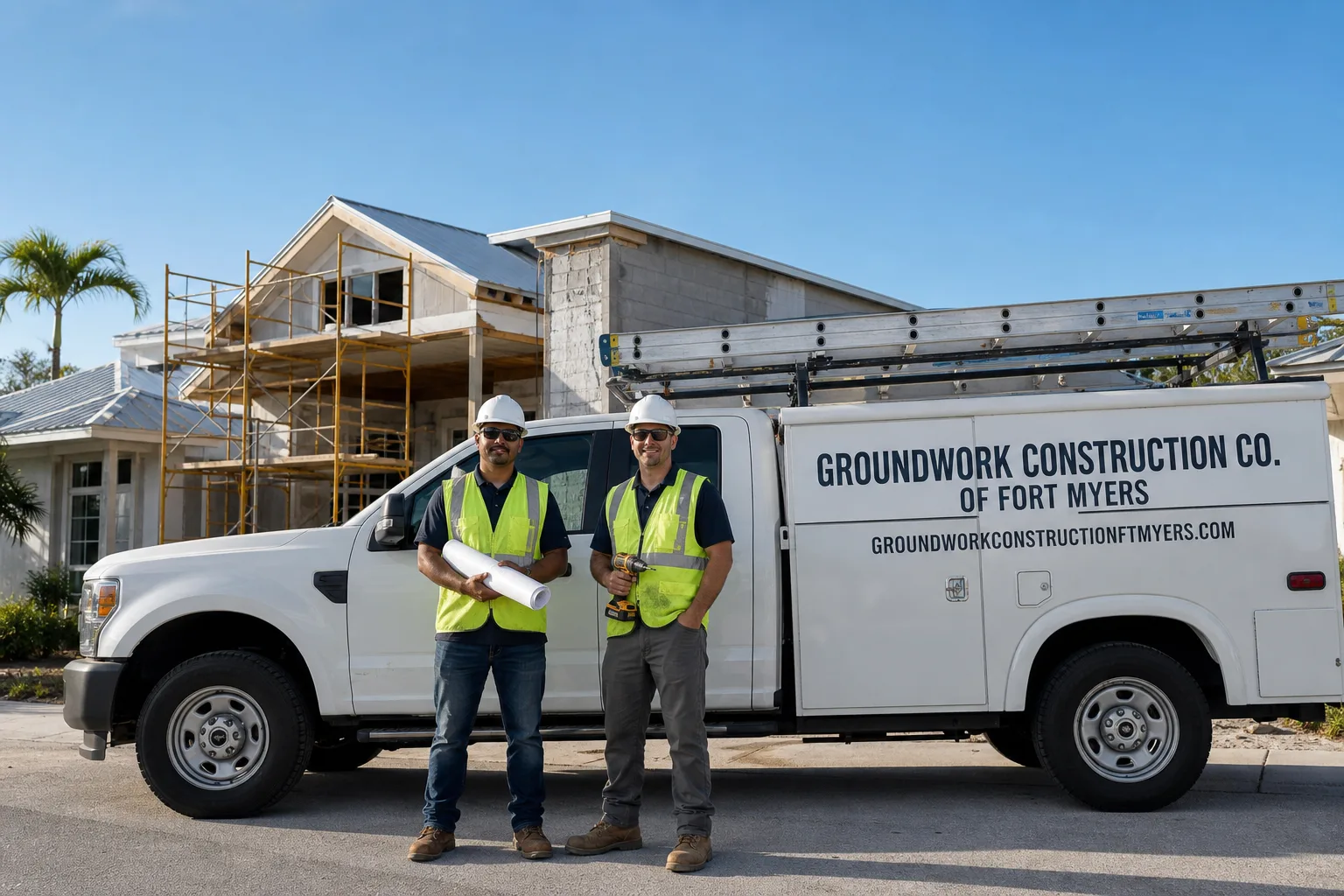
What Emergency Storm Damage Repair Actually Looks Like in Sanibel, and What You Should Expect to Pay
After a storm tears through Sanibel, the most urgent repairs typically involve securing the roof, boarding up blown-out windows, and tarping any openings where water is getting in, then moving to structural drying and a full damage assessment. A complete emergency storm damage response on the island usually runs between $3,500 and $22,000 depending on how much of the envelope was breached and whether framing or electrical got wet. Call (844) 638-7249 now if you have an active leak or structural exposure. We answer live, 24/7, and can have a crew on the causeway immediately.
What Fails First on a Sanibel Garage Door After a Coastal Storm
Salt spray and storm surge don’t attack a garage door evenly. We see the same failure sequence repeat on nearly every barrier island job west of the causeway. The bottom roller brackets and track bolts go first. Those low mounted steel fasteners sit in pooled saltwater for hours during surge events and start rusting within days. Then the torsion springs, which are under constant tension and coated in a thin factory grease that salt air strips away, develop surface corrosion that leads to hairline fractures and sudden snap failures, often six to twelve months after the storm, not during it. The opener chain or belt drive follows if the unit wasn’t sealed against humidity. By the time a homeowner notices the door sticking or hearing a loud bang in the garage, the damage has been compounding for weeks.
Coastal storm response on Sanibel means inspecting every component that saltwater touched, not just the panels that look fine from the driveway. We pull the bottom weather seal, open the track brackets, check the cable drums, and test the spring cycle count. If a door took surge water above the bottom panel, we usually recommend replacing the entire track-and-hardware set in stainless or hot dipped galvanized steel, swapping to nylon rollers, and installing corrosion resistant springs with a powder coated finish. It costs more than a standard inland repair, but it’s the only setup that survives more than a few years in the salt air between Sanibel and the Gulf. This is also the moment to check whether the garage door header or jamb framing absorbed water, something we address as part of our full Roofing in Sanibel storm restoration scope when the roof sheathing or fascia was also damaged.
How We Handle Emergency Storm Damage, Step by Step
Every storm job on Sanibel moves through the same five stage sequence. What changes is the severity, not the order of operations.
1. Stabilization and water stop (hours 0-4)
We arrive, assess the immediate hazard, and stop active water intrusion. For garage doors, this often means bracing a twisted track, releasing spring tension so the door can be manually lowered and locked, or installing temporary plywood over a panel that’s been punctured by flying debris. On roof related breaches, our Roofing crew tarpes the affected area. The goal is simple: no more water gets in tonight. We photograph everything for your insurance claim before touching anything.
2. Moisture mapping and damage documentation (day 1)
Once the opening is sealed, we run moisture meters across the garage slab, the bottom 24 inches of drywall if the garage is finished, and any adjoining wall cavities shared with the house. Saltwater wicks up drywall and insulation far past the visible waterline. We mark the cut line, document readings, and give you a written scope of what needs to come out and what can be dried in place. You decide what gets demoed based on that data, not guesswork.
3. Material removal and drying (days 1-3)
Wet drywall, insulation, and any track hardware we’ve condemned get removed. We set commercial dehumidifiers and air movers in the garage and any connected rooms. On Sanibel, where ambient humidity rarely drops below 70%, drying takes longer than mainland jobs. We leave equipment running for 48-72 hours minimum and recheck moisture content before closing anything up. During this window you’ll choose your replacement door materials and hardware grade. We present the line-item quote with material options while the equipment runs, so no decisions are rushed.
4. Structural and rough in repairs (days 3-7)
This is where the rebuild starts. Any rotted bottom plates or studs get sistered or replaced. We reflash the garage door opening with peel and stick membrane lapped under the wall sheathing, run new pressure treated blocking where needed, and install the new stainless track brackets and galvanized hardware. If the opener motor took water, it gets replaced and reprogrammed. The door assembly itself goes in last, after all the rough framing passes inspection if a permit was required.
5. Final hang, balance, and test (day 5-10)
The new door sections go up, springs get wound to spec, and we run the door through a full cycle test with a 50 pound balance check. We adjust the opener force sensitivity so it reverses with minimal resistance, a safety point we never skip. You get a walkthrough of every component replaced, a photo record for your insurer, and the 730-Day Done Right Promise in writing covering the entire repair.
The Hardware and Material Choices That Actually Hold Up Here
Standard galvanized garage door hardware that works fine in Fort Myers will start rusting within two years on Sanibel. You have to upgrade the metallurgy to survive the salt air. Here’s what we recommend and why.
- Stainless steel track brackets and fasteners. The single best dollar-for-dollar upgrade on any coastal garage door. Standard zinc plated steel bolts corrode at the thread root where salt mist collects. Stainless eliminates that failure point. About a $90-$180 upcharge depending on door size, and it pays for itself the first time a neighbor’s standard hardware rusts out.
- Hot dipped galvanized torsion springs. Factory coated springs add roughly 15-20% to the spring cost but triple the lifespan in salt air. We order these with a cycle rating matched to your door weight and use frequency, usually 25,000-50,000 cycles for a two car door that opens four times a day. Standard springs on a Sanibel door often snap within three to five years.
- Nylon rollers with sealed ball bearings. Metal rollers grind rust dust into the track and sound terrible after a year of salt exposure. Nylon rollers run quieter, never rust, and need no lubrication. They cost about $12-$18 per roller versus $4 for steel, and on a 12 roller door the upgrade is roughly $100-$150 total.
- Pressure treated or composite bottom retainer. The wood or thin steel retainer that holds the bottom weather seal sits inches from the slab where water pools after a storm. Composite doesn’t rot and won’t swell, keeping the seal tight against the concrete. A small detail that prevents big air and water leaks later.
These aren’t luxury add ons. On Sanibel, they’re the minimum spec we write for any garage door exposed to salt air, which means every door west of Tarpon Bay Road. Homeowners sometimes pair a full hardware upgrade with new impact rated Custom Windows & Doors in Sanibel if the storm damaged multiple openings, which lets us coordinate the order and keep the permit timeline moving on a single schedule.
What Emergency Storm Damage Repair Costs in Sanibel, FL
For a garage door storm repair on Sanibel, expect to pay $400-$1,800 if only the hardware, springs, or a single panel need replacement, and $2,500-$7,500 if the full door assembly, track, and opener must be replaced with coastal rated components. The spread is wide because storm damage is never uniform. Here’s what drives the number.
How many panels took water or impact. Replacing one bottom panel is a $250-$500 job. Replacing four panels because surge water sat against them for hours is effectively a new door, and the price moves accordingly. Matching a discontinued panel style on an older door sometimes forces a full replacement even if only one section looks bad.
Saltwater contact with the track and springs. This is the hidden cost driver. If the waterline reached the bottom roller brackets, the entire track set and both springs should be considered compromised. Replacing hardware and springs adds $300-$900 to a panel repair and is the difference between a six month fix and a ten year fix.
Opener motor submersion. A garage door opener that took even six inches of saltwater is done. Salt corrodes the circuit board contacts and the capacitor inside the motor housing. A new belt drive opener with battery backup, required if the garage is your primary entry, runs $450-$800 installed.
Framing and drywall remediation. If water wicked into the garage wall shared with the house, we’re cutting drywall, pulling insulation, drying the cavity, and replacing it. That adds $600-$1,800 depending on the linear footage and whether any electrical outlets or switches were in the wet zone.
Permit scope. A straight hardware swap doesn’t require a permit. Replacing the entire door assembly usually does, because Sanibel’s building department wants to verify the new door meets current wind load and impact rating requirements for the home’s exposure category. Permit fees and the inspection add $150-$400 to the job and about three to five business days to the schedule while we wait for the inspector.
Every estimate we write in Sanibel is a fixed price, line item scope. No change orders appear later because we missed something. If the moisture meter says cut, we write it in the quote. You see exactly what’s getting replaced and what grade of hardware we’re using, before we order a single part.
What Sanibel Homes Specifically Do to Garage Door Storm Repairs
Sanibel’s building department operates independently of Lee County and enforces its own permit queue and inspection calendar. For a garage door replacement after storm damage, that means the permit review often adds three to five business days beyond what a mainland contractor quotes, simply because Sanibel’s inspectors are managing a post Ian rebuild volume that hasn’t let up. We schedule that lead time into our start date and don’t surprise you with it mid project. It’s just the reality of building on a barrier island with its own municipal government.
The salt air and humidity also means we never install standard zinc hardware on any garage door here, storm repair or not. Every fastener, bracket, and spring we use on a Sanibel job gets upgraded to stainless or hot dipped galvanized as a baseline spec. We’ve pulled too many rusted bolts out of two year old doors near the Gulf to pretend the standard inland package works. And because nearly all post Ian reconstruction on the island is converting old slab on grade homes to elevated construction, many of the garage doors we’re replacing now are on new raised foundations where the bottom seal sits four to eight feet above the surge zone, a detail that dramatically changes which flood venting and seal specs apply. On those homes, we coordinate the door install with the Wood Fence in Sanibel scope if the storm took out fencing and privacy screening at the same time, so the site stays secure through the whole rebuild.
The causeway logistics affect every material run. Concrete trucks, dumpsters, and crane deliveries all cross the same toll bridge, and during tourist season that crossing can turn a 45 minute parts run into a two hour delay. We schedule material deliveries for early morning and keep critical hardware stocked on the truck so a missing bracket doesn’t stall the job until tomorrow.
Serving Sanibel, FL - Our Local Coverage Area
We’re based in the Sanibel area and know this community well. Use the map below to see our service coverage - if you’re nearby, we can almost certainly help.
Frequently Asked Questions About Emergency Storm Damage Repair in Sanibel
We answer the phone live, 24/7, and can have a crew crossing the causeway within two hours of your call for active water intrusion or a security breach where the garage won’t close. After a major storm event like a hurricane, we stage trucks on the island before the causeway reopens so we’re already in place when residents are allowed back. For non emergency damage, we typically schedule the assessment within 24 to 48 hours.
Yes, if the door assembly is being replaced rather than repaired. Sanibel’s building department treats a full door swap as a structural opening change that must meet current Florida High Velocity Hurricane Zone wind load requirements for the home’s exposure category. We pull the permit, schedule the inspection, and build the inspection wait time into the project timeline upfront. A hardware only repair, like swapping rusted brackets and springs, usually doesn’t trigger the permit requirement.
Most Florida homeowner policies cover garage door damage from wind, falling debris, and named storm events, less your hurricane deductible. We provide a detailed photo package and a line item repair scope formatted for insurance adjusters that clearly separates storm related damage from pre existing wear. You submit it to your carrier. We don’t bill insurance directly, but we give you everything an adjuster needs to process the claim quickly.
From stabilization tarp or board up through final inspection, a hardware and panel repair takes one to three days. A full door and opener replacement with any framing or drywall remediation runs five to ten business days, with the extra time split between drying equipment run time and waiting for Sanibel’s inspection calendar. We give you a day by day schedule at the estimate so there are no gaps where you’re wondering when we’ll be back.
Every emergency storm damage repair we do is covered by our 730-Day Done Right Promise. If anything we fixed fails because of our workmanship or the hardware we specified, we make it right at no charge. The individual components like springs, openers, and panels carry their own manufacturer warranties on top of that, and we register them in your name so the coverage is fully transferable.
Get a Free Storm Damage Assessment on Sanibel
If your garage door took saltwater, wind, or debris during the last storm, don’t wait for a stuck track or a snapped spring to tell you something’s wrong. Call (844) 638-7249 and we’ll schedule a free on site inspection, go over every component with a moisture meter and a corrosion check, and hand you a written estimate with fixed pricing and zero surprise add ons. You decide what gets done, and everything we touch is backed by the 730-Day Done Right Promise.
Written by Derek Hollenbeck, Owner at Groundwork Construction Co., serving Sanibel since 2014.