
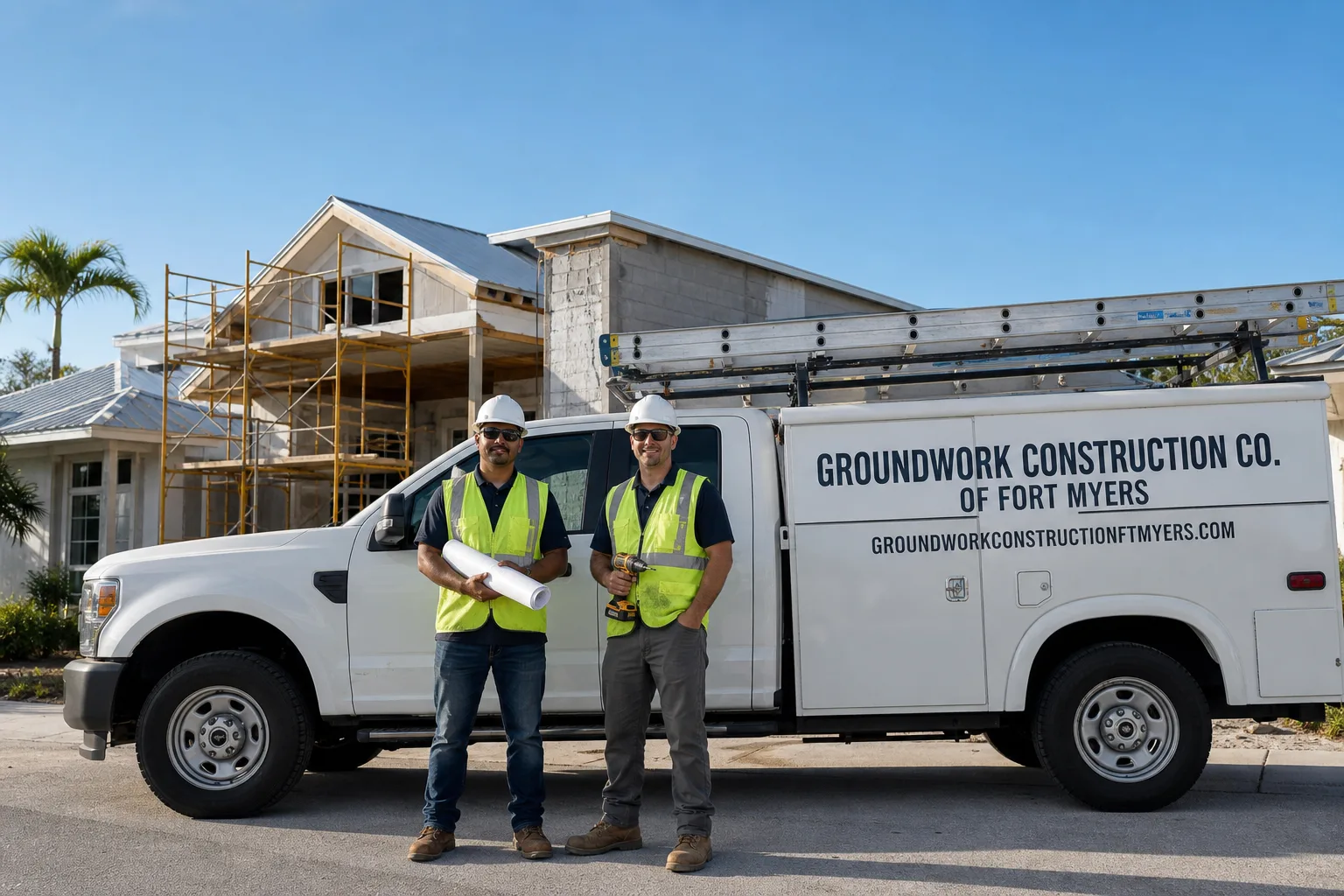
What a Metal Roof in Saint James City Actually Costs, and How Long It Takes
A standing-seam or metal panel roof on a Saint James City home runs $15,000 to $40,000 for most full replacements, and a skilled crew will typically have it watertight in 5 to 10 working days depending on the house’s footprint, the roof’s complexity, and the condition of the deck underneath. The single biggest variable right now is whether you’re replacing a post-Ian temporary tarp job or putting metal on new construction that’s already engineered for the load - and we’ll explain exactly why that matters. Call (844) 638-7249 and we’ll give you a written, line-item price for your specific roof before you commit to anything.
How We Put a Metal Roof on a Pine Island Home, Step by Step
Our crew tackles metal roofing as a sequenced build, not an assembly line. The salt air and the island logistics on Saint James City demand extra care at each stage - and skipping a step just means paying for it later when the fasteners start bleeding rust onto white trim three years in. Here’s how it goes.
Stage 1: Tear-off, deck inspection, and structural reality check (Day 1-2). The old roofing comes off, and we expose the sheathing. On Saint James City homes, we’re almost always looking at plywood that’s been through Ian and at least a few wet seasons since. Any soft or delaminated sections get cut out and replaced. More importantly, we’re checking every hurricane strap, tie-down, and rafter-to-top-plate connection for corrosion - the salt mist here accelerates metal connector degradation faster than anything we see on the mainland. If a strap is thinned by rust, it gets replaced with a hot-dipped galvanized or stainless equivalent. Nobody’s laying metal over compromised structure.
Stage 2: Underlayment and the high-wind prep (Day 2-3). We roll out a self-adhered, high-temperature underlayment - usually a peel-and-stick product rated for the Miami-Dade HVHZ - to create a secondary water barrier. In Saint James City, which sits in a high-velocity hurricane zone, this isn’t optional. We also apply seam tape and a corrosion-resistant drip edge. At this stage you’ll see the crew spend extra time on eaves and rake edges, because a coastal storm drives rain sideways and a metal roof’s perimeter is where water gets behind the panels if the flashing isn’t dead right.
Stage 3: The metal panel layout and fastening system you pick (Day 3-5). This is where you make your biggest material call: standing seam versus exposed-fastener metal panel. Standing-seam panels lock together with concealed clips that allow the metal to expand and contract without chewing through the fastener gaskets - a real advantage on a Pine Island rooftop that’ll see 140-degree surface temps in July and cool Gulf breezes at night. Exposed-fastener systems cost less up front, but the neoprene washers on the screws require inspection every few years in this salt environment. We’ll talk through that choice before we order a single panel.
Stage 4: Trim, flashing, ridge cap, and the details that stop leaks (Day 4-8). This is where the crew earns its keep. Valleys get an open or closed metal flashing depending on the roof geometry; pipe boots get stainless clamps, not plastic; ridge caps get a vented profile to keep the attic breathing. Every penetration gets a custom-cut flashing piece, never just caulk. The elevation difference between a ridge and a valley on some of the older elevated Saint James City fishing cottages can be steep - we often have to fabricate custom transition flashing on-site to get the water-shed right.
Stage 5: The final walk-through and the Lee County inspection (Day 9-10). Once the metal is up and the site is cleaned, we walk the roof with you if the pitch allows it safely, or we’ll show you ground-level photos of every detail. Then the county inspector comes out to verify the tie-downs, the underlayment, and the wind-load compliance. Saint James City jobs go through Lee County’s building department, and we pull every permit ourselves - you shouldn’t have to chase paperwork. If the inspector flags anything, we fix it. That’s it.
The Options You’ll Choose Between for a Metal Roof Here
A metal roof isn’t one product. You’re picking a system, and the right call depends on how long you plan to own the house and what kind of wind and salt exposure your specific lot gets. Here’s what we’ll walk through together:
- Standing-seam (concealed fastener) versus exposed-fastener panels. Standing seam uses hidden clips and no exposed screws through the panel face - better for wind uplift, zero fastener-neoprene degradation, and the look most Pine Island buyers expect. Exposed-fastener saves roughly 20-30% on materials but the screw gaskets will eventually need replacement in salt air. If you’re near the southern tip where the Gulf spray is relentless, we strongly recommend standing seam.
- Aluminum versus Galvalume versus painted steel. Aluminum carries a higher material cost but has a natural resistance to salt corrosion that steel can’t match without its coating staying intact. Galvalume (zinc-aluminum alloy coated steel) is the go-to middle ground - good corrosion resistance and a lower price point than straight aluminum. Painted steel with a Kynar 500 finish gives you the widest color range and excellent fade resistance under the Florida sun.
- Gauge thickness - 24-gauge versus 26-gauge. A 24-gauge panel is thicker and more dent-resistant. For a roof that’ll see airborne debris during a tropical storm, the extra rigidity matters. A 26-gauge panel is lighter and less expensive; it’s fine on steeper roofs where falling coconuts and branches are less likely, but we err toward 24-gauge on low-slope Saint James City roofs.
- Ridge venting and attic airflow. A metal roof gets hotter than shingles at the surface, and a poorly vented attic transfers that heat into the house. We size ridge vents and soffit ventilation to create a continuous air path. On older elevated cottages with cathedral ceilings and no attic, we talk through insulated panel options that keep the interior comfortable without adding a drop ceiling.
What Metal Roofing Costs in Saint James City, FL
Plan on $15,000 to $40,000 for a complete metal roof on a typical Saint James City home. A straightforward 1,500-square-foot ranch with a simple gable roof and no deck damage will land near the bottom of that range. A 2,500-square-foot elevated coastal home with multiple valleys, dormers, and significant sheathing replacement after Ian will push toward the top.
Here’s what moves the number:
- Roof complexity and square footage. More material, more labor. Valleys, hips, dormers, and steep pitches all slow the install and increase waste. A simple gable roof with two planes cuts faster and costs less.
- Deck condition after tear-off. If we open the roof and find rotted plywood or OSB, that’s a change-order line item. On Saint James City homes that took Ian’s rain before the tarp went up, we often replace 20-40% of the deck. That can add $2,000-$6,000 depending on the area.
- Corroded connector replacement. Hurricane ties, rafter anchors, and truss plates that have rusted through in the salt air need to be swapped out. We carry hot-dipped galvanized and stainless replacements, but it’s extra labor on an older house and it adds to the total.
- Metal panel type and gauge. Standing-seam aluminum at 24-gauge costs the most. Exposed-fastener painted steel at 26-gauge costs the least. The difference on a full roof can be $8,000-$12,000.
- Permit and inspection fees. Lee County permit fees for a roof replacement scale with the project valuation, and Saint James City jobs face the same schedule as the rest of the county. We handle it, but it shows up on your estimate as a line item.
Every estimate we write is a fixed, line-item price - no percentage markups hidden in the material line, no change orders unless we both agree in writing that something unexpected was found under the old roof. Call (844) 638-7249 to schedule a free on-site estimate, and we’ll hand you the real number.
What Saint James City Homes Specifically Do to a Metal Roof
The salt air at the southern tip of Pine Island doesn’t gradually age a roof. It picks at the weakest points - fasteners, flashing, cut edges - and accelerates the failure timeline by years compared to an inland home. We see galvanized vent-pipe boots rusted through in four years, exposed screw heads with the neoprene gasket crumbling to dust, and aluminum trim that’s holding up fine right next to a steel hurricane strap that’s flaking rust onto white siding.
For a metal roof here, the spec has to be stainless or hot-dipped galvanized fasteners on every connection, not just the ones the manufacturer ships. The underlayment needs to be a self-adhered, high-temp product rated for a high-velocity hurricane zone, because Saint James City sits squarely in the HVHZ and Lee County inspectors won’t sign off on anything less. If you’re in a FEMA AE or VE flood zone - which covers a large portion of the island - the roof deck elevation and attachment method get checked against the floodplain requirements, and a metal roof that’s not properly anchored can fail a wind-uplift test at inspection.
The logistics also add cost that a mainland Roofing in Saint James City quote sometimes doesn’t reflect. Every bundle of metal panels, every roll of underlayment, and every dumpster for the tear-off has to come across the single Pine Island Road causeway. During the morning and late-afternoon traffic windows, a delivery truck can sit at that bridge for 45 minutes. We stage materials to avoid that bottleneck - scheduling oversized loads for mid-day and keeping a buffer day in the timeline for weather delays - but it’s a planning layer that a Cape Coral roofer never has to think about.
Many of the homes we’re roofing here are post-Ian rebuilds, and the owners are often pairing a metal roof with Impact Windows & Doors in Saint James City to get the full wind-mitigation credit on their insurance. Others use the roof project as the right time to swap out old aluminum single-pane windows for Window Replacement in Saint James City. If you’re already paying to have a crew and a dumpster on-site, bundling makes sense and our Roofing division coordinates with the window crew so you’re not managing two schedules.
Serving Saint James City, FL - Our Local Coverage Area
We’re based in the Saint James City area and know this community well. Use the map below to see our service coverage - if you’re nearby, we can almost certainly help.
Frequently Asked Questions About Metal Roofing in Saint James City
A properly installed standing-seam aluminum or coated-steel roof in Saint James City’s salt air should deliver 40 to 50 years of service life, with the finish warrantied against fade and chalk for 30-35 years depending on the manufacturer. The roof itself outlasts the fasteners if the fasteners weren’t spec’d right - that’s the failure point, not the metal panels.
Yes. Lee County requires a building permit for any roof replacement, and the job must pass a wind-load inspection that verifies the attachment method, underlayment, and fastener spacing meet the current Florida Building Code for a high-velocity hurricane zone. We pull the permit, schedule the inspection, and make sure it passes. No homeowner should have to navigate that alone.
We don’t recommend it, and on most Saint James City homes we won’t do it. You lose the chance to inspect the deck for hurricane damage, the extra layer traps heat, and the metal panels can’t be attached through two layers of material with the same wind-uplift rating. The only way to know what’s under the shingles is to take the shingles off.
The manufacturer covers the metal panels and finish - typically 30 to 35 years for the coating on a Kynar 500 system from a brand like CertainTeed. Our workmanship is covered by the 730-Day Done Right Promise: if something we installed isn’t right, we fix it, no runaround. That’s one of the longest workmanship guarantees you’ll find on a residential metal roof in Lee County.
Most Florida carriers offer a wind-mitigation discount for a metal roof that’s installed to the current code with the right attachment and a secondary water barrier. The exact discount depends on your carrier and the rest of your home’s mitigation features - we’ll give you the documentation you need to submit, but your agent will calculate the dollar amount. Call (844) 638-7249 and we can walk through what the insurance paperwork requires before we start.
Get a Fixed-Price Estimate for Metal Roofing in Saint James City
We’ll come out to your property in Saint James City, measure your roof, assess the deck condition from the attic side if accessible, and write you a line-item price that covers every fastener, panel, and permit fee - no surprises written in later. The estimate is free and you’ll have it in your hand before we ask for a decision. Call (844) 638-7249 to schedule it. A live person answers, any hour.
Written by Derek Hollenbeck, Owner at Groundwork Construction Co., providing metal roofing and full-scope home construction across the Pine Island area since 2014.